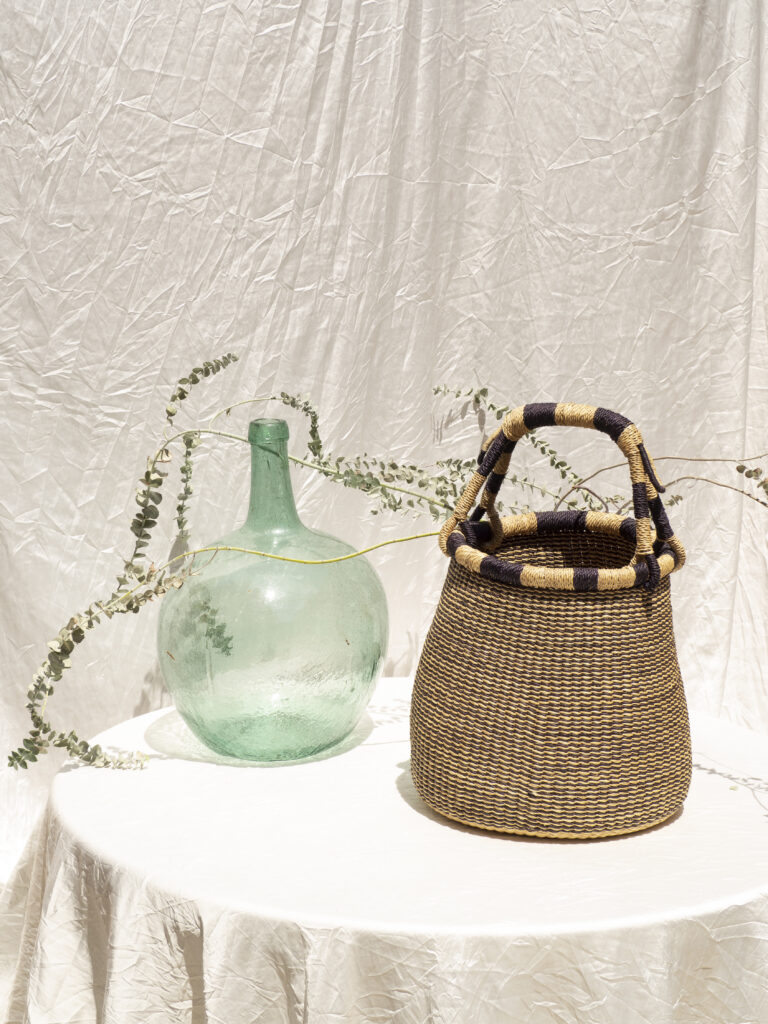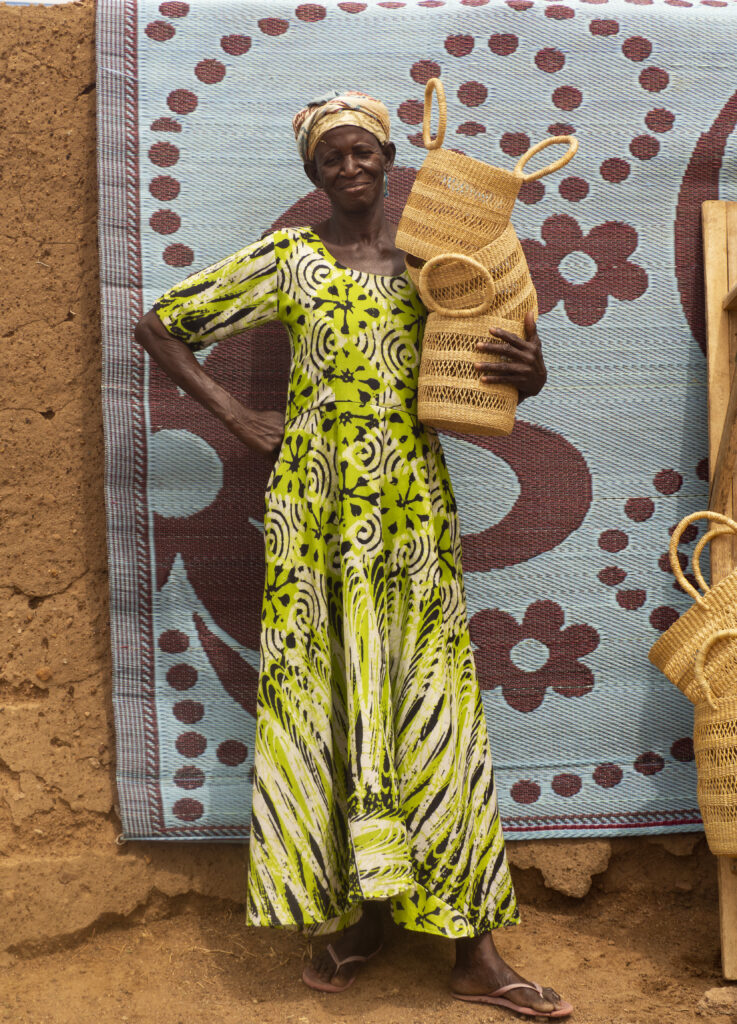
There are brands that make beautiful objects, and then there are brands that build worlds. Aketekete belongs to the latter. Rooted in Ghana but resonating far beyond its borders, the brand has quietly positioned itself as one of the most thoughtful voices in contemporary craft. In its universe, a basket is never just a basket and a piece of jewellery is never merely an accessory; each object becomes a vessel of memory, culture, and time. The story of Aketekete begins with an idea that feels almost radical in today’s hyper-accelerated world: that craft must be slow, intimate and grounded in human experience. Founded in 2020, the brand quickly distinguished itself by rejecting the speed and uniformity of global retail. Instead, it embraced a mode of working that honours the artisan communities of Ghana whose skills have been kept alive by generations of hands. Aketekete works directly with these artisans not as labourers hidden behind the brand, but as collaborators and cultural bearers whose knowledge forms the backbone of everything produced. This respect for craft is not nostalgic. It is a form of cultural preservation that feels urgent and contemporary. Techniques like Bolga weaving, calabash carving and traditional bead-making are not treated as exotic curiosities; they are approached with the seriousness of design languages that deserve to stand in dialogue with global aesthetics. The results are objects that feel timeless yet modern. A woven market basket, for example, carries the soft asymmetry of elephant grass shaped by hand, but it also sits comfortably inside a minimalist home in Copenhagen or an editorial shoot in New York. A string of beads made from recycled glass recalls centuries of Ghanaian ornamentation while reading as fresh and sculptural in a contemporary fashion context.
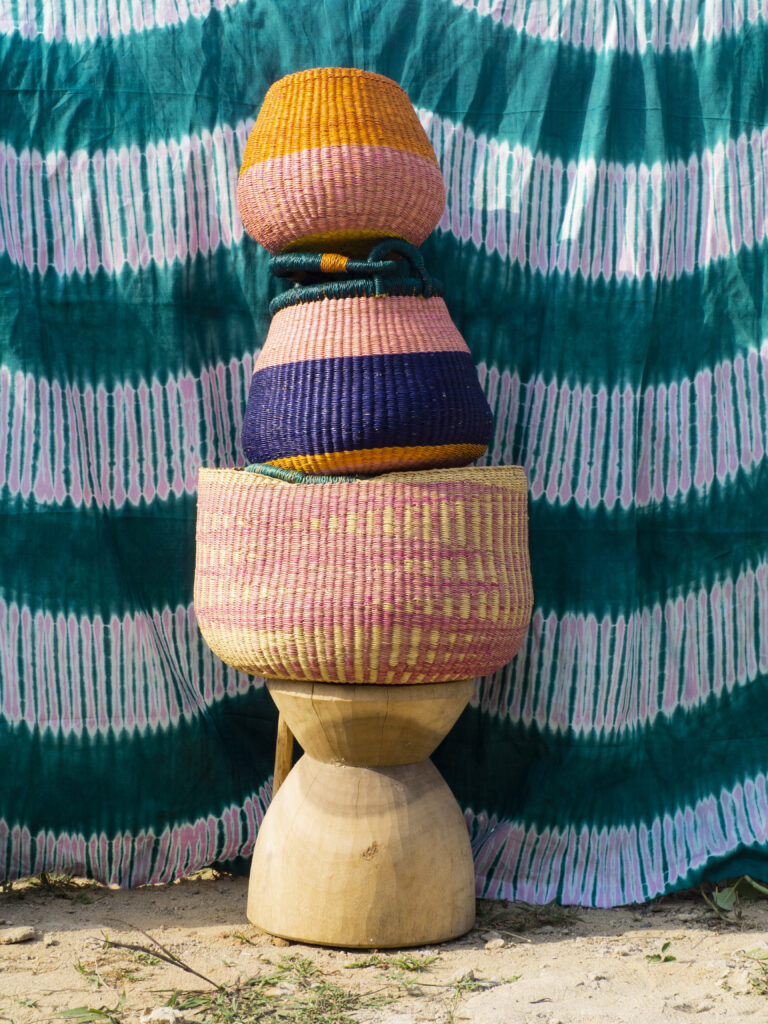
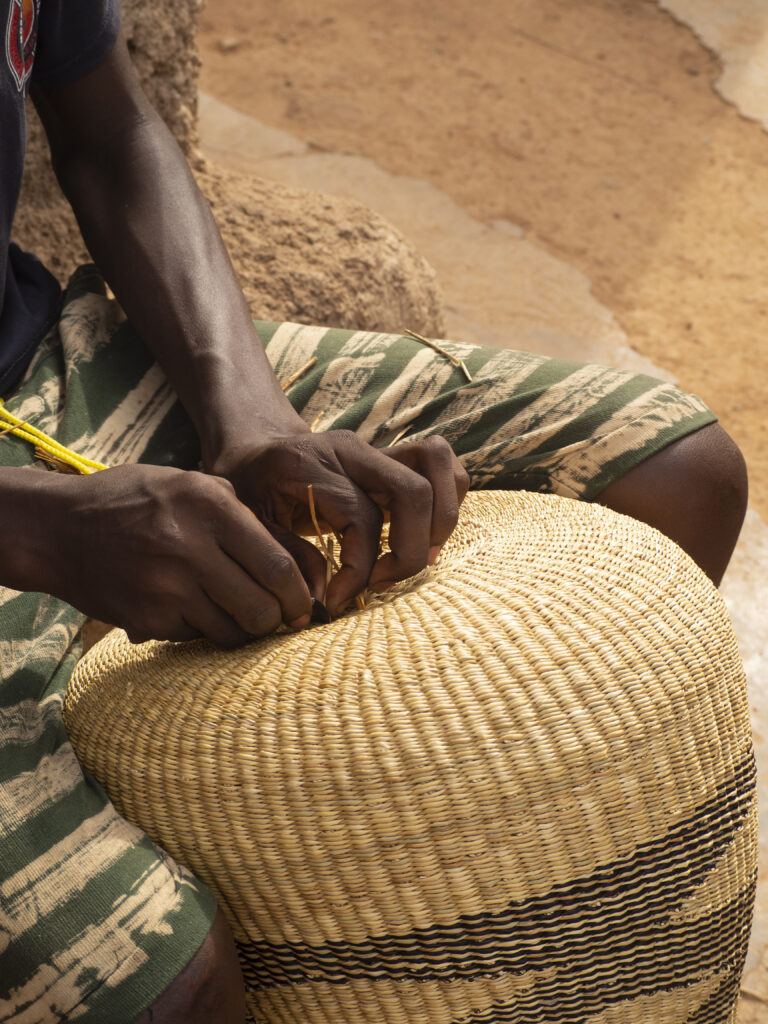
Aketekete is set apart as a brand simply because of its ability to create beautiful things, and its ability to explain meaning. Built on a philosophy that sees people, land, and material as inseparable. Natural fibers, clay, raffia, glass and calabash are sourced from the environments artisans know intimately. These materials dictate the rhythm of production: baskets take days to weave, beads require careful firing and cooling, calabash bowls grow into their own organic shapes. Rather than force standardisation, the brand allows each object to express its origin. The slight curve of a bowl, the small variation in the colour of a woven handle, the gentle unevenness of a bead, these aren’t treated as imperfections but as signatures of the human stories behind the final form. The result is a body of work with an unmistakable emotional texture. Aketekete pieces aren’t interchangeable; they feel alive. They carry within them the pace of the artisan’s hand, the inheritance of technique, the geography of the material. In an industry saturated by mass production, this presence makes Aketekete objects feel almost rare. They resist the disposability of modern consumer culture and instead offer the kind of intimacy one usually finds in heirlooms. There is also a contemporary clarity in the brand’s design direction. Aketekete avoids both the cliché of “traditional African craft” and the sterile neutrality of global minimalism. Instead, it occupies a space where heritage and modernity speak to each other. The brand’s colour palettes, silhouettes and material compositions feel intentional and current without sacrificing authenticity. It is a complex duality: global but never detached, rooted without being provincial, elegant without losing the warmth of handwork.
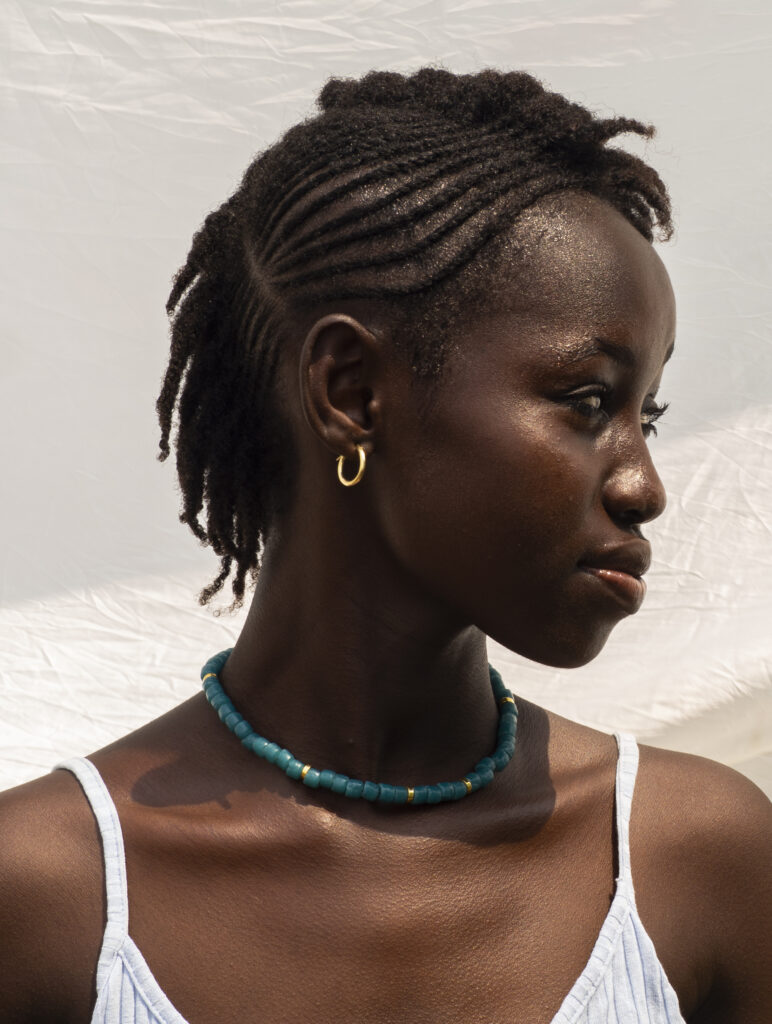

This sensibility extends to the way the brand collaborates. Designers, interior studios, and creative directors from different parts of the world seek out Aketekete not simply to purchase goods but to co-create. Through bespoke commissions and collaborative collections, the brand adapts traditional techniques to new forms, calabash lamps for studios, sculptural baskets for editorial displays, jewellery lines imagined with contemporary designers. These collaborations function like gentle experiments, expanding what Ghanaian craft can be while keeping its cultural core intact. Perhaps the most compelling aspect of Aketekete is the quiet confidence with which it asserts a different way of valuing things. Its objects invite you to slow down, to consider what it means to own something made by a specific person in a specific place. They invite you to recognise the difference between the machine-perfect and the human-perfect. And they encourage a mode of consumption guided not by trend cycles but by connection, story and care. In a world that celebrates speed, Aketekete insists on depth. In a market dominated by sameness, it insists on individuality. And in a cultural moment where authenticity is often performed rather than lived, it insists on integrity at every level, in its materials, its relationships and its craft. Aketekete is not merely preserving tradition; it is reimagining what the future of African craftsmanship can look like when guided by respect, imagination and purpose. It is a reminder that craft, when treated as an art form rather than an industry, becomes more than the object itself. It becomes evidence of who we are, where we come from and how we choose to move through the world.