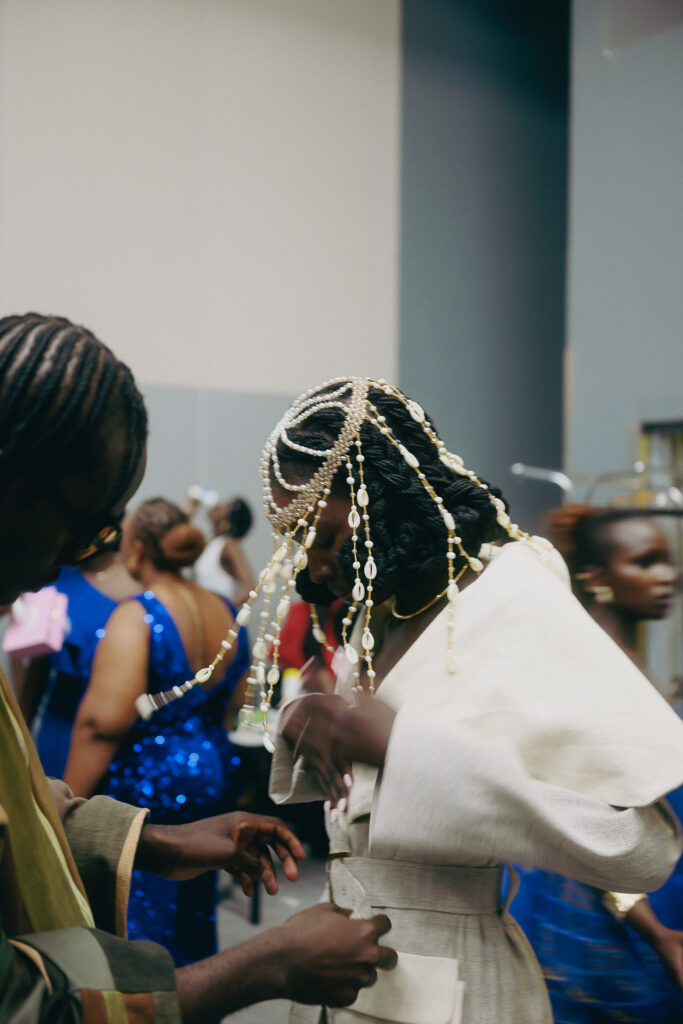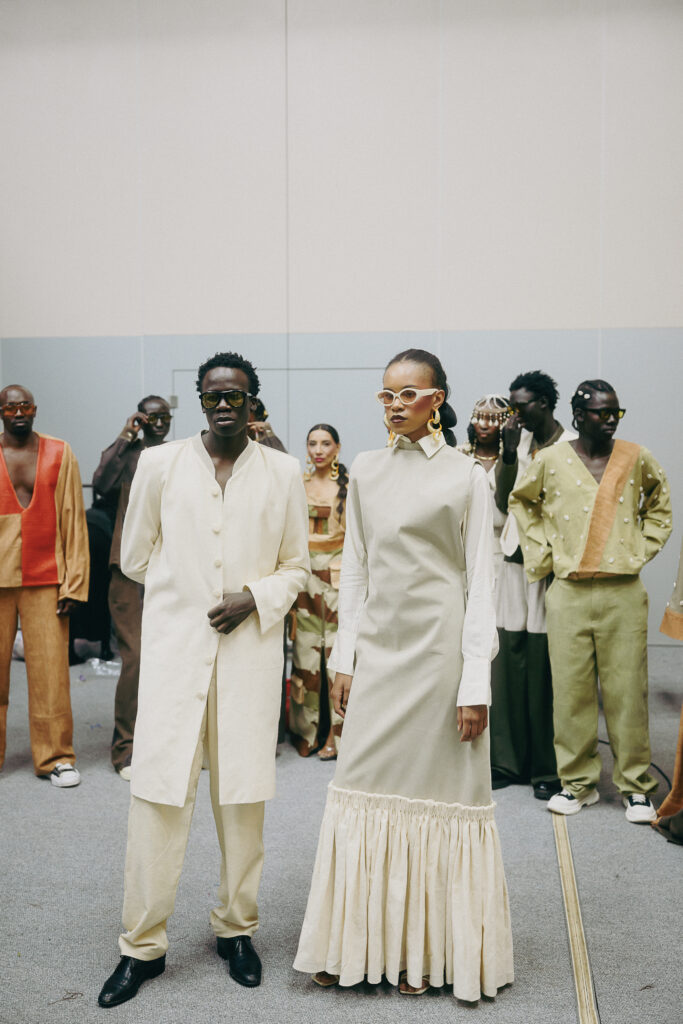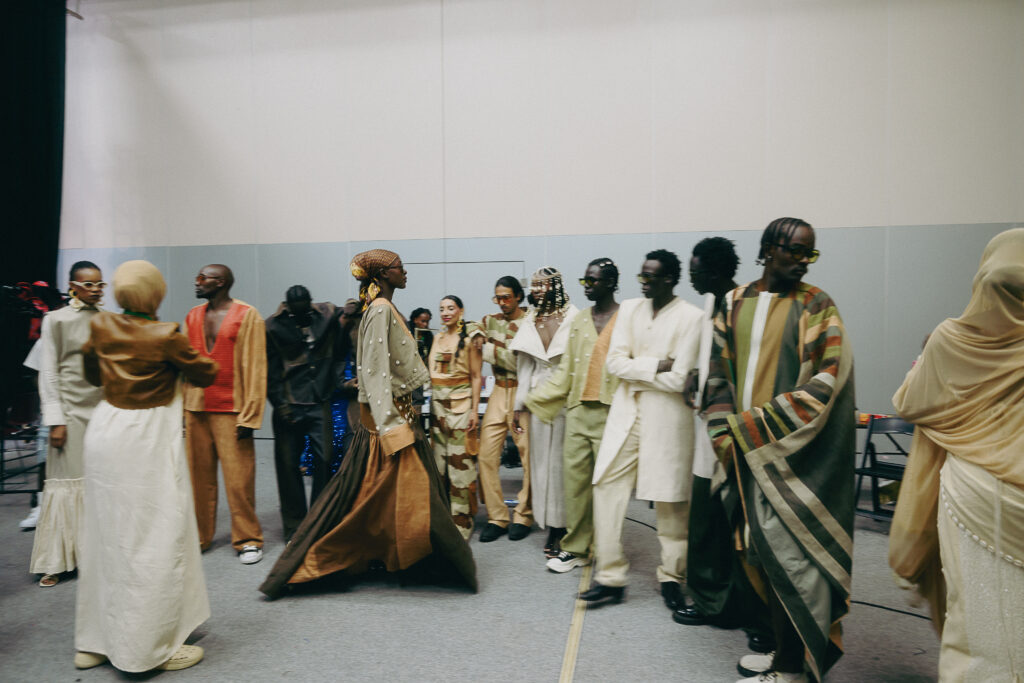
What began in 2013 as a modest platform at the Hilton in the city’s centre has grown into a cultural engine. Nairobi Fashion Week is no longer just a runway event; it is a declaration. The eighth season, held January 28–31, at the Sarit Expo Centre in Nairobi, established a bold new chapter under the theme “Decarbonize” and, rather than just showcasing clothes, the event framed fashion as a tool for environmental action, inviting key players in the African fashion industry to rethink production, consumption, and cultural impact.
Nairobi has taken centre stage in Africa for everything quietly radical over the past decade. They seem not to be concerned with Western validation, but assured, intentional, and increasingly ideological. Nairobi Fashion Week is no longer just a runway event; it is a response to the climate and environmental changes we face today. This edition positioned Nairobi as a continental hub for responsible fashion, with designers from Kenya, Nigeria, France, Sri Lanka, Germany, and the USA presenting collections grounded in ethical production, circular design, and carbon-conscious innovation.
Highlighted in this article include:
- Wanni Fuga
- John Kaveke
- Maisha by Nisria: Expanding its creative upcycling approach with garments crafted from discarded textiles and off-cuts.
- Studio Lola: Slow-fashion methodologies and fair-trade collaboration with local artisans.
- VAST Made by Africa: Emphasising handcrafted, small-batch production that celebrates traditional techniques while prioritising wearability.
- Rialto Kenya‘s, whose patchwork designs addressed textile waste directly through recycling.
- Afrostreet Kollections: Showcased vibrant, African-inspired custom and ready-to-wear clothing that celebrates bold prints and modern aesthetics.
Across January 29th and 30th, Thread Talks, held at The Social House Nairobi, became the intellectual spine of the week. Conversations examined how Africa can decarbonize its fashion supply chain fairly, reframing sustainability as systems thinking instead of seasonal trends. Representatives from UNEP, Gatsby, the Kenya Fashion Council, and veteran designers debated production ethics, circular economies, and the realities of scaling African fashion globally without repeating extractive models. A designer masterclass powered by Anansi translated theory into practice, equipping creatives with tools to build brands that are both responsible and internationally competitive. By the time the runway opened on January 31st at the Sarit Expo Centre, the audience understood the show as the culmination of an argument: fashion as policy, craft as activism, and Nairobi as a city writing its own terms of relevance.
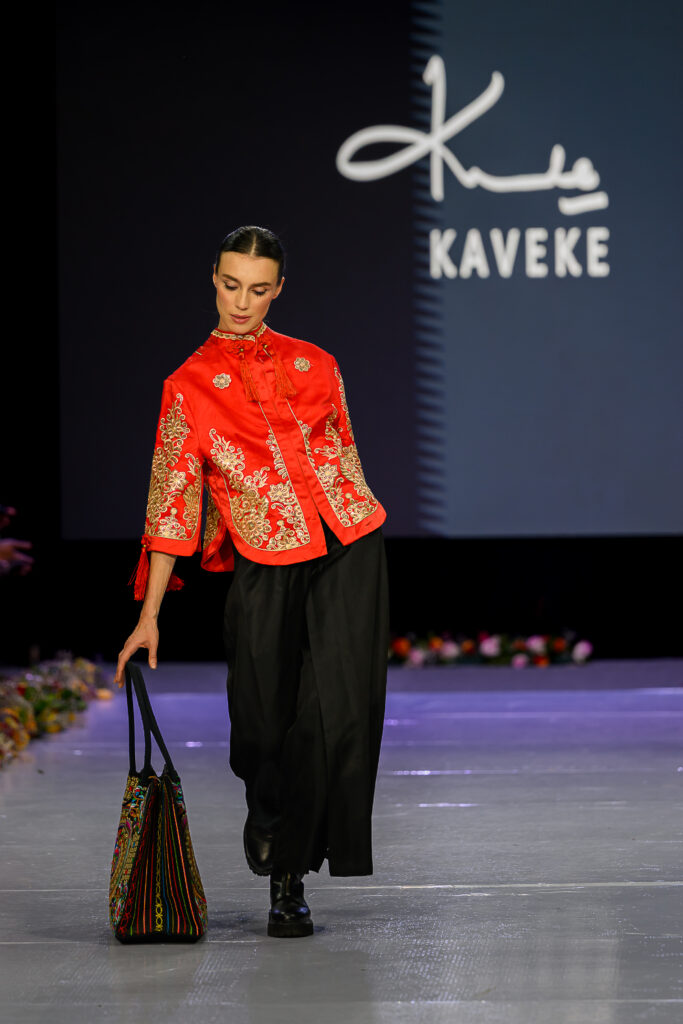
The evening found its gravitational centre in John Kaveke, the seasoned Kenyan menswear statesman whose return to the runway carried ceremonial weight. His collection staged a dialogue between Maasai heritage and Japanese precision. Structured tailoring met ceremonial fluidity; disciplined silhouettes softened through cultural symbolism. The garments felt architectural yet deeply human, an intercontinental exchange rendered in cloth. Kaveke did not quote tradition; he translated it, reaffirming his status as one of East Africa’s most intellectually rigorous designers.
Nigerian luxury house Wanni Fuga followed with a study in controlled power. Clean lines, sculptural silhouettes, and impeccable tailoring articulated a vision of modern African elegance that felt globally fluent. There was restraint in the palette and authority in the cut clothing designed not to shout but to command space. Each piece elevated the runway into a quiet theatre.
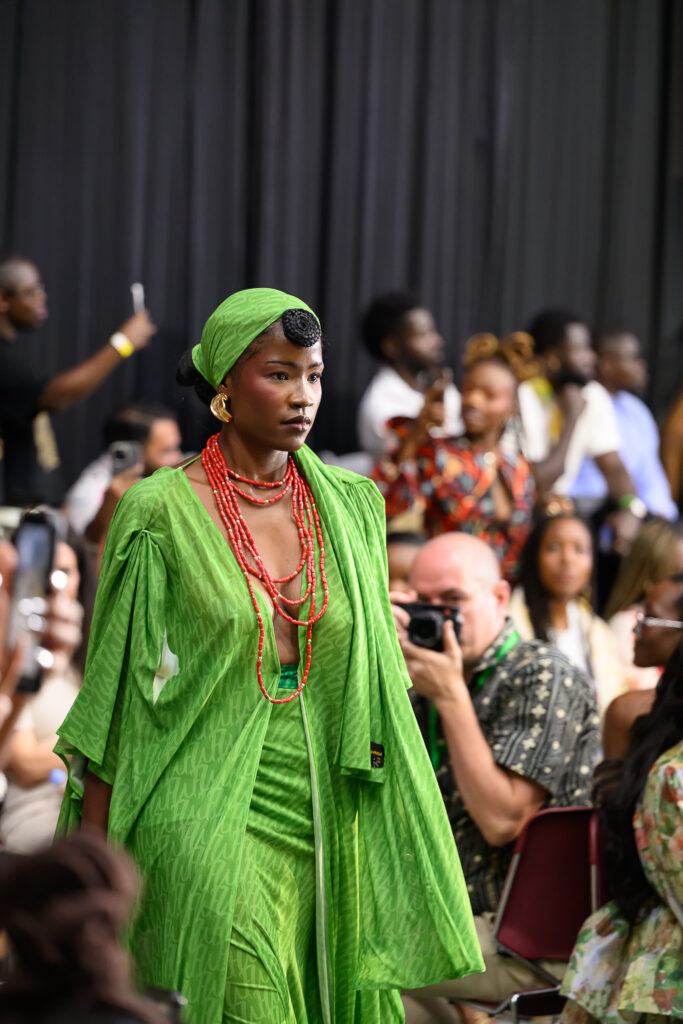
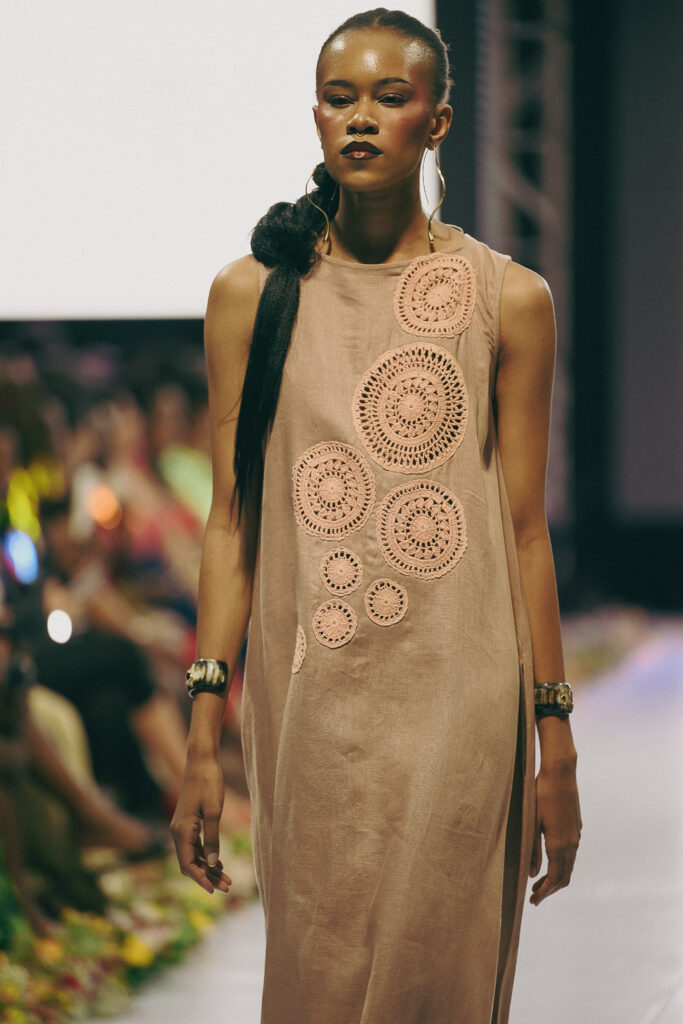
Since its inception, the Nairobi Fashion Week positioned itself as a bridge for emerging East African designers to meet buyers, stylists, photographers, and international observers who might otherwise never have encountered them. In its early seasons, the ambition was ecosystem-building, to prove that Nairobi possessed not only talent but also infrastructure, an audience, and an appetite. It succeeded. Over successive editions, the event expanded in scale and conviction, onboarding more than 100 designers and steadily reshaping Nairobi’s reputation from a commercial hub to a creative capital. But scale is not what defines its current chapter. Purpose is.
As global fashion grapples with overproduction, exploitative labour systems, and environmental collapse, Nairobi Fashion Week leaned into a counter-narrative. Sustainability at the event was not an afterthought stitched onto a press release; it is the thematic spine. The 2025 edition signalled the paradigm shift, foregrounding regenerative practices and circular design. Now in 2026, the language sharpened. If fashion elsewhere treats sustainability as a buzzword, earthy palette, artisanal textures, and pastoral imagery, this year, Nairobi treated it as systems thinking. Panels interrogated supply chains. Designers spoke not only about silhouettes, but about fabric sourcing, fabric waste, and the dignity of hard labour. Buyers present at the event were encouraged to think long-term. New ideas about consumption itself were also raised.
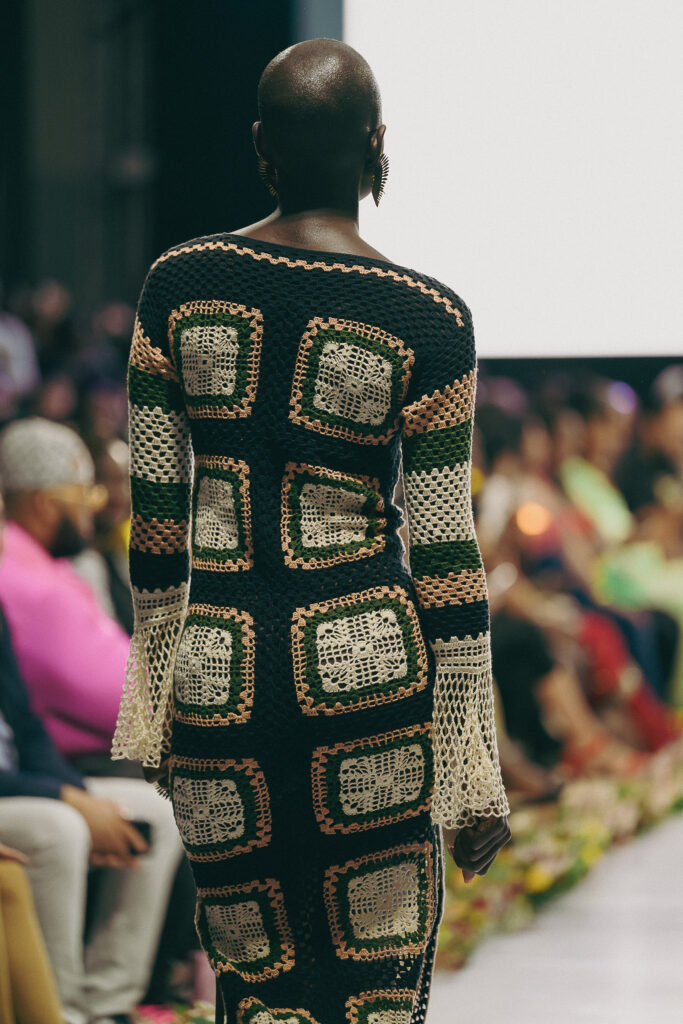
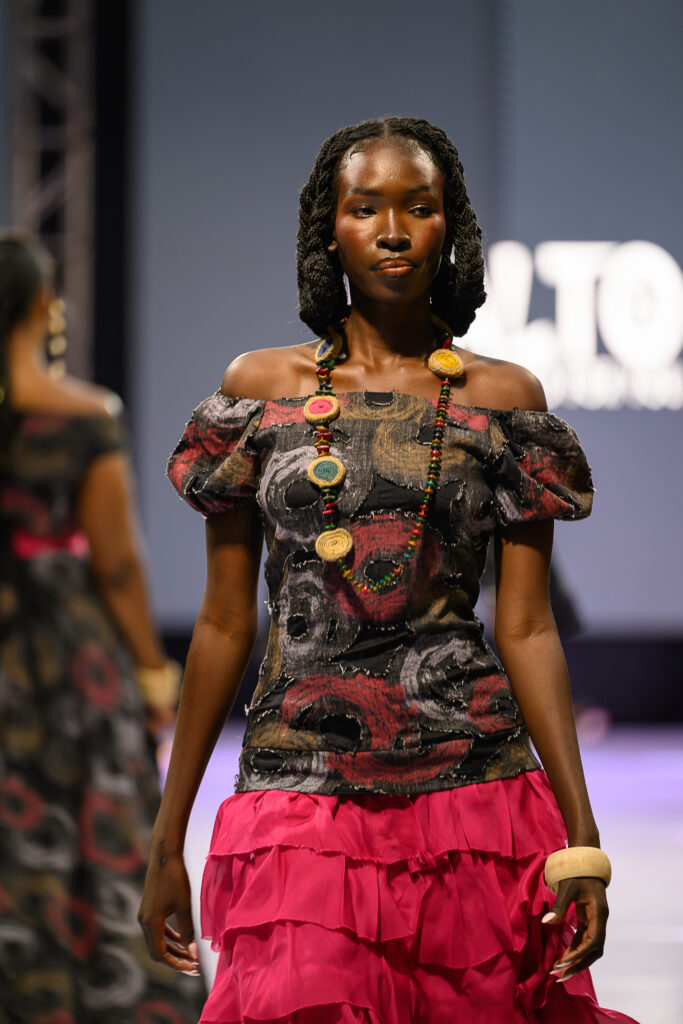
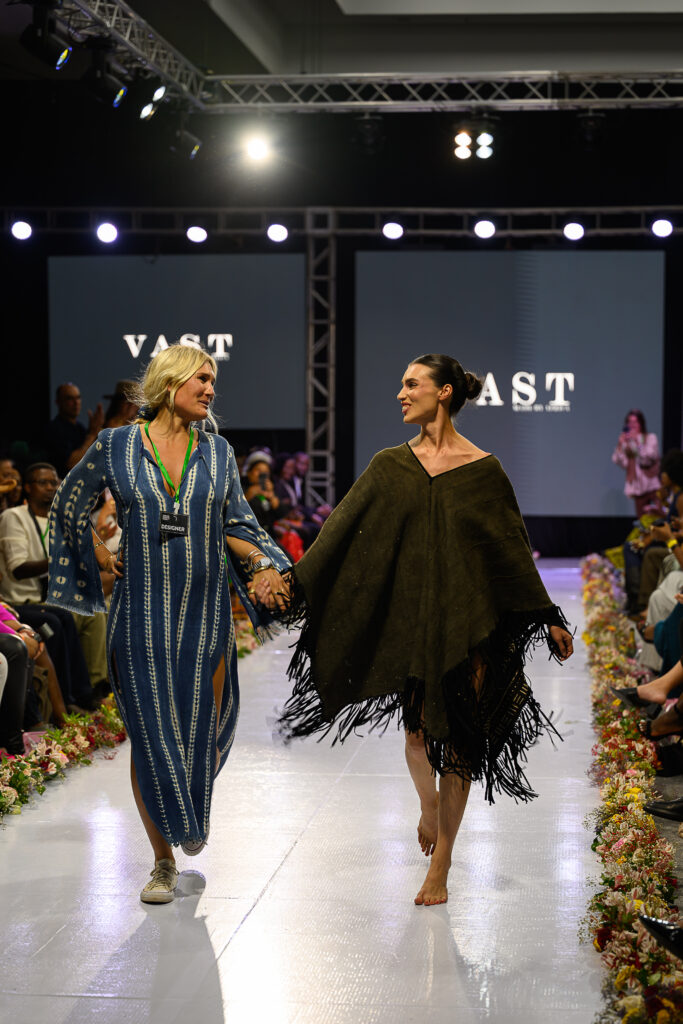
On the runway, the ideology translated into work that felt tactile and intentional. Maisha by Nisria extended her practice of upcycling into sharper, more architectural forms, transforming discarded textiles into garments that carried visible histories. Patchworks were not decorative; they were arguments against waste. Elsewhere, menswear designer John Kaveke designed tailoring that fused heritage motifs with contemporary precision, giving evidence that sustainability does not require aesthetic compromise. The collections varied in language, but shared a common refusal to detach beauty from responsibility. What also distinguished the 2026 edition was its refusal to frame Africa as peripheral to the sustainability conversation. Too often, the continent is cast either as a source of raw materials or as a site of extraction and manufacturing. Nairobi’s runway inverted that gaze. Designers from Kenya, Nigeria, Europe, South Asia, and the United States converged not to discover Africa, but to participate in a dialogue already created. The message was subtle, but firm: the future of ethical fashion will be negotiated in places like Nairobi.
There is also an economic pragmatism at work. For many African designers, sustainability is about survival. Working with limited access to imported fabrics and industrial manufacturing, creatives have long relied on small batch production, local artisanship, and resourcefulness. What the global North is rebranding as circular fashion has, in many communities, been an embedded practice for generations. Nairobi Fashion Week’s recent editions simply articulate this reality in contemporary terms, aligning tradition with policy advocacy and international discourse.
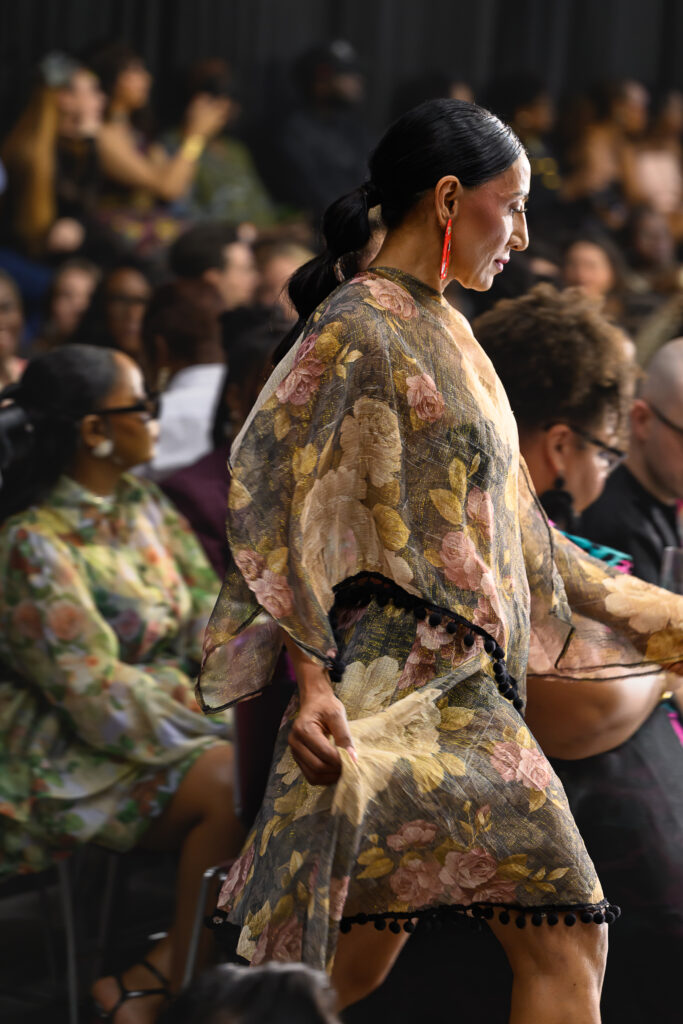
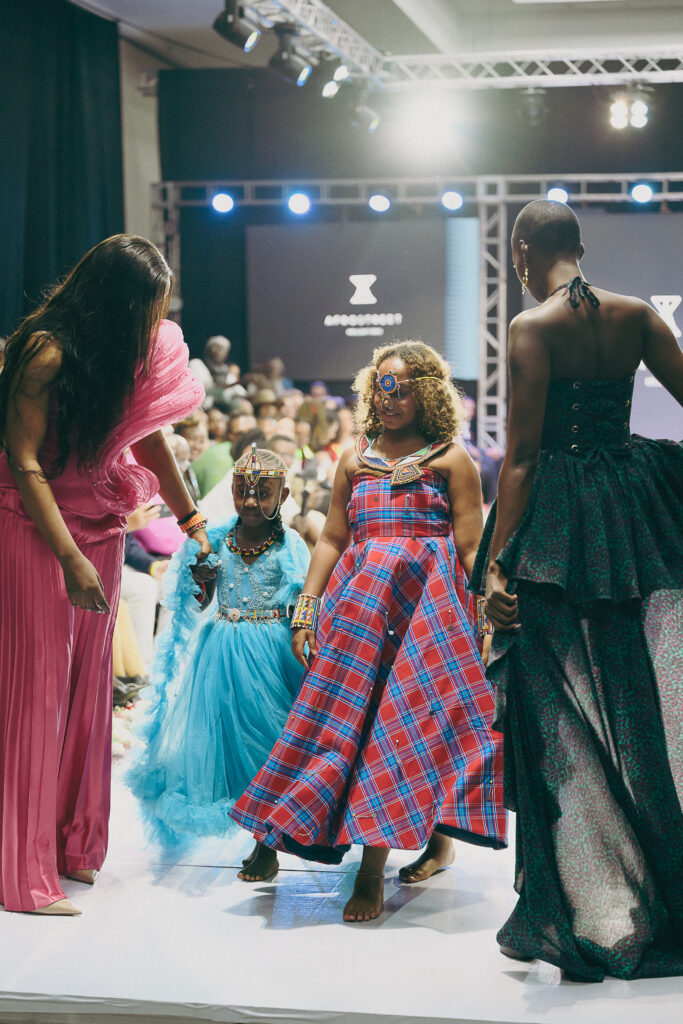
For our reader attuned to the interplay between photography, culture, politics, and aesthetics, Nairobi Fashion Week offers a compelling case study in how regional platforms can shape global conversations. It demonstrates that fashion weeks need not be spectacles of excess; they can be sites of inquiry. They can incubate designers and interrogate the systems that those designers inherit. As the lights dimmed on the 2026 season, what lingered was not a single viral look or celebrity cameo, but a mood, thoughtful, urgent, and self-assured. Nairobi is not asking for a seat at the table. It is building its own, and inviting the world to reconsider how fashion is made, who it serves, and what it costs.