
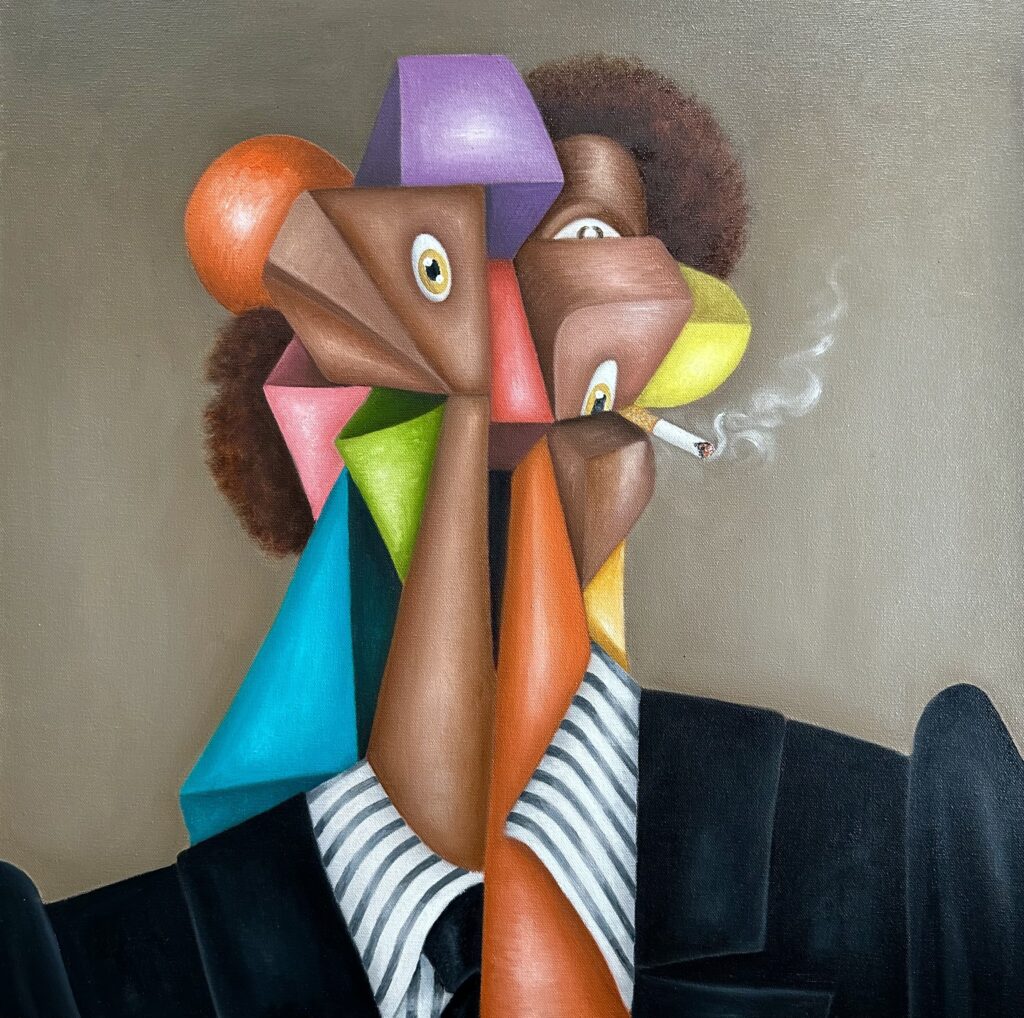
With all due respect, art should resist the idea of flawlessness, yet Tariq Oliver’s work comes arguably and remarkably close to that threshold. The precision of his lines suggests a striking level of confidence. They appear deliberate, almost resolved in a single gesture, giving the impression of a fine artist who trusts the ideological form as it emerges. There is little visible evidence of correction or hesitation; instead, the surface feels controlled, composed, cool and calm. Whether or not his artistic process itself involves some sort of self-doubt, the final image does not say that to us; instead, it presents a clarity that reads as decisiveness, time and time again. The pull to his work is immediate and difficult to rationalise: you encounter the painting and feel compelled, almost instinctively, to live with it, to take it home. Many collectors who are pushed to collect, including us, cannot fully articulate why; the work seems to operate before language, before logic. So, to call him singular is not an exaggeration. What situates Tariq Oliver firmly within the confines of contemporary painting is not timing alone, nor simply the precision of his line or control of the canvas surface, but the way his figures engage urgent questions and conversations around Black identity, perception, social roles, and the instability of representation. His subjects are not fixed portraits but negotiated presences, shaped as much by internal consciousness as by external expectation.
While his visual language draws from traditions such as Cubism and, to some extent, caricature, he moves the goal post. Distortion becomes a critical tool, not a stylistic gesture. The work asks: who is granted clarity, and who is rendered through fragmentation? Who controls the gaze? Each painting operates as a psychological ambigram of identity, not meant to be read in a single direction, but to hold multiple, sometimes conflicting truths at once. In that tension, fueled by sharp colours, the work refuses resolution, and it is precisely this refusal that gives it overwhelming force.
In this exclusive conversation, Tariq speaks about painting in terms closer to memory than representation: something layered, shifting, and unresolved. His figures begin less as portraits than as emotional containers, where, in his own words, fragmentation becomes a language for holding multiple states at once. While the work originates in personal experience, he resists fixing it there, instead opening it outward so viewers can locate themselves inside.
Having lived between Lagos, London, and Madrid, the notion of being “in between” emerges not as geography but as an internal condition. Identity, in his work, is fluid, never singular, never fully resolved. His approach to material reflects this sensitivity: rather than forcing the image, he responds to what each medium allows, whether the immediacy of acrylic or the slower, more reflective pace of oil. The paintings do not instruct or resolve. They hold tension. And within that space, recognition, not shock, becomes the most enduring gesture: the possibility of seeing oneself, fully and without simplification.
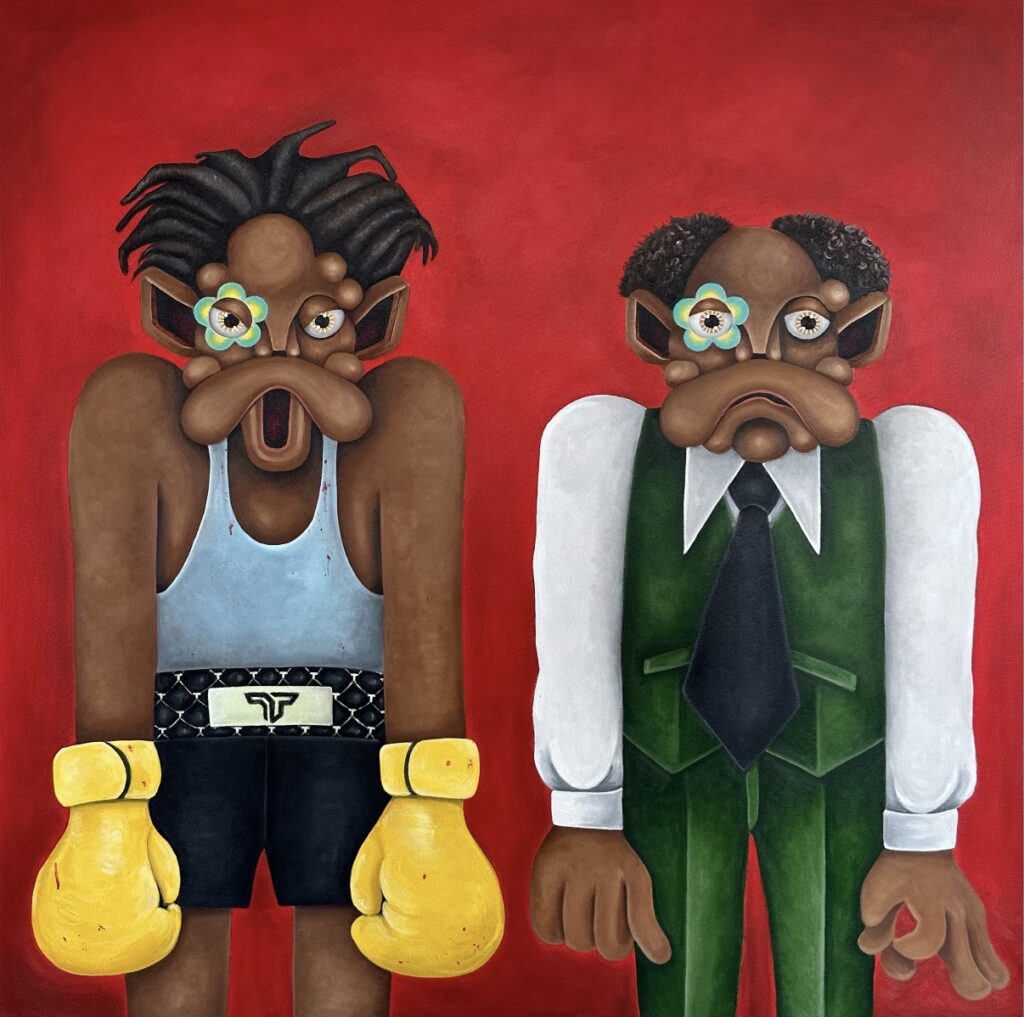
Your paintings feel both symbolic and deeply personal. Are these characters rooted in lived experience, or are they constructed as universal avatars navigating systemic roles? Take, for example, In Between States I, there’s a palpable sense of emotional suspension, as though the figures are caught between memory and becoming. When you were building this body of work, were you trying to document a specific personal transition, or were you more interested in creating a universal emotional condition that viewers could project themselves into?
Yes, it’s a bit of both, I’d say. The work usually starts from something personal, a feeling, a moment, but I’m not trying to keep it tied just to me. I want it to open so other people can step into it in their own way. With Between States I, I wasn’t really thinking about transition as much as I was trying to capture the layers in our emotions, how we can hold multiple feelings at once. The fragmentation in the figures, kind of leaning into a cubist language, was just my way of showing that… that sense of emotional multiplicity. So, it comes from a real place, but I’m less interested in documenting something literally and more in creating a space where people can find their own meaning in it.
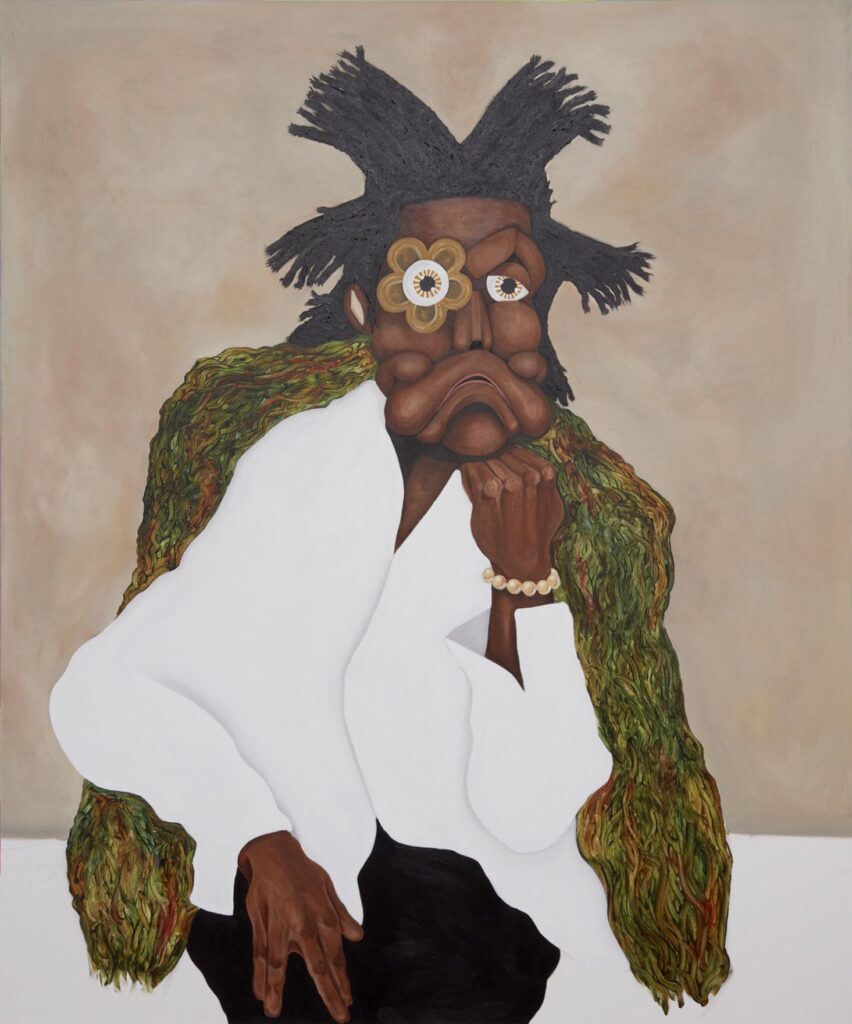
Your practice often transforms trauma, loss, and psychological tension into something visually tender, almost beautiful. How do you decide where beauty should remain in a work about pain, when does softness become necessary, and when does it risk diluting the truth of the experience? I mean, your own writing speaks about “the ongoing accumulation of trauma” and the way precious memories remain as treasures within suffering.
I think earlier on, I was more focused on trying to process certain experiences; it was a bit more intense, maybe more direct. Now it feels a lot more open. The experiences we move through change over time, and I’m still interested in how we carry emotions, how they shift, overlap, and sit in the body over time. And I think there’s something beautiful in that… just holding multiple emotions at once. It’s not about softening anything; it’s just more honest to me. We’re never feeling one thing in isolation. So, the work now is less about confronting something specific and more about creating space for that complexity, the tension, the quieter moments, all of it. And honestly, I had a professional writer help draft parts of the bio, so some of the wording might sound a bit more complex than how I’d naturally say it lol, but the core of it is true to the work
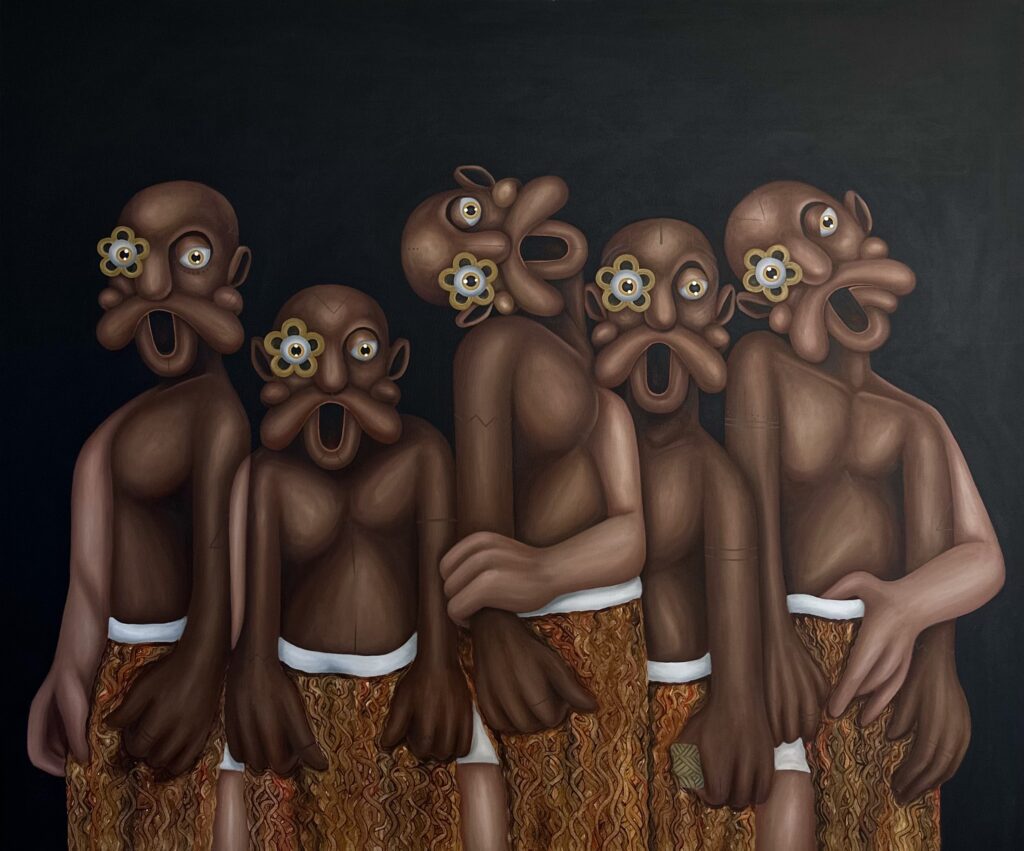
Having lived in Lagos, London, and Madrid, your work seems to carry the emotional architecture of displacement, of never fully belonging to one place. In this exhibition, how much does “between states” refer to geography, and how much does it refer to identity itself?
Yes, geography plays a role, moving between different places shapes how you see the world, but for me, it’s less about a specific location and more about identity. That feeling of being ‘in between’ isn’t just physical, it’s internal. In this body of work, I was more focused on the human experience itself, the emotional and psychological side of it. The different tones in the figures are intentional, but not in a fixed way. It’s more about placing different races within the same emotional space, just as humans. So ‘between states’ becomes less about where you are, and more about how you exist, emotionally, mentally, even spiritually at times. That space where things aren’t fixed, where identity is shifting, layered, and not easily defined.
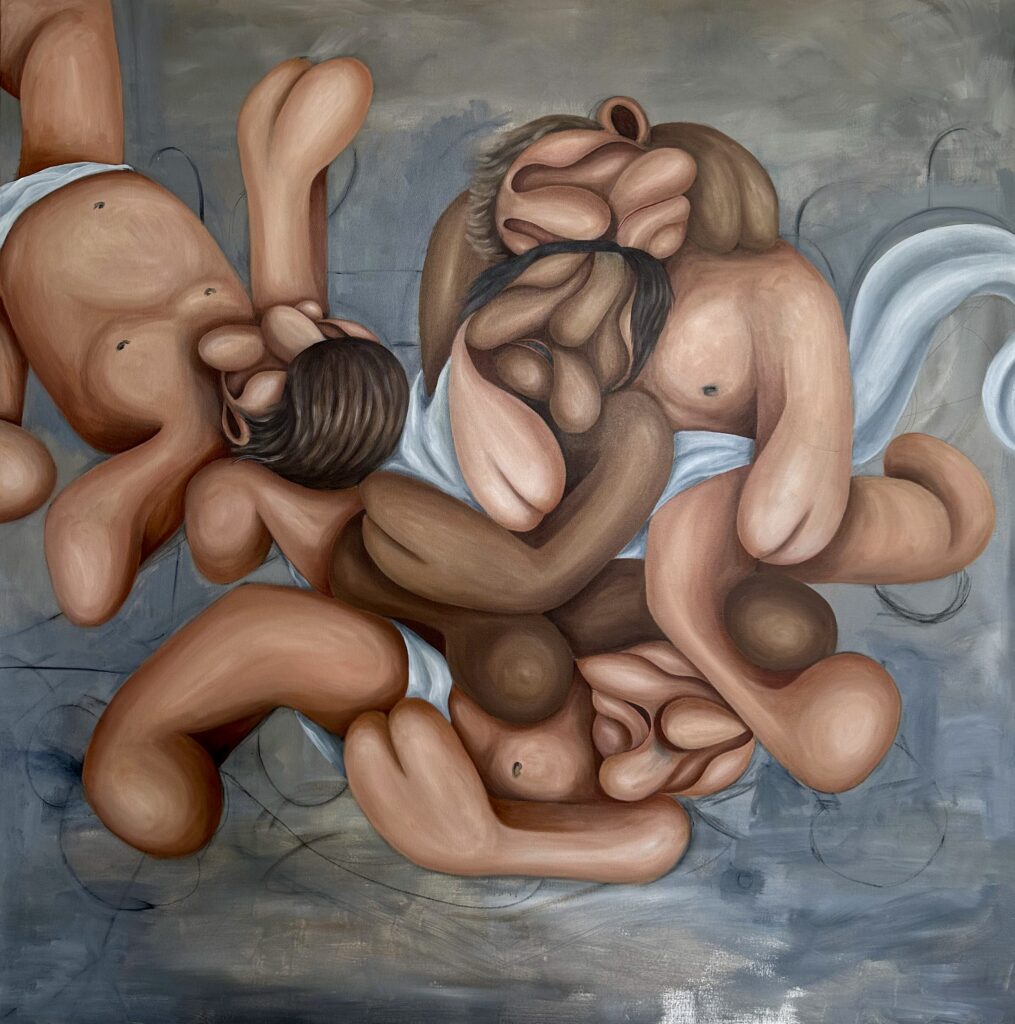
Your figures often feel psychologically exposed rather than represented; they seem less like portraits and more like internal landscapes. When you begin a painting, are you painting a person, a memory, or a feeling first?
It can be both, to be honest. Sometimes it starts from someone I know, but I’m not really painting them as a person; it’s more how I perceive their emotional landscape, how they carry themselves internally. But more often than not, it starts from a feeling. I’ll have a certain emotional state in mind, and the figure kind of forms around that. It’s less about capturing someone and more about giving shape to something internal. So, the figure becomes a way to hold that feeling, almost like a container for it, rather than a portrait.
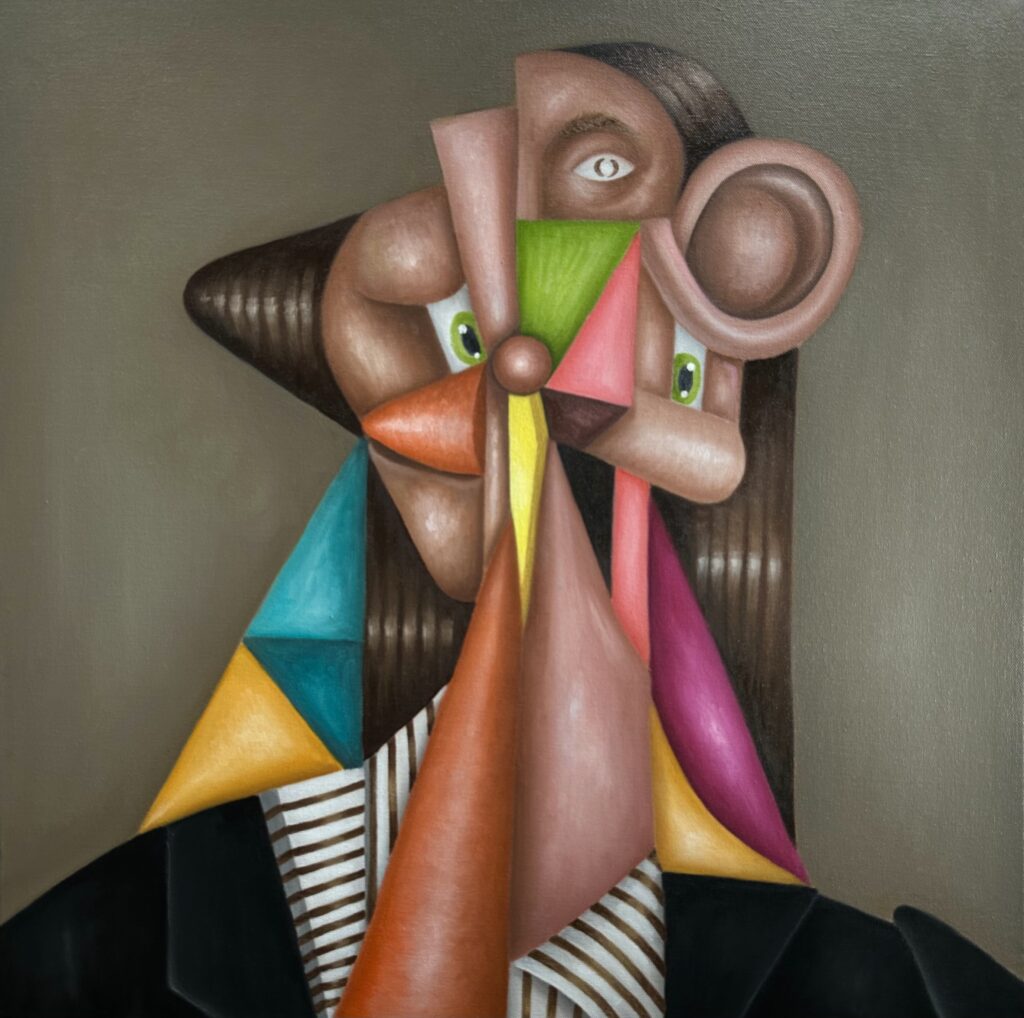
You work across acrylic, oil pastels, charcoal, colour pencil, and oil pigment sticks, and that layering creates a kind of friction on the surface. Do you think material resistance is important to your process? Does the physical struggle of making the image help you arrive at emotional honesty?
To be honest, I wouldn’t describe it as a struggle in that dramatic sense. For me, it’s more about responding to the material and working with what’s in front of me. Earlier on, I used acrylic a lot, partly because of accessibility and how quickly it dries. Lately, I’ve been working more with oil, which has opened a different pace and depth for me. Each material carries its own energy. Acrylic can feel immediate and sharp, whereas oil allows more time to sit with an image, move things around, and let emotions unfold gradually. So, I wouldn’t say resistance is the goal, but the nature of the material influences the feeling of the work. Sometimes what a material allows or doesn’t allow can lead you somewhere more honest.
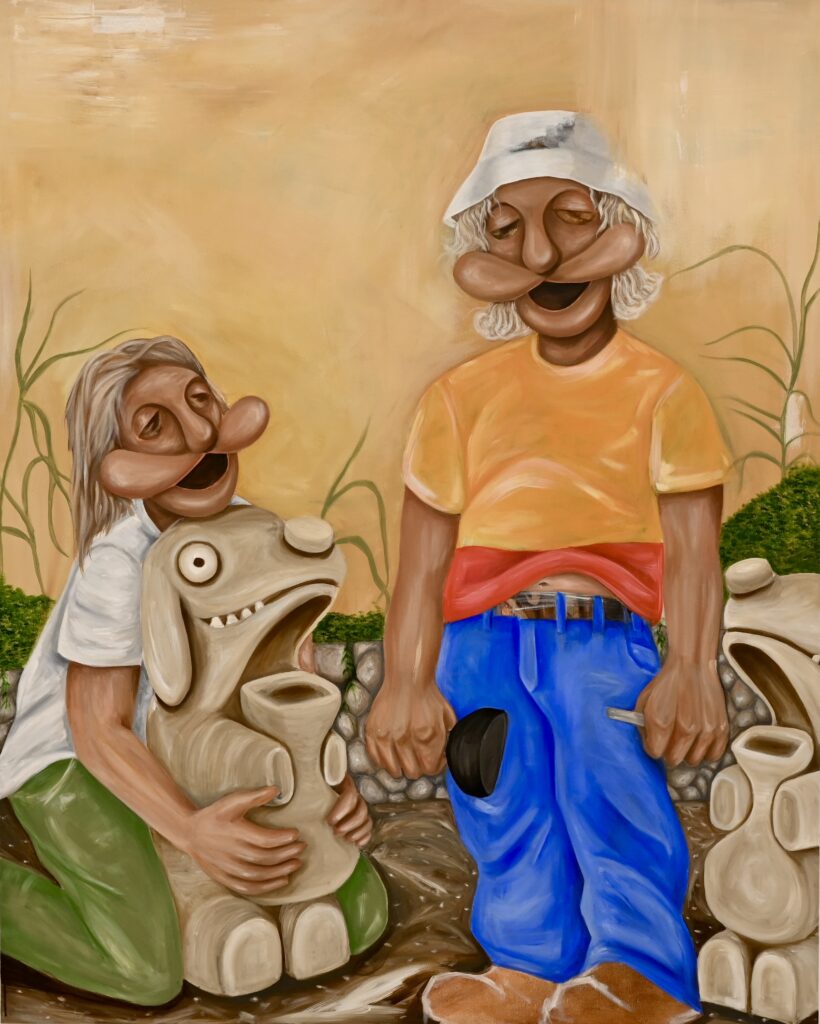
There is a recurring tension in your work between intimacy and confrontation: the viewer feels invited in, but also implicated. Do you see your paintings as acts of witnessing, accusation, or confession, or do they deliberately resist being fixed to one moral position?
I think they deliberately resist being fixed to one position. I’m not trying to make paintings that tell people exactly what to feel or how to read them. Life is rarely that clear, and I think the work should hold that same complexity. Sometimes a painting can feel like witnessing, just observing something honestly. Other times, it might feel more confessional because there’s always something of me in the work. And for some viewers, it may feel confronting, depending on what they bring to it. The colour plays a big part in that tension. Bright or sharp colours can draw you in, almost seduce you visually, but then the emotion underneath might be more uneasy or layered. I like that push and pull. So, for me, it’s less about accusation or morality and more about creating a space where different emotional truths can exist at once.
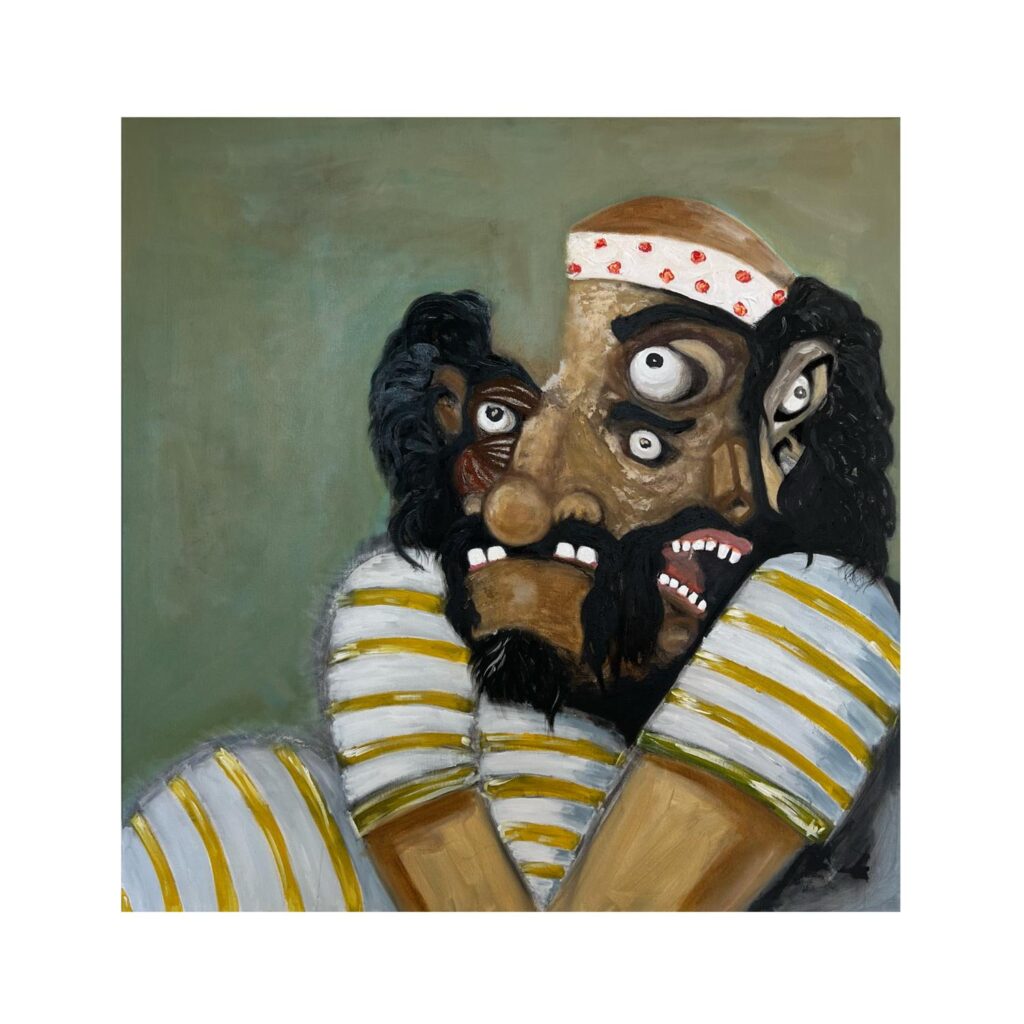
Your work challenges complacency with the cruelty of the world, but it also refuses hopelessness. When you think about the afterlife of a painting, after it leaves your studio and enters someone else’s home or collection, what do you hope lingers most: discomfort, recognition, or the possibility of healing?
For me, it’s more about recognition than discomfort. Discomfort can be part of it, but only if it leads somewhere deeper. I’m not interested in shocking people for the sake of it. When a painting leaves the studio, I hope it continues to live with someone in a personal way. Maybe they see something of themselves in it, or it speaks to a feeling they didn’t quite have words for. Even if their relationship to it changes over time, I like the idea of the work staying open like that. And I think there can be healing in recognition. Sometimes just feeling seen, or seeing your own complexity reflected to you, can be enough. So, if anything lingers, I’d hope it’s that sense of connection.