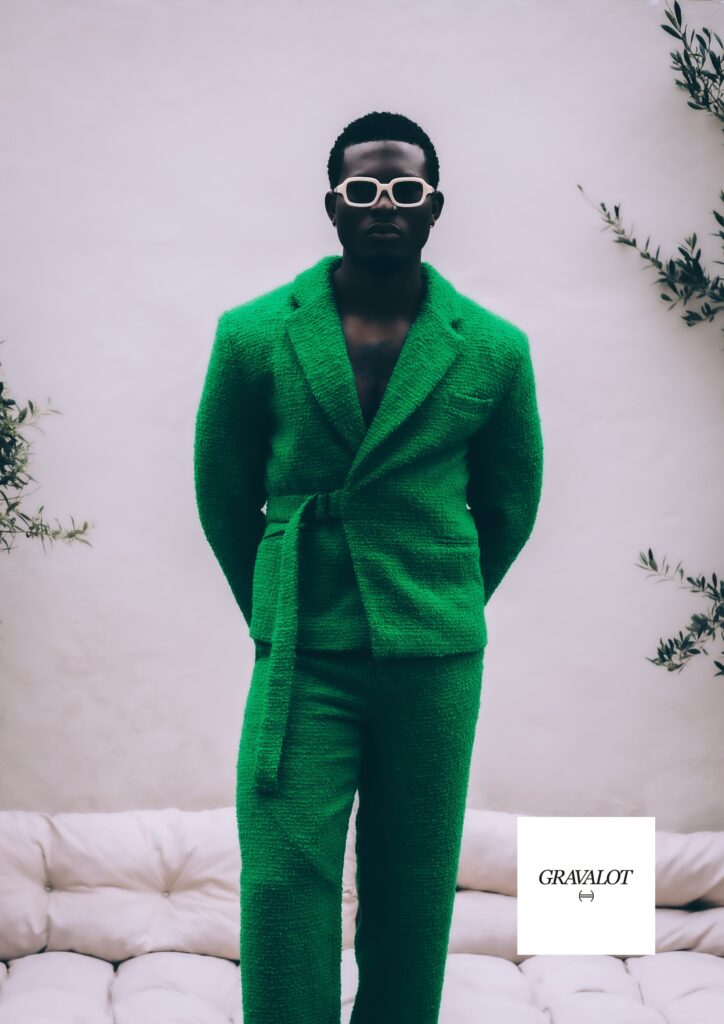
Gravalot is an Afro-contemporary fashion house built on the belief that clothing can carry memory, philosophy and intention. Founded in London by Onye Anuna and Prince Comrie, the brand moves with a quiet certainty, crafting garments that sit at the intersection of heritage and futurity. Their work draws deeply from African histories and diasporic movements, yet it resists nostalgia. Instead, Gravalot treats tradition as a living organism, something that grows, adapts and contributes to a wider conversation about culture and selfhood. What makes Gravalot distinct is its devotion to craft. The brand works through small production runs, guided by a model that values precision and limits waste. Onye and Comrie choose their fabrics with care and often source them close to the places that inspire each collection. Natural fibres, hand dyeing, and region-based weaving often shape their materials. This focus is not an aesthetic gesture but a commitment to dignity in labour and responsibility to the environment. Gravalot’s pieces carry the quiet insistence that what we wear should reflect both personal and communal values.
Gravalot collections often emerge from research into local histories and the tension between memory and myth. The line titled Beware of Natives, for instance, was produced in Nigeria and built from locally woven fabrics and traditional textile practices. Other collections have travelled through military silhouettes, embroidered symbolism and sculptural tailoring, revealing how Gravalot uses form to question the narratives we inherit. The clothes are not just patterns and cuts. They are small essays on identity. Gravalot has shown at fashion weeks across London and Paris, steadily building a presence that feels both global and rooted. Their work has been presented in intimate spaces and larger international platforms, yet the brand continues to speak in a focused voice. Even as they expand into markets such as Japan and explore new technologies through projects like Pleatt, the core of Gravalot remains unchanged. They build slowly. They study deeply. They move with intention. In a fashion landscape driven by churn and spectacle, Gravalot offers an alternative rhythm. Theirs is a world where garments hold stories, where craft is a form of resistance, where culture is a source of innovation rather than a trend to be mined. Wearing Gravalot is less about decoration and more about alignment with a philosophy. It is a reminder that style can be rooted, that design can be thoughtful, and that fashion can speak with clarity when it is made with purpose.