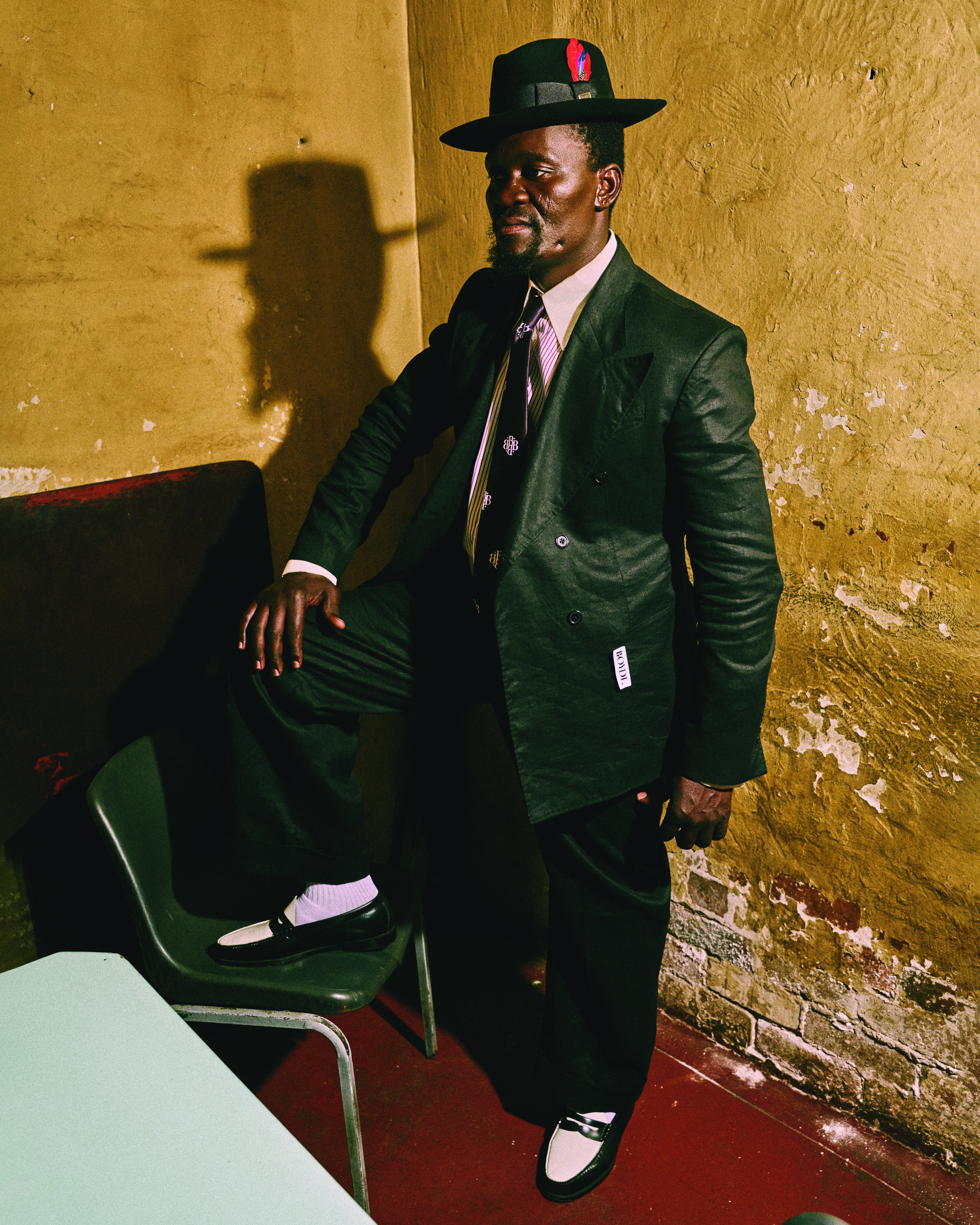
What separates BOYDE from most male-centred fashion houses is the intellectual architecture behind the clothes. The masculinity they propose is not projected outward but held inward: composed, controlled, and self-sufficient. Most male-focused tailors revolve around identity signals, status, masculinity, and subculture. Boyde, founded by Samkelo Boyde Xaba, cuts differently. Each collection is anchored in conceptual frameworks, architecture, politics, and spatial control. For example, one collection studies apartheid-era hostels and turns them into form, structure, and silhouette. So the clothing isn’t just expressive, it’s analytical, speaking mostly through craftsmanship.
There’s a tendency in menswear to confuse presence with volume, to believe that to be seen, a garment must impose. Big logos, exaggerated silhouettes, and references multiply until the wearer becomes an advert or prisoner of fashion rather than a subject in space. Boyde asks that men do it differently: that fashion authority, when properly constructed, does not need to announce itself.
For Spring/Summer 2026, Boyde turns to the legacy of South Africa’s Swenkas, Zulu men who transformed fashion into an act of dignity, pride, and resistance. Titled Afrosartorialism, the collection reframes tailoring as both cultural memory and contemporary expression, merging African identity with refined, global design language. Rooted in the lived histories of migrant workers under apartheid, the Swenkas used dress, performance, and competition to assert self-worth against systemic hardship. Boyde transports this ethos forward through constructed suits, hand-developed textiles, and a commitment to sustainability, positioning clothing as both structure and storytelling. Presented through film and imagery shot in historically significant spaces, with former Swenkas themselves, the collection resists nostalgia in favour of preservation. Here, fashion becomes a quiet but deliberate articulation of resilience, identity, and presence

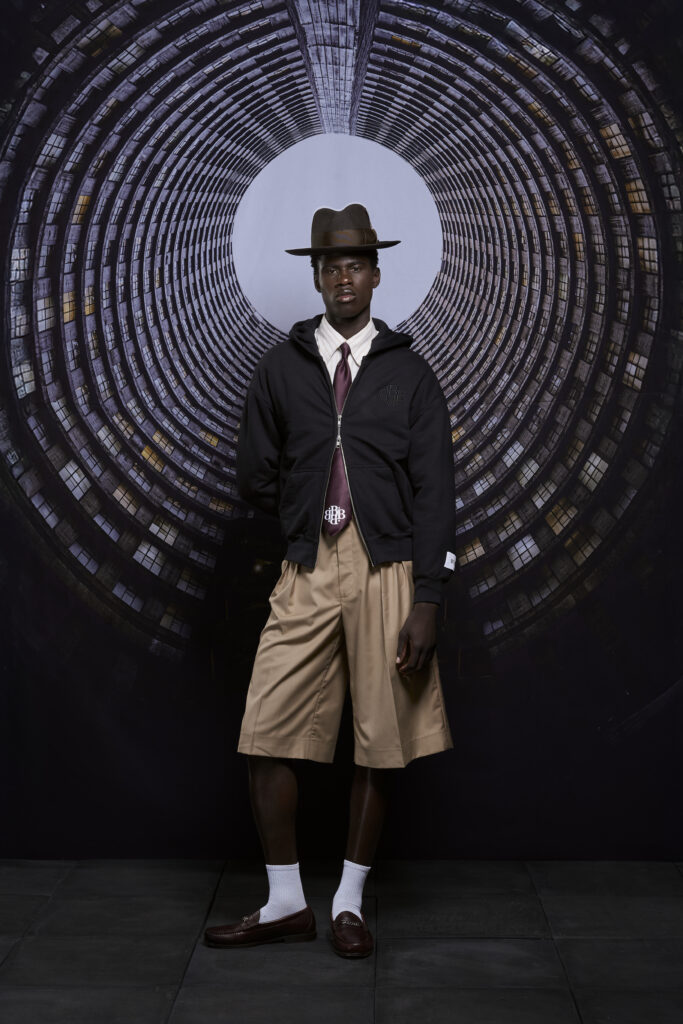

Boyde also ignores the language of trends, subculture, and nostalgia, and instead builds from something more exacting. The clothes look like forms that have been considered, reduced, and clarified until nothing extraneous remains; it is minimalism as a discipline. What distinguishes the brand is its logic. Architectural sensibility is at play, not in the superficial sense of bespoke tailoring or clean lines, but in the way each piece negotiates balance and containment. The body is not decorated; it is housed. The materials become a medium through which space is organised, tension is distributed, and proportion is made legible. In this sense, the clothes do not sit on the wearer; they organise how the wearer occupies the world at large. That organisation extends beyond form into thought. Where many male-centred brands construct identity through overt cues, heritage references, street codes, or declarations of masculinity, Boyde operates through omission. It removes the need for performance.
Boyde does not rely on pattern, colour, or immediate cultural markers to locate itself. Instead, its references are embedded at the level of structure and concept, absorbed rather than displayed. This makes the work harder to categorise, but also more enduring. It avoids the trap of representation and moves toward something more rigorous: interpretation and global exportation.