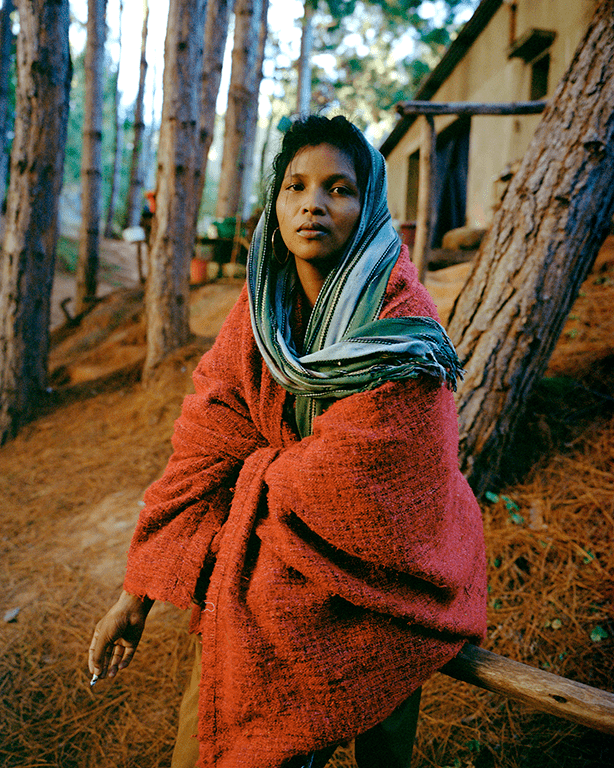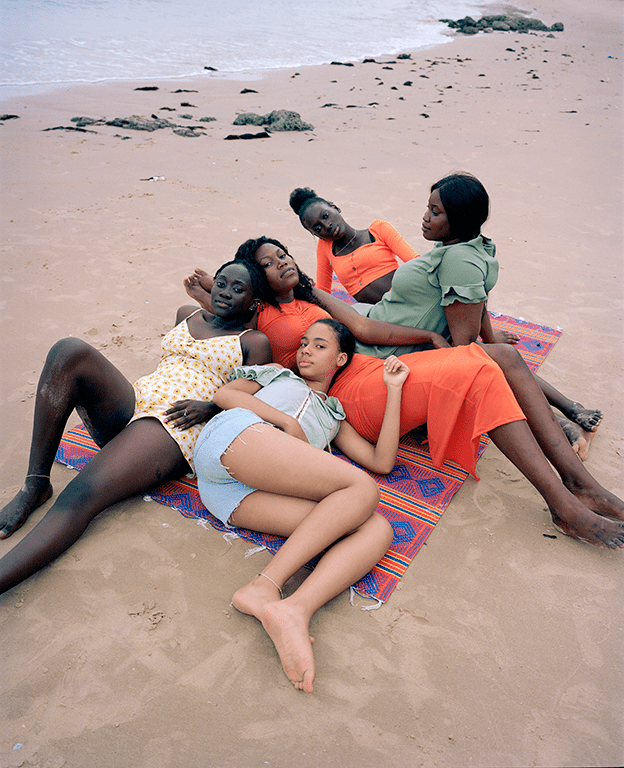
Everyone thinks that by now, we should already be at the printers, preparing to send the new issue into the world. But summer has a way of interrupting even the most carefully imagined timelines. The holidays arrived, and with them came the annual rhythm of photography festivals like Arles, exhibitions, prizes, and discoveries, each revealing new artists and new ways of seeing. Somewhere within that summer constellation, a few photographers quietly entered our field of vision. One of them was the extraordinary Charlotte Yonga, a French-Cameroonian artist whose work came to our attention when she was presented as part of the 2026 Discovery Award of the Louis Roederer Foundation by Fondation H, Antananarivo, Madagascar.
There is something beautiful about the way photography finds us sometimes. Not through a deliberate search, but almost by accident, through another exhibition, another image, another pair of eyes that suddenly asks us to look again. Charlotte Yonga was one of those encounters. Her work stayed with us. Her photographs carried a particular intimacy, a quiet intelligence, and a way of holding people and places that felt both deeply personal and expansive. The more we looked, the more curious we became about the person behind the lens. And so, rather than simply watching from a distance, we began a conversation with Charlotte, the artist, and somewhere between the photographs, the questions, and the exchange that followed, a new possibility for how the new issue of Random Photo Journal began to take shape.
Photography, much like memory, asks for a certain kind of patience. The most meaningful reflections often arrive only when there is enough peace to allow them to surface. And so this Journal Project itself was not without its difficulties. When we got to her, Charlotte had been caught in the beautiful chaos of summer, surrounded by family, movement, and the many small demands that come with being present in the lives of those around you. She needed a moment to step away from the noise, to sit with the questions, return to her catalogue, and consider what she wanted to share. In waiting, the conversation became less about extracting answers and more about giving the artist the space to speak in her own time, with the care and thoughtfulness that her work deserves.
Much like us, Charlotte’s practice is rooted in questions of identity, displacement, and belonging, with particular attention to the ways North–South relationships shape how people are seen, represented, and understood. Working through photography and drawing, she considers the body as both a site of vulnerability and strength, and as a living archive through which personal and collective stories can be told. Since 2021, her research has increasingly focused on personal intimacy, interpersonal relationships, and emotion, exploring these not simply as subjects, but as embodied forms of social resistance and liberation. Her approach carries a strong sense of dramaturgy, allowing bodies, gestures, and relationships to become third spaces where memory, identity, and lived experience unfold. A graduate of ENSAPC, she has exhibited her work internationally at Paris Photo, Art-O-Rama, Landskrona Photo, Vogue, and LagosPhoto. Working with friends, family, and people from her immediate surroundings, the artist constructs scenes that draw from the language of family photographs, popular stories, and everyday life. There is a careful negotiation with local ideas of modesty and what can be shown, but within those boundaries, the images make room for something more private: desire, intimacy, uncertainty, and the quiet theatre of becoming.
Could you share a little about how you found your way to photography, what started the journey for you, and how you were able to acquire your first camera?
I studied for five years at the École Nationale Supérieure d’Arts de Paris-Cergy (ENSAPC), from 2005 to 2010, where I experimented with many different media: photography and video, but also sculpture, installation and performance. I found a lot of joy in exploring all these different forms. But I felt particularly at ease in the photography class. I also had difficulty concentrating and staying in one place in the studios available to students, so photography became a way for me to go out into the world, to encounter people and explore unfamiliar environments that I might not otherwise have dared to enter without a project.
What really made me want to pursue photography was a series of portraits I made in different foreign bars and restaurants in Paris. I discovered these places almost as microclimates, each with a very strong visual identity. I started in a Cameroonian restaurant my father used to go to, then photographed in a Tunisian bar and a Pakistani restaurant. I presented this work for my third-year diploma and received a distinction, which really encouraged me to continue. I bought my first medium-format camera, a Hasselblad, at a well-known photography fair near Paris. I was lucky enough to meet “Les Victors,” the small team who were responsible for Hasselblad’s after-sales service in France. They were absolutely wonderful. They generously assembled a custom camera for me using the best parts they could find across the different stands, while looking for the fairest and most affordable price. I will always be grateful to them for that beautiful first camera.
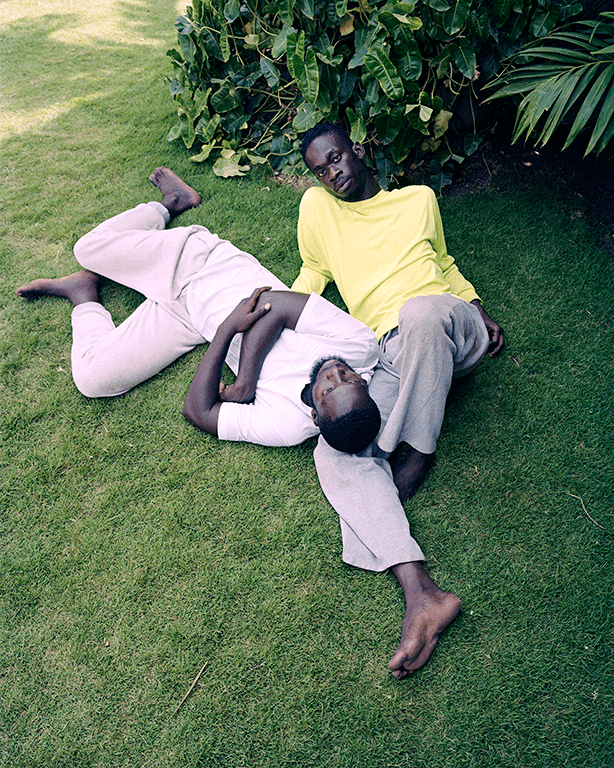
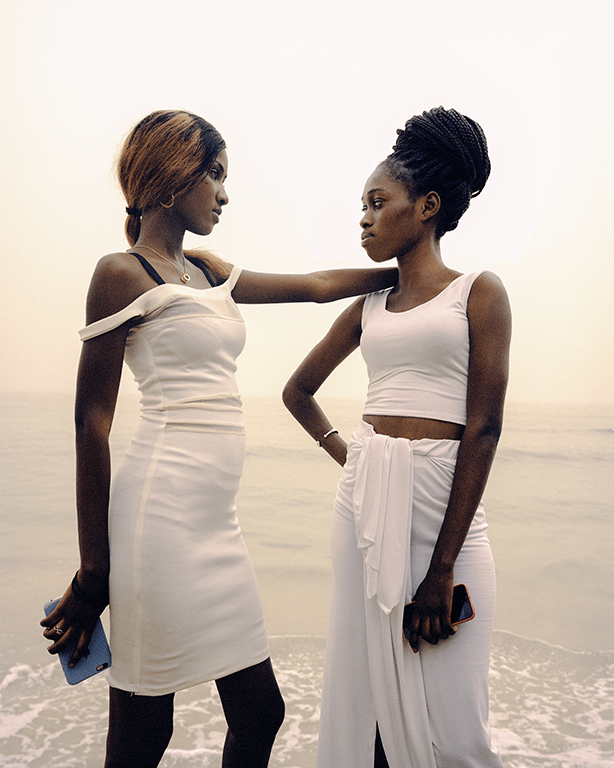
Your work sits at the intersection between documentary and fiction. Do you believe photography is more truthful when it acknowledges its own construction, rather than claiming objectivity?
I do think that photography is not necessarily a guarantee of truth. A photographer makes many choices, whether conscious or not, when taking a photograph, and each of them shapes our perception of a scene, an event or a person. Framing, focus, colour or black and white, as well as the exact moment the shutter is released, create something that is closer to a vision than to a truth. I feel that we often expect photography to remain faithful to reality, and that we are particularly attached to its supposed truthfulness, perhaps much more so than in cinema, literature or painting, where we more readily accept fiction, construction and abstraction.
Personally, I am drawn to documentary photographic practices that play with these boundaries and allow themselves creative and inventive openings. Acknowledging that a photograph is constructed does not necessarily take it further away from reality; on the contrary, it can make the point of view from which that reality is being observed more visible.
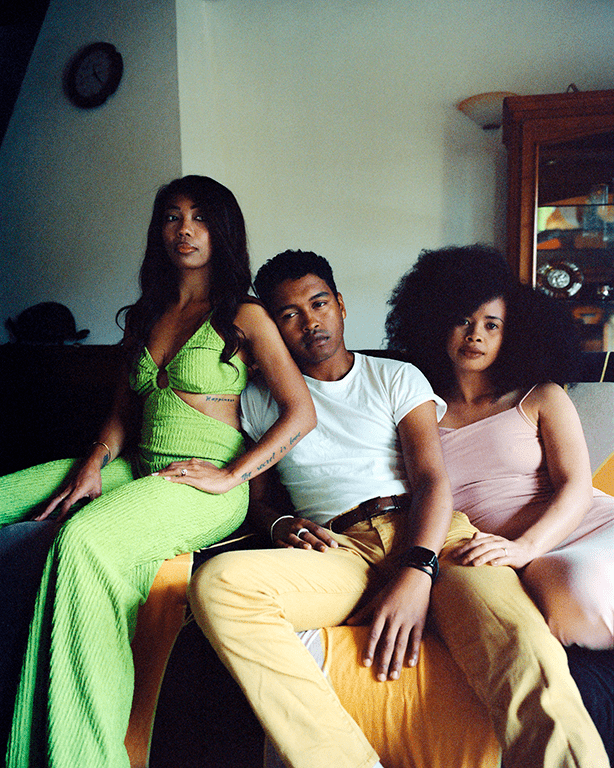
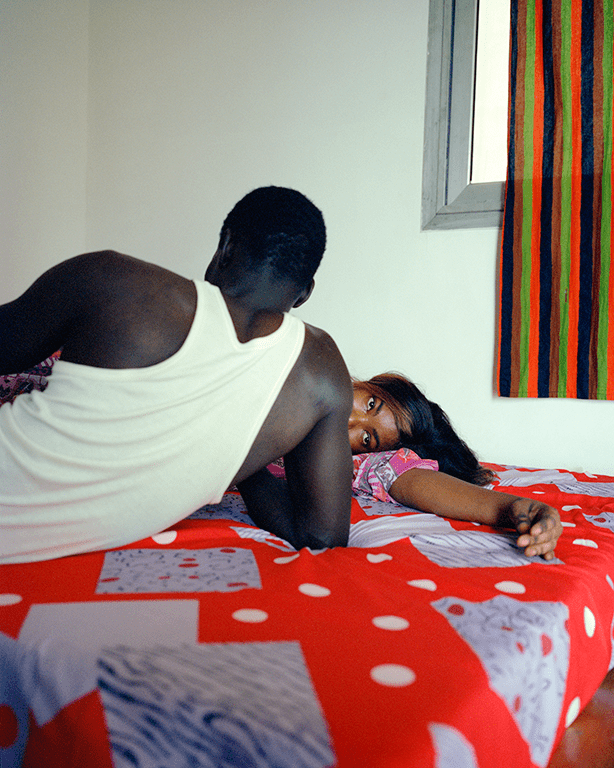
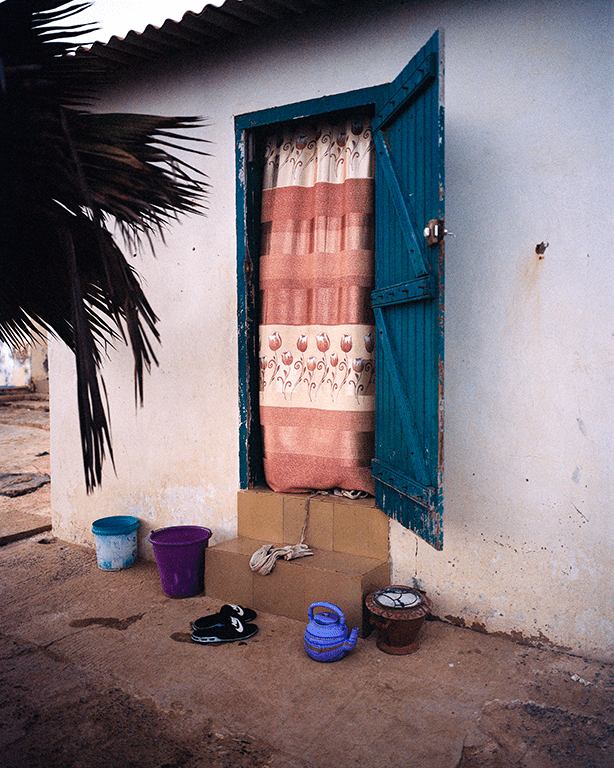
In Naam Na La, love feels less like romance and more like an atmosphere. What visual qualities allow an emotion to exist in a photograph without becoming symbolic or sentimental?
You are right. In Naam Na La, I worked around what evokes love, because photographing love itself seemed impossible to me. So I was interested in reconstructing scenes and visions that could create feelings associated with love: tenderness, mutual support and sisterhood, but also waiting, absence, nostalgia and frustration. The overall tone of the series is very important to me in creating this atmosphere: the colour palette, with soft, often twilight tones and pastel colours, but also images of nature, which can evoke fertility and hope.
I think what interests me visually is a kind of gentle tension. There is something in my photographs that has to do with restraint and the lightest touch. The meaning is never completely given; it is suggested, and can sometimes remain strange or ambiguous. Perhaps it is precisely this open space that allows emotion to exist without becoming overly symbolic or sentimental.
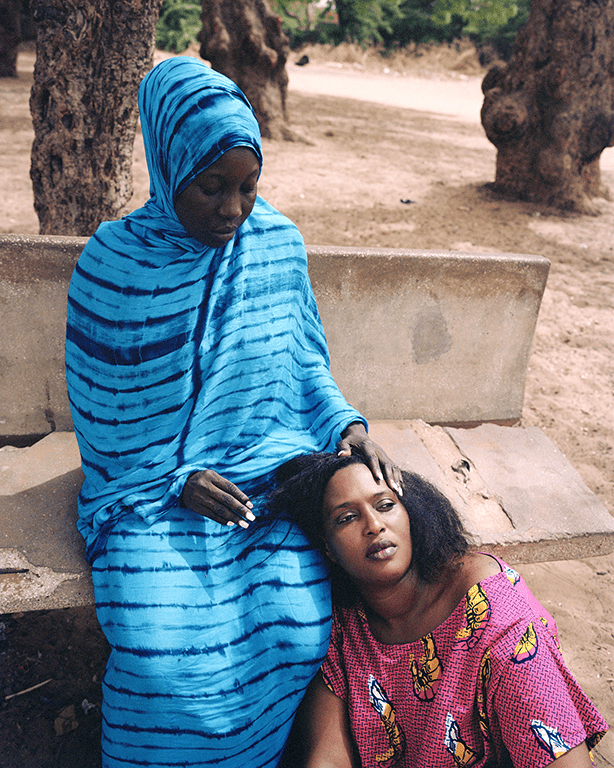
As a Franco-Cameroonian artist working across different geographies, how do you avoid making photographs that simply explain Africa to Europe or Europe to Africa? What responsibilities come with refusing those expectations?
This is a very real question and an important issue for me. As a person of African descent who grew up in Europe, it is something I constantly think about when I choose to photograph on the African continent, knowing, for example, that the project may later be shown in Europe, although fortunately not only there. I often feel tensions around these questions. Photography carries a colonial history: it was used, among other things, to produce and circulate hierarchical representations of non-Western peoples. So the responsibility you mention is very real. But I also believe it is essential that those who have historically been placed in front of the camera can fully appropriate the medium, shift perspectives and produce their own narratives. For me, it is not about pretending that we can escape this history, but rather working from within it, with its contradictions, and trying to open up other spaces of representation.
This awareness also informs the kinds of narratives I try to create. I try to create deliberately unspectacular narratives, avoiding both miserabilism and hyper-aestheticisation. Instead, I am interested in a certain form of ordinariness, in everyday experiences and emotions and in their beauty. I bring a kind of cinematic dramaturgy into this, and I like to make the people I photograph feel iconic while retaining their simplicity. My methodology, however, remains the same with all my subjects, whether I am photographing in Africa, in the West or elsewhere. Of course, I adapt to the people and contexts I encounter, particularly when it comes to intimacy and modesty, which can be expressed very differently from one culture to another. I do not want to place myself in a position where a territory or a person has to be “explained” to another audience.
I embrace a certain sense of uncertainty, ambiguity and ambivalence in my images, and I value the possibility that they can be read differently depending on who is looking at them. I am also aware that the reception of my images will always partly escape me, and that is part of the game.
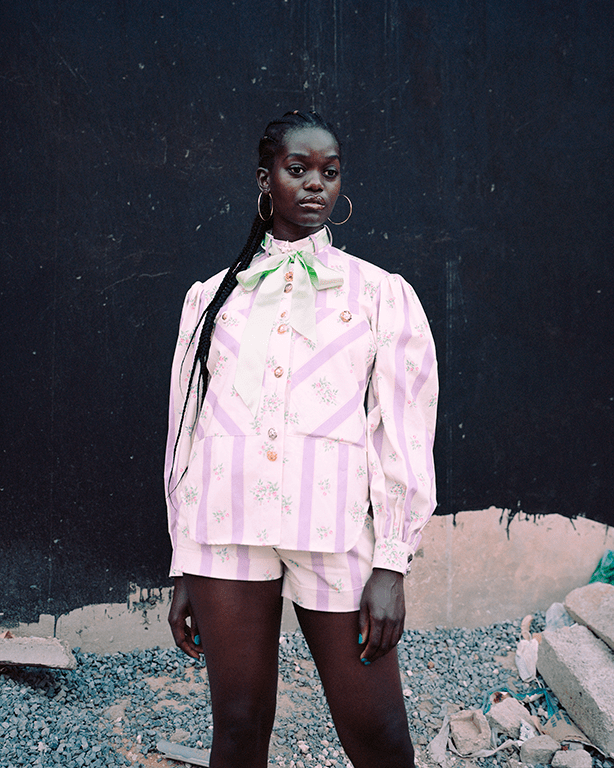
Many of your portraits are collaborative rather than observational. What has sitting with people taught you about representation that couldn’t have been learned through photography alone?
I have been making portraits for about fifteen years now. It is a discipline that is very dear to me, and over time I have realised how difficult it is to make a meaningful image of someone who is not involved in the process, and especially of someone who does not want to be photographed. I see photography as a gift rather than an extraction. When someone agrees to be photographed, they are offering something of their image, which is why collaboration is so important to me. There are zones of comfort, zones of safety, a kind of personal space that needs to be respected. A portrait photographer has to learn to perceive these spaces, even if it is purely instinctive.
When I photograph someone, I suggest things to them, but they also suggest things to me. Through this exchange, we gradually arrive at an image that feels embodied and harmonious. It also requires dedicated time, so that trust, play and pleasure can emerge. Perhaps that is what all these years of portraiture have taught me: representation is never something you create alone.
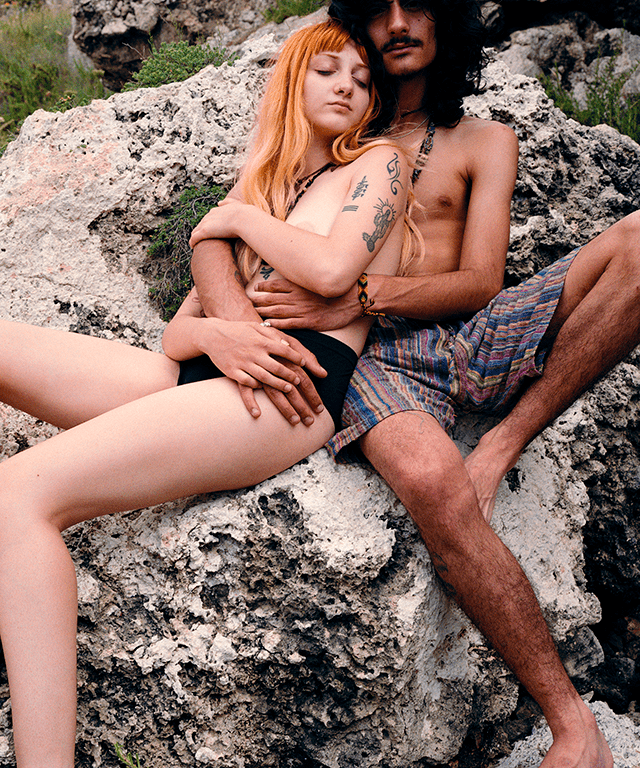
Your images balance tenderness with uncertainty. Do you see vulnerability as something you discover during the photographic process, or something you deliberately create through composition and sequencing?
I think vulnerability exists in all of us. Simply pointing a camera at someone can make them vulnerable, in terms of their posture, their attitude and their awareness of themselves. So I would almost say the opposite: I like to counterbalance that vulnerability with a sense of strength, something defiant, sometimes almost hieratic. I like the posture to reveal a subtle alchemy between these two dimensions.
I think this reflects my own vision of human beings and their psychology: we are made up of both fragility and strength, vulnerability and courage. I don’t think I can deliberately create something that does not already exist within a person. It is more about bringing out qualities that they already carry within themselves. I also like to think of the people I photograph a little like actors. I can suggest a situation, a posture or a direction, but then it is their own presence that inhabits it.
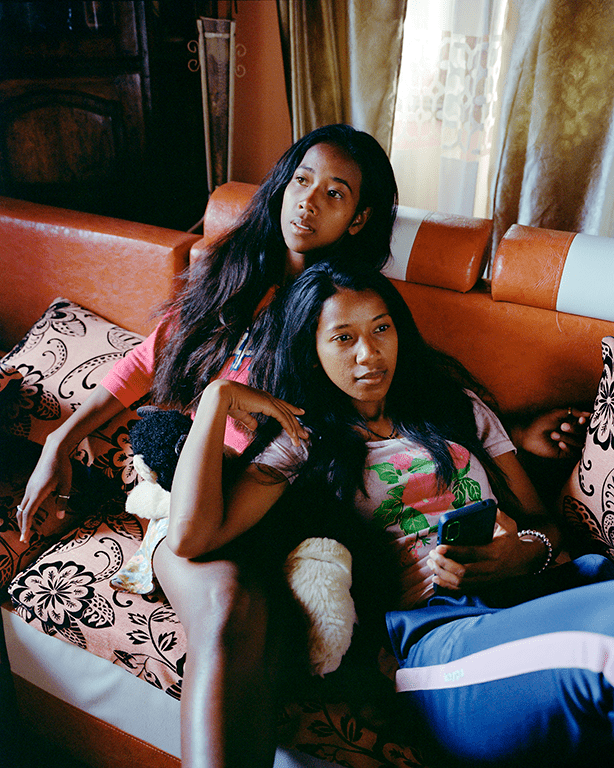
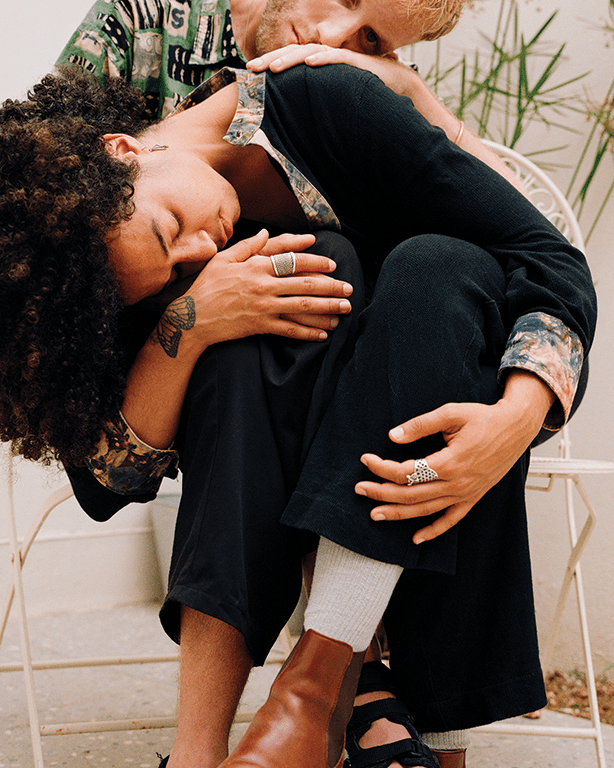
Are there other photographers or image makers that inspire the work that you do? Can you name some of them?
When I was a student, photographers such as Alec Soth, Rineke Dijkstra, Lise Sarfati and Valérie Jouve were very important inspirations for me. At the time, I was also desperately looking for the work of Black women photographers, or women photographers with African roots, because I rarely encountered those references in the environments where I was studying. Discovering Yto Barrada’s work was therefore particularly important to me. I was deeply drawn to the intimacy and poetry of her approach, and to the way she could address questions of place, identity and history without ever becoming overly explanatory. Today, I also look with great interest at a younger generation of Black photographers, many of them born in the 1990s, who have become major figures in contemporary image-making. I think, for example, of Tyler Mitchell, Nadine Ijewere and Renell Medrano. What inspires me is the way they have boldly broken down boundaries between art, fashion and portraiture, while bringing new forms of representation into the mainstream. There is a sense of freedom and confidence in their work that I find very stimulating.
I also really love the work of artists such as Karen Paulina Biswell, Farren van Wyk and Louisa Ben, who draw from their own mythologies, personal histories and mixed cultural backgrounds. They play with the boundaries of documentary photography and with the representation of racialised bodies, while developing very distinctive visual languages. I feel a strong connection to the way they approach identity, embodiment and representation.