
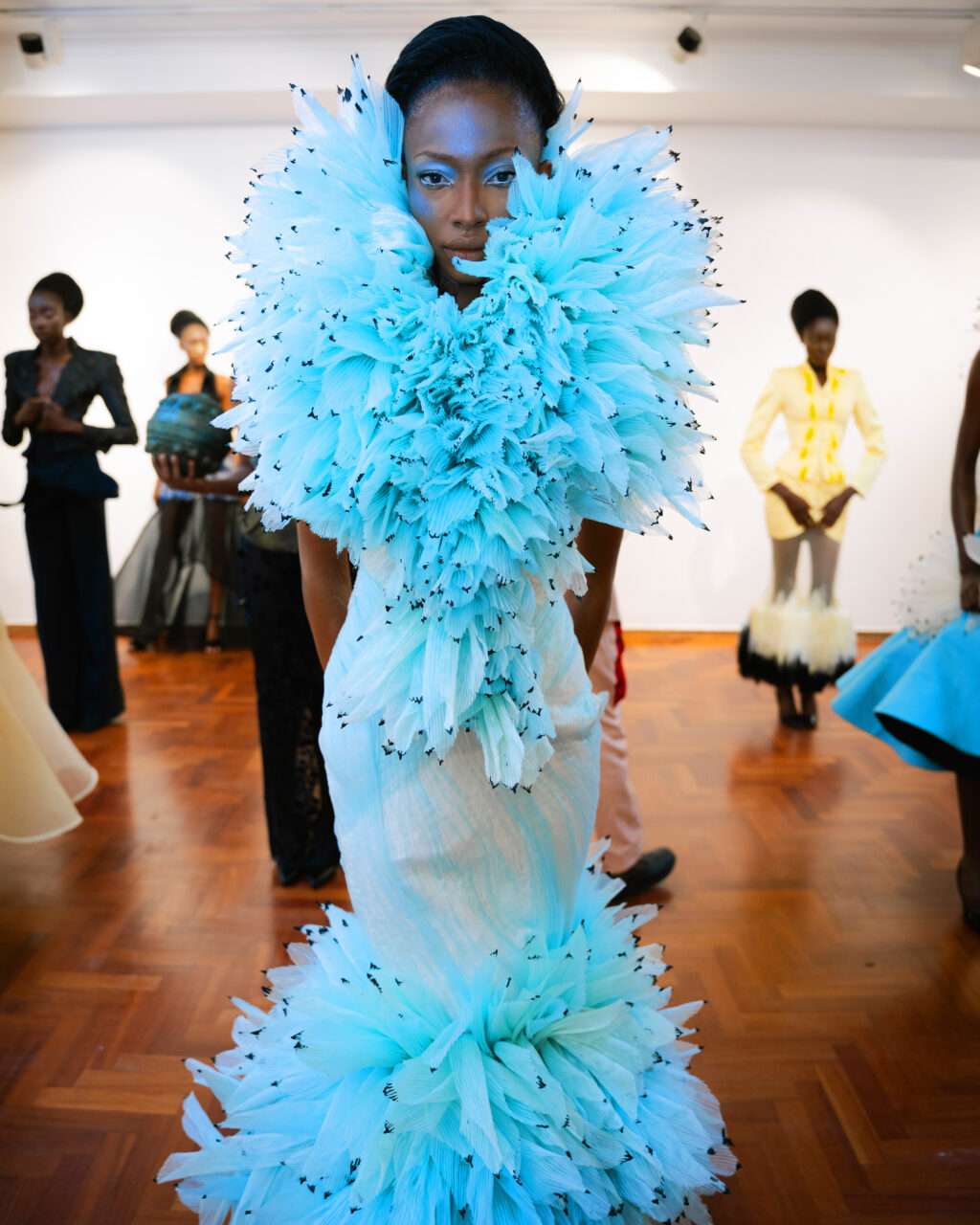
After years of presenting her work across international fashion capitals, from Paris and London to the United States, Italy, Lagos Fashion Week, and Ghana, Abelia Anaba Franklyn is exploring a different relationship between fashion, audience, and artistic expression.
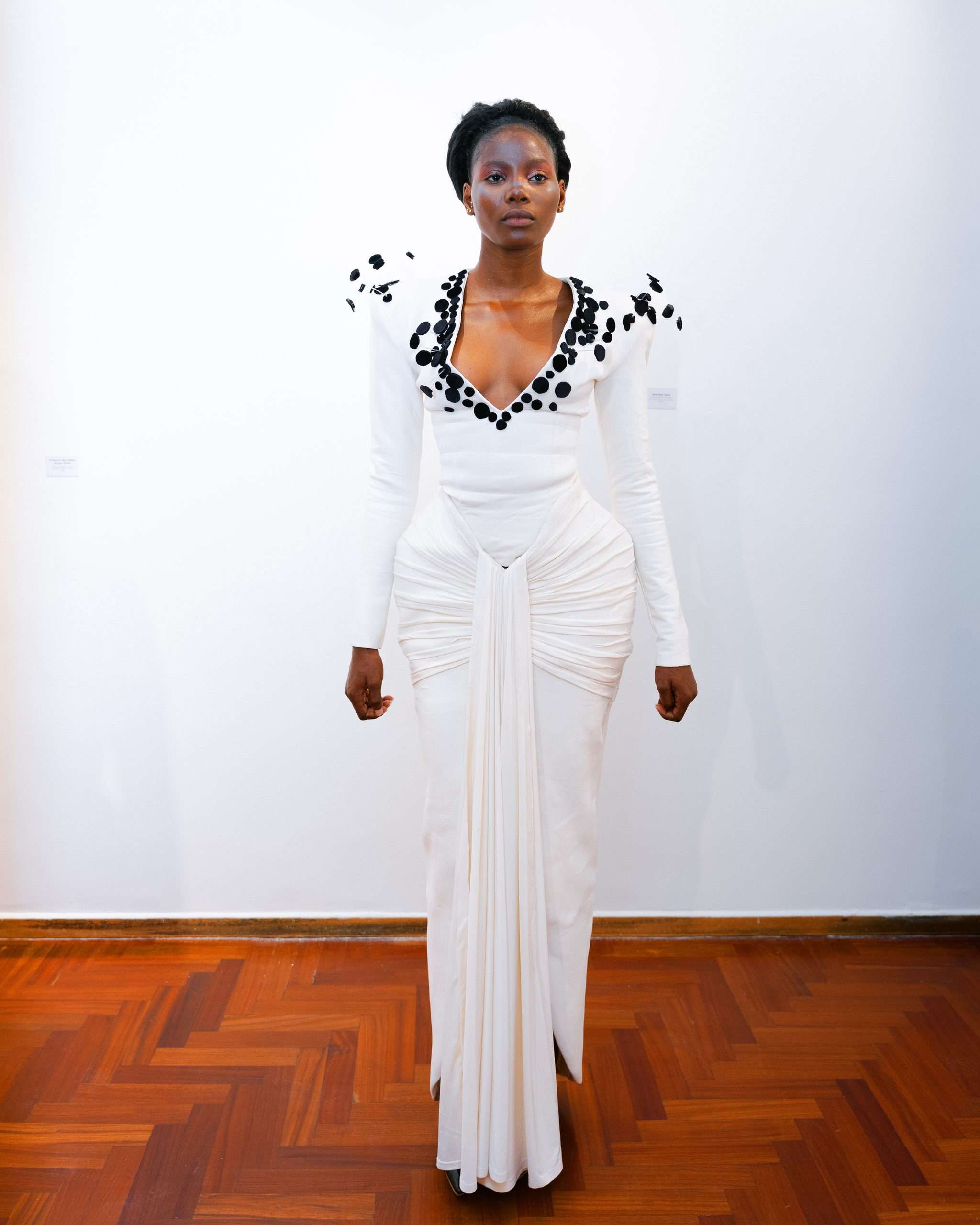
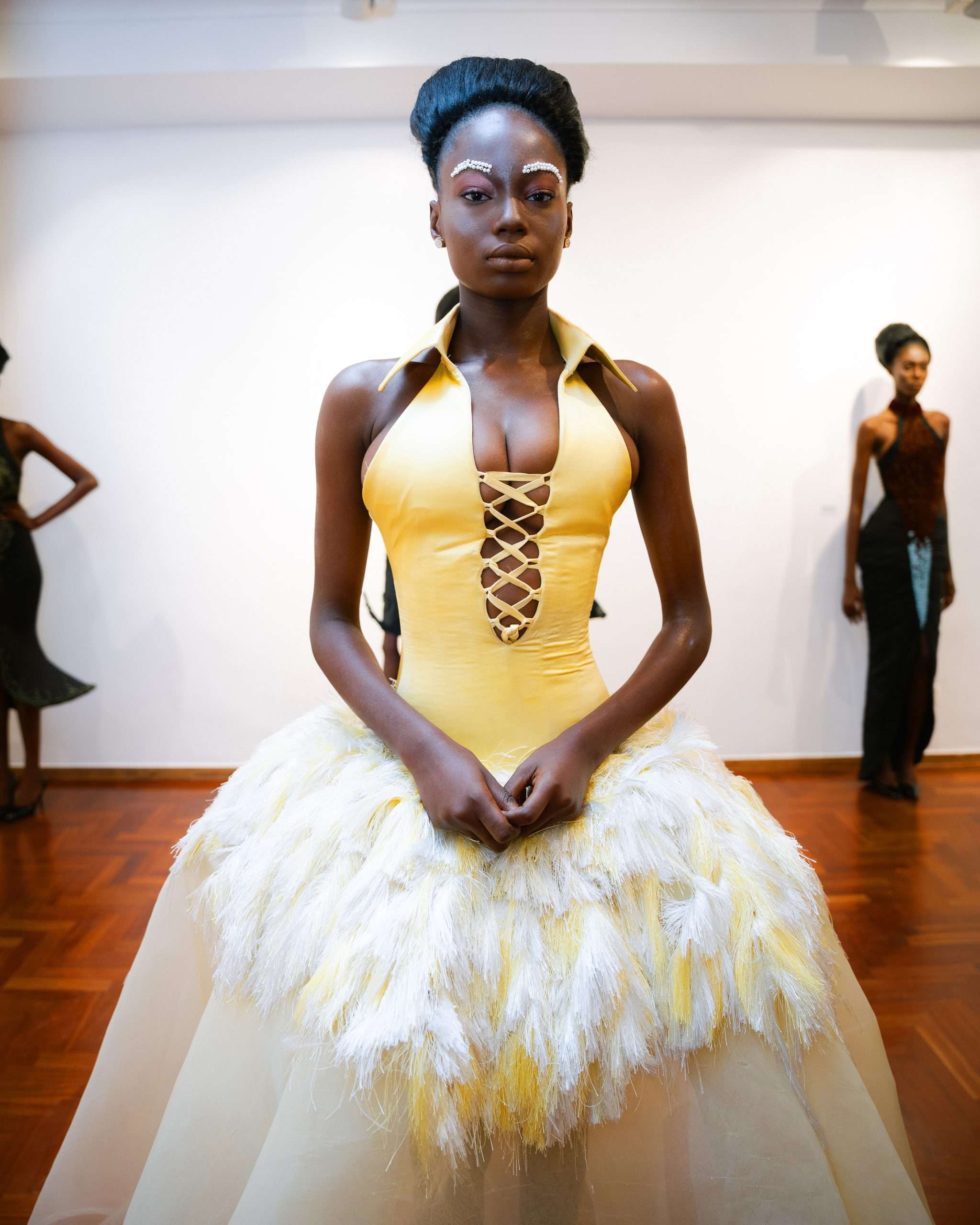
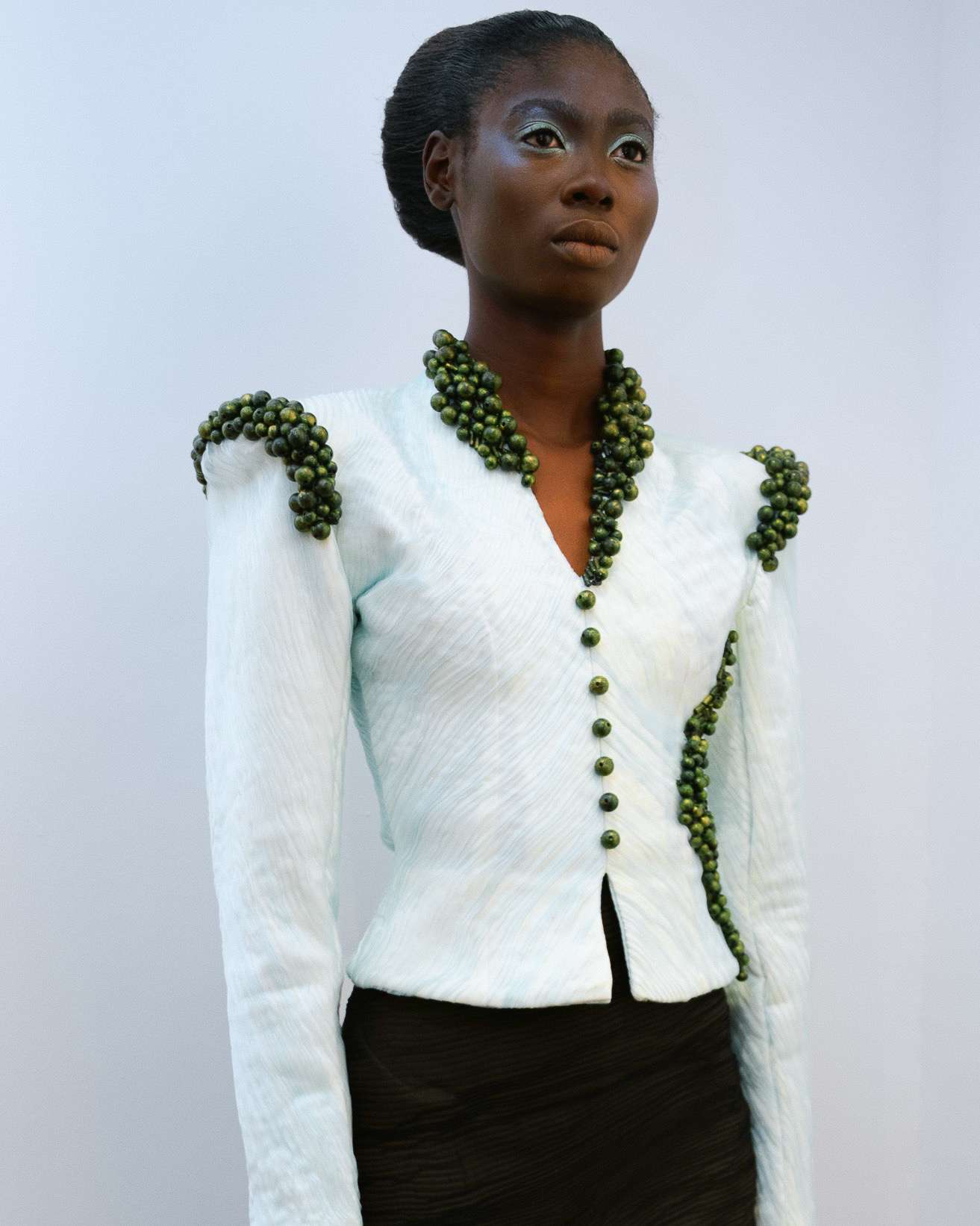
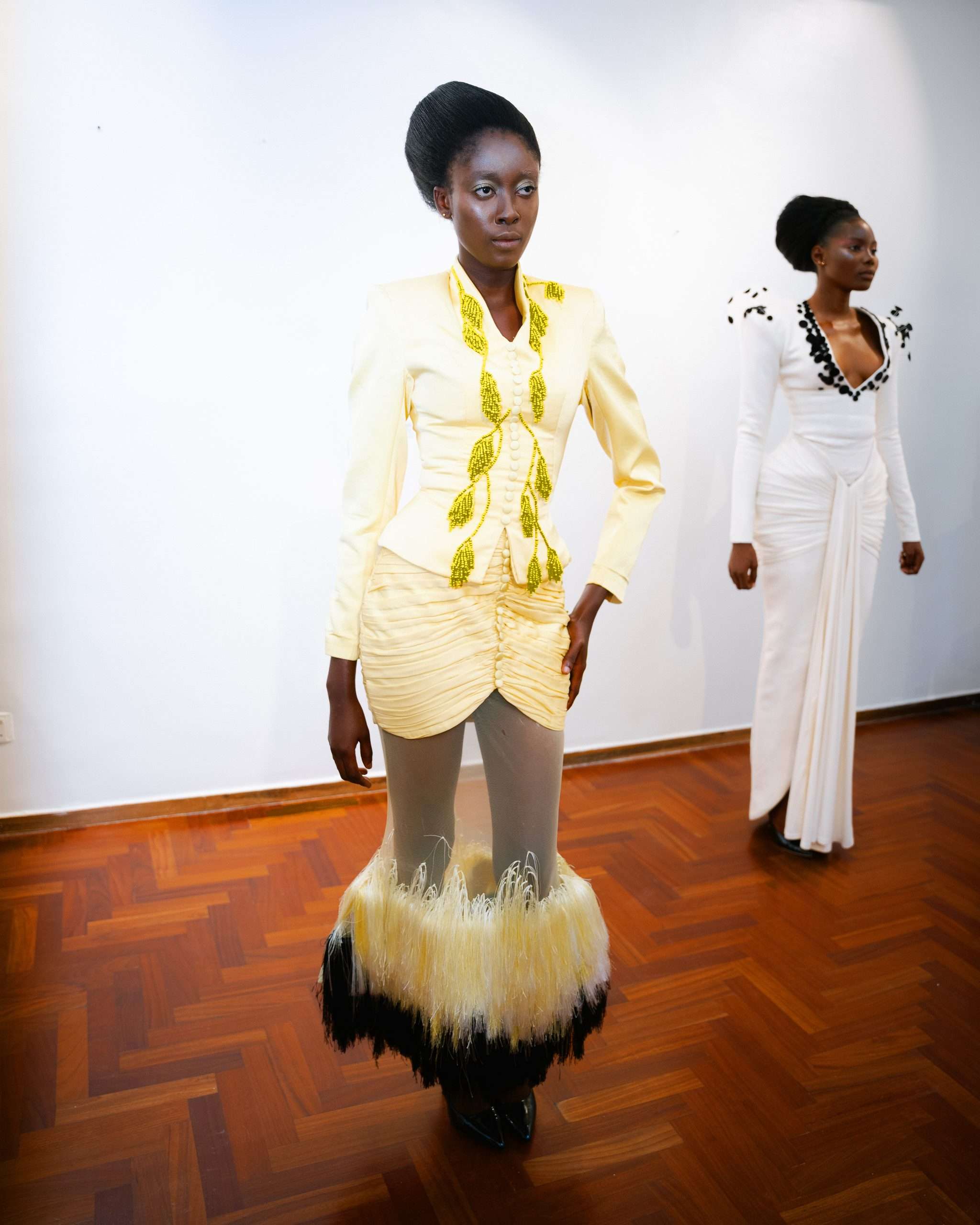
For her latest collection Igbo-Ukwu, exhibited at the Alliance Française de Lagos Art Gallery, Weiz Dhurm moves away from the familiar runway format, transforming the presentation into a fashion exhibition. The shift invites a different kind of encounter with her work, one in which garments are not simply modelled and passed before an audience, but experienced as objects of artistic investigation, where construction, material, detail, and craftsmanship become as important as the finished silhouette.
For more than a decade, Abelia Anaba Franklyn has been developing a fashion practice that resists easy categorisation. Since establishing Weiz Dhurm Franklyn in 2012, as seen in i-D Magazine and Marie Claire, she has moved between theatrical construction, experimental silhouettes, elaborate embellishment, and historical research, building a visual language that places fashion somewhere between clothing, performance, and artistic expression. Her entry into the industry was not through the conventional route. Having studied Theatre Arts at the University of Lagos, Franklyn approached fashion with an understanding of character, narrative, and visual composition.
Largely self-taught, she developed her practice through experimentation, working with artisans and tailors, and an ongoing investigation into the possibilities of garment construction. That background is visible in the theatricality of her collections, where clothing operates as more than something to be worn. It becomes a vehicle for storytelling. She belongs to a generation of independent designers who helped establish the creative foundations of the industry before the present wave of global attention. Their work contributed to an environment in which Nigerian designers could pursue individual identities, experiment with form, and engage with international audiences without entirely surrendering their creative positions to external expectations.
Looking towards the collection Igbo-Ukwu, the 9th-century bronze tradition that stands among the most remarkable early histories of metalworking in Sub-Saharan Africa, Franklyn draws from a legacy of extraordinary technical and artistic sophistication. Igbo-Ukwu, historically associated with the Kingdom of Nri, was an important centre of political, cultural, and commercial activity in southeastern Nigeria from at least the 8th or 9th century CE. Its connections extended far beyond the region, forming part of extensive trade networks that linked communities along the Niger River with Gao, and through wider trans-Saharan routes to North Africa and Egypt. Its archaeological significance lies particularly in an extraordinarily sophisticated bronze-working tradition that flourished during the 9th century, making it among the earliest known centres of advanced bronze casting in sub-Saharan Africa. Through the lost-wax technique, its artisans produced objects of remarkable intricacy, demonstrating an advanced understanding of metallurgy, form, and ornamentation.
The significance of this artistic tradition entered wider archaeological consciousness in 1938, when local villager Isaiah Anozie discovered bronze objects while digging beside his home. Subsequent archaeological excavations revealed a remarkable collection of ceremonial vessels, pendants, human and animal figures, and other objects whose technical complexity challenged established assumptions about the history of African art and technological achievement. Today, the Igbo-Ukwu discoveries stand as an important record of an advanced artistic and material culture, offering evidence of a society whose creative knowledge, technical ingenuity, and international connections were already flourishing more than a millennium ago.
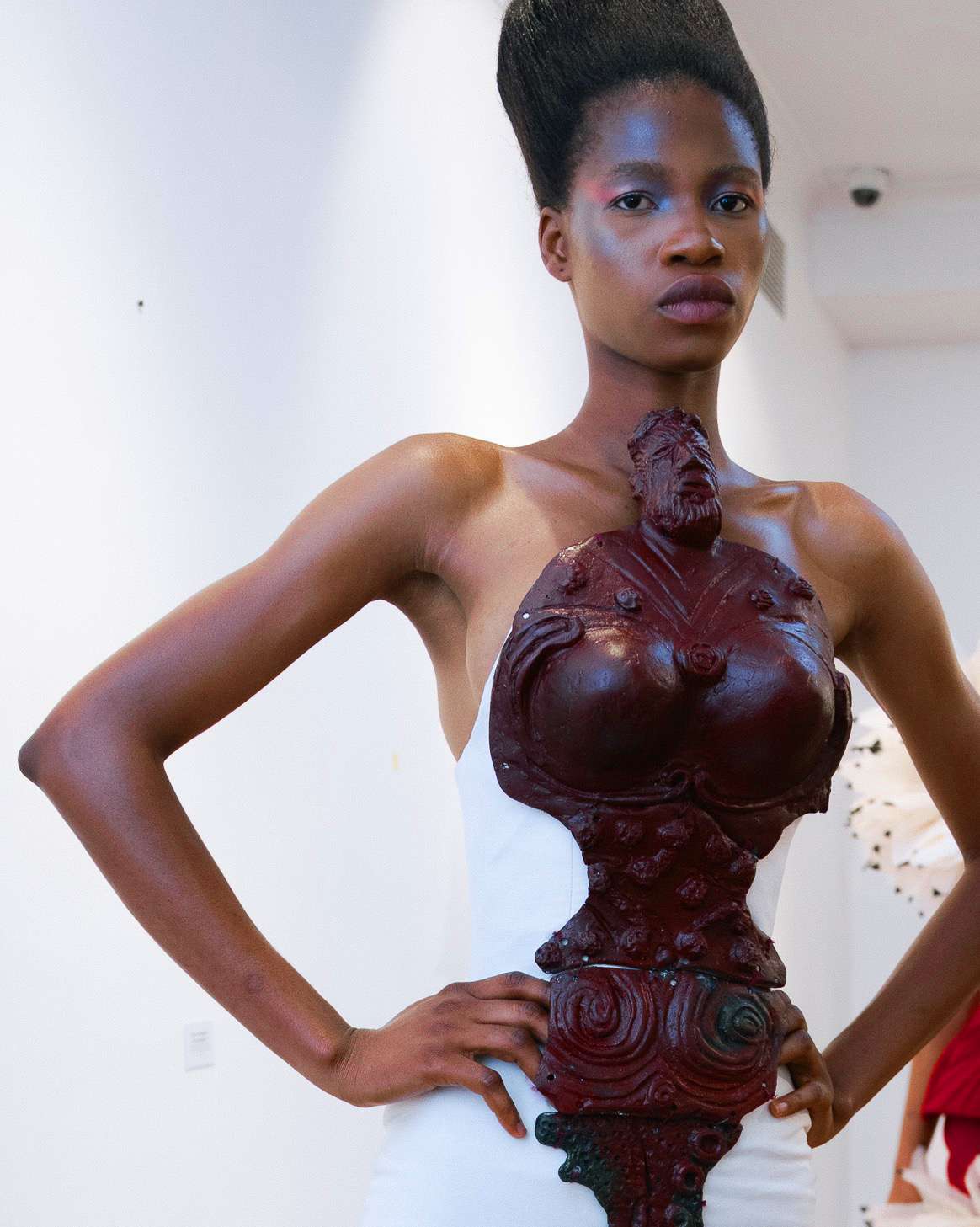
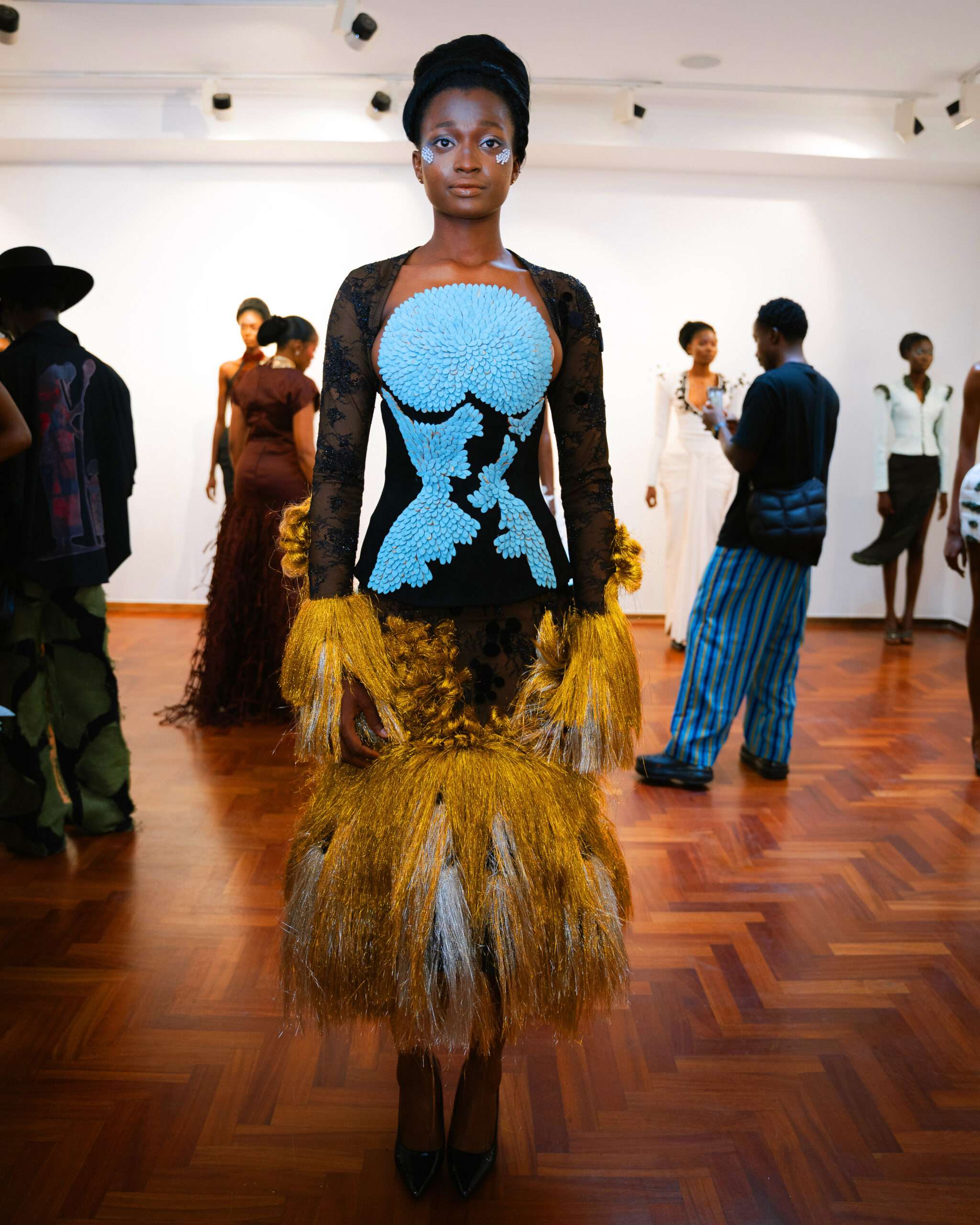
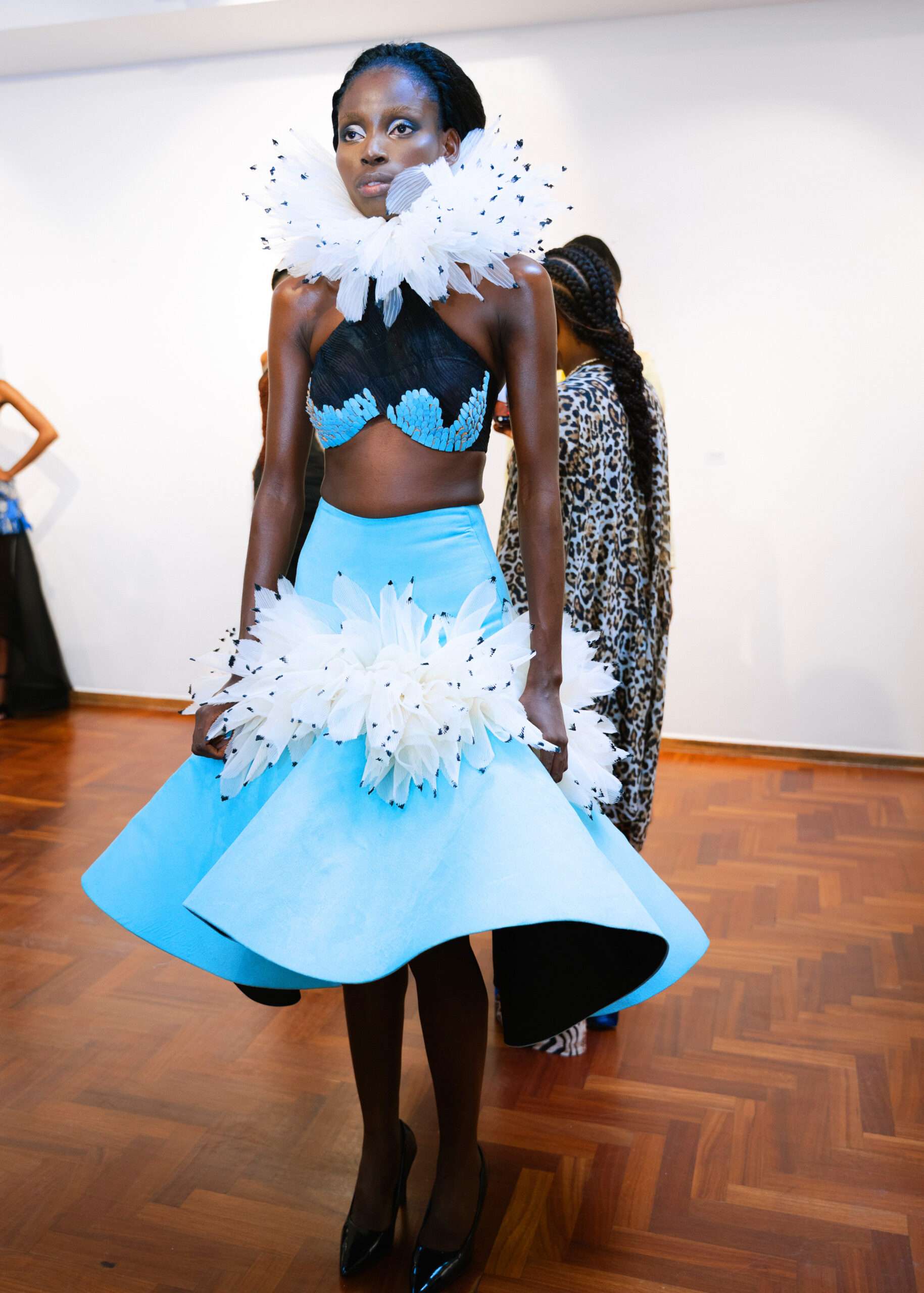
By bringing this history into contemporary fashion, Franklyn opens up a conversation between ancestral knowledge and future possibilities for African design. The exhibition is not simply a presentation of clothes, but an invitation to look more closely at how fashion is made, where its ideas originate, and what other forms it can take. Perhaps the more interesting question is not what comes after the runway, but what fashion becomes when it is allowed to exist beyond traditional runway culture.
With Igbo-Ukwu, Weizdhurm Franklyn returns to her roots, looking to Igbo-Ukwu not simply as a reference to the past, but as a language through which to imagine the future of African fashion. For this collection, Franklyn brings that legacy into a contemporary fashion context, translating the material intelligence of Igbo-Ukwu into new forms, textures, and silhouettes. Moving beyond the conventions of the runway, the presentation invites guests into a closer encounter with the making of the collection, where craftsmanship becomes both the subject and the experience. It is a return that looks forward, asking how ancestral knowledge can continue to shape contemporary African design, not as an archive to revisit, but as a living source of creative possibility.

Photography by Obaroh Oghenemairo Jesse