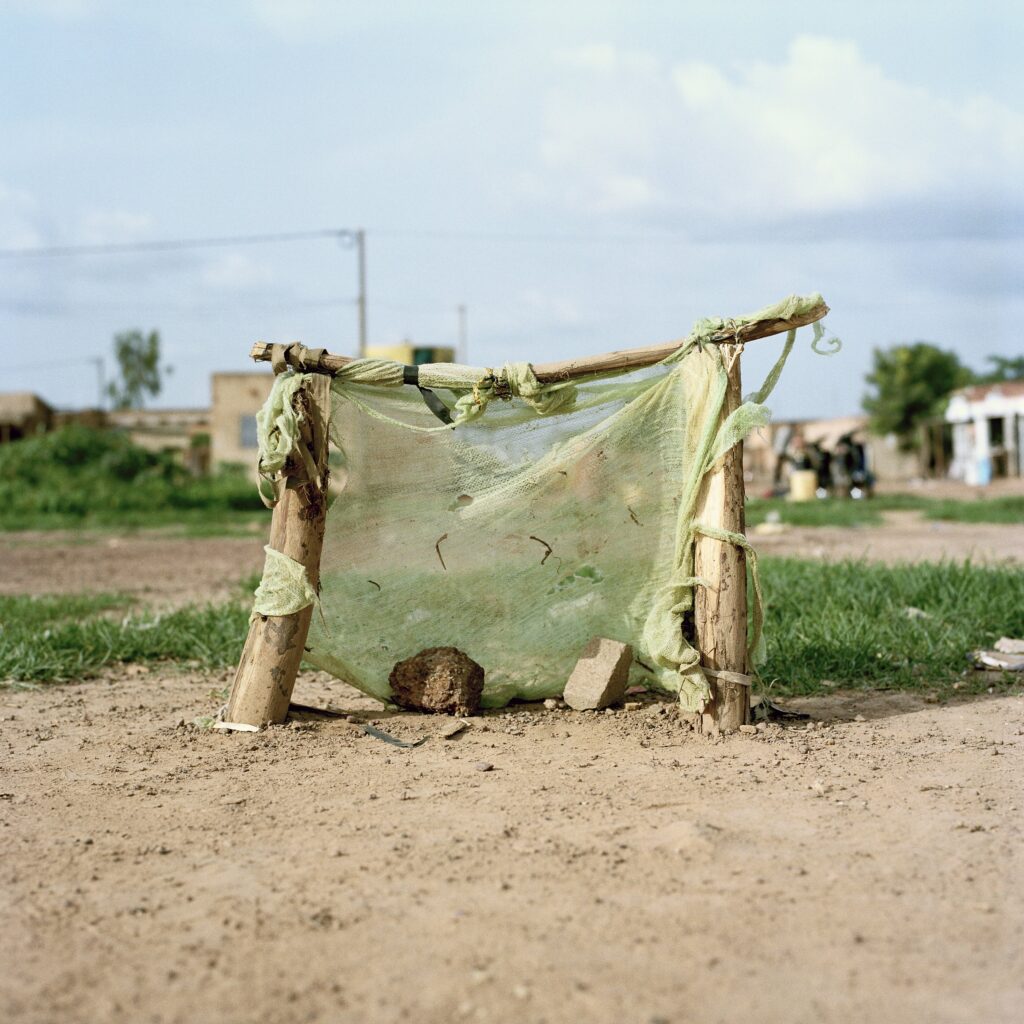
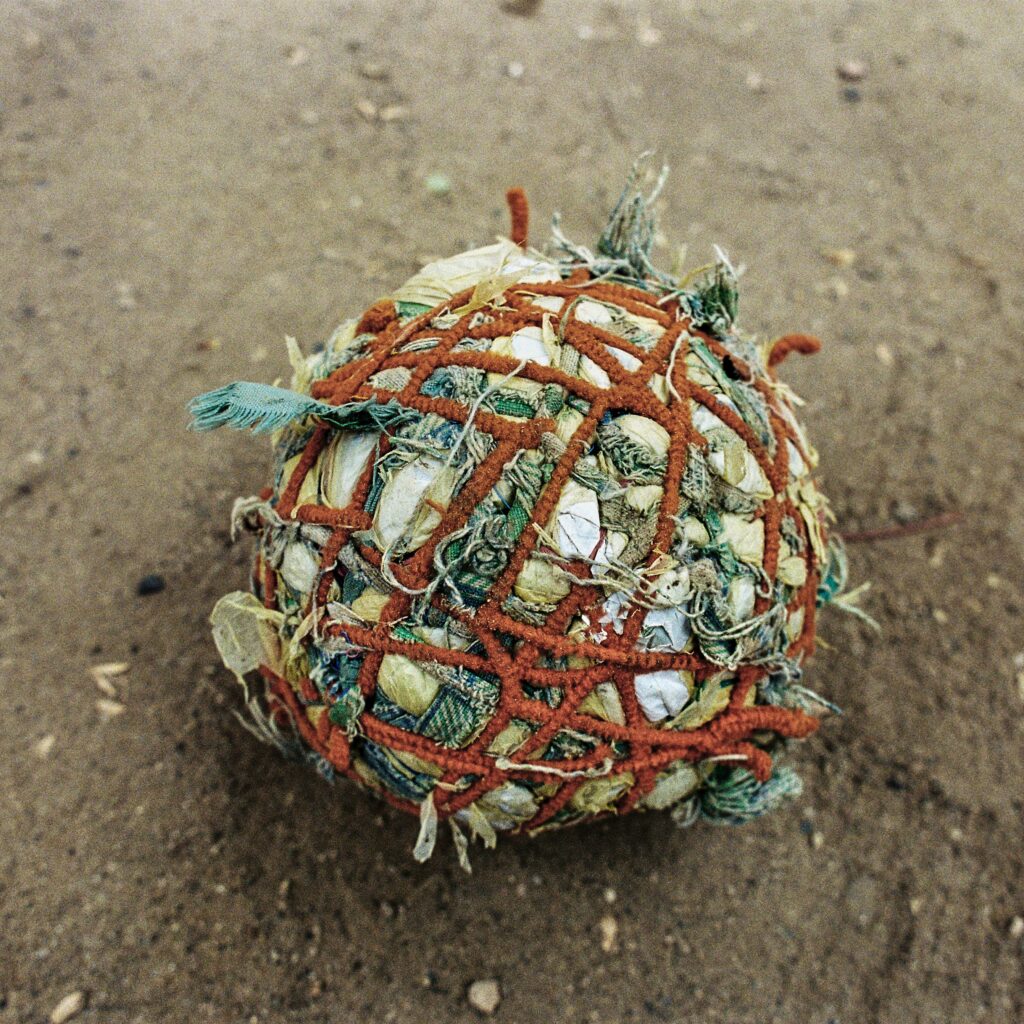
In the year 2000, right after the World Trade Centre was attacked, Jessica Hilltout and her partner bought a Jeep. Their plan was simple: repair it, fuel it, pack a Hasselblad and a Canon 5D Mark II, and set off from Mongolia through the countries ending with Stan, excluding Afghanistan. For Jessica, the journey was not just about photography. As a humanist, she felt an underlying need to communicate through imagery, but it was also about self-discovery, confronting fear, and overcoming moments of insecurity and doubt. It was a difficult journey, and keeping a diary became an important companion, helping her remain confident while documenting the people and places that nourished her eyes. Over time, these travels led Jessica to the African continent, taking her through places such as Burkina Faso, Kumasi, Madagascar, Malawi, and South Africa. It was on these roads that she developed Amen, a project centred on grassroots football and its ability to connect people across geographical, cultural, and economic boundaries. What fascinated Jessica was football and how the game exists in communities where resources are limited and access to sporting infrastructure is scarce. In these places, football survives because people make it exist, creating balls from found materials, marking pitches wherever they can, and reclaiming everyday spaces as grounds for play.
To accompany the project, she kept a logbook in which she recorded daily interactions, observations, ideas, and possible directions for the work. The notebook functioned as both a diary and a research tool, giving the project an academic quality while allowing her to reflect on what she was witnessing. The question remains: what first drew her to places such as Burkina Faso and Kumasi? Through her images, we can see that the answer lies in a search for forms of human connection that transcend language and geography.
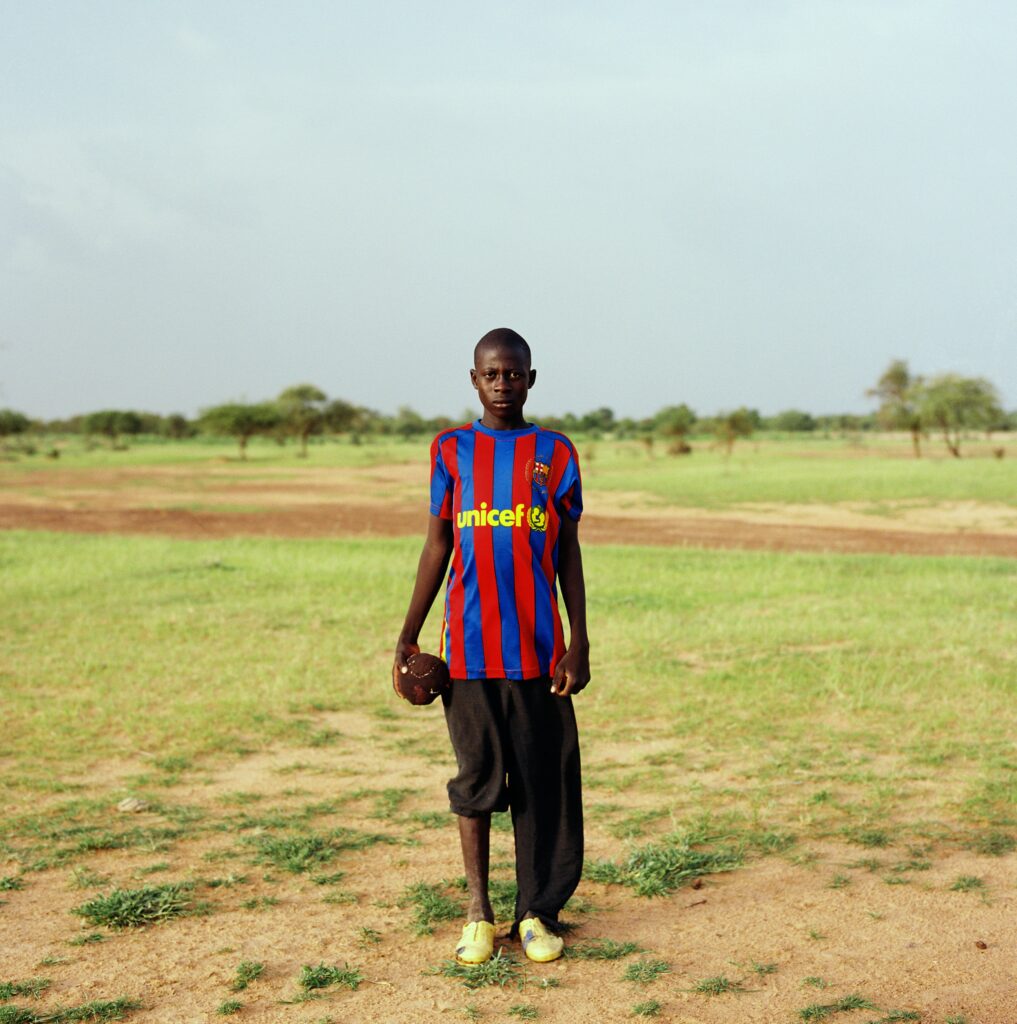
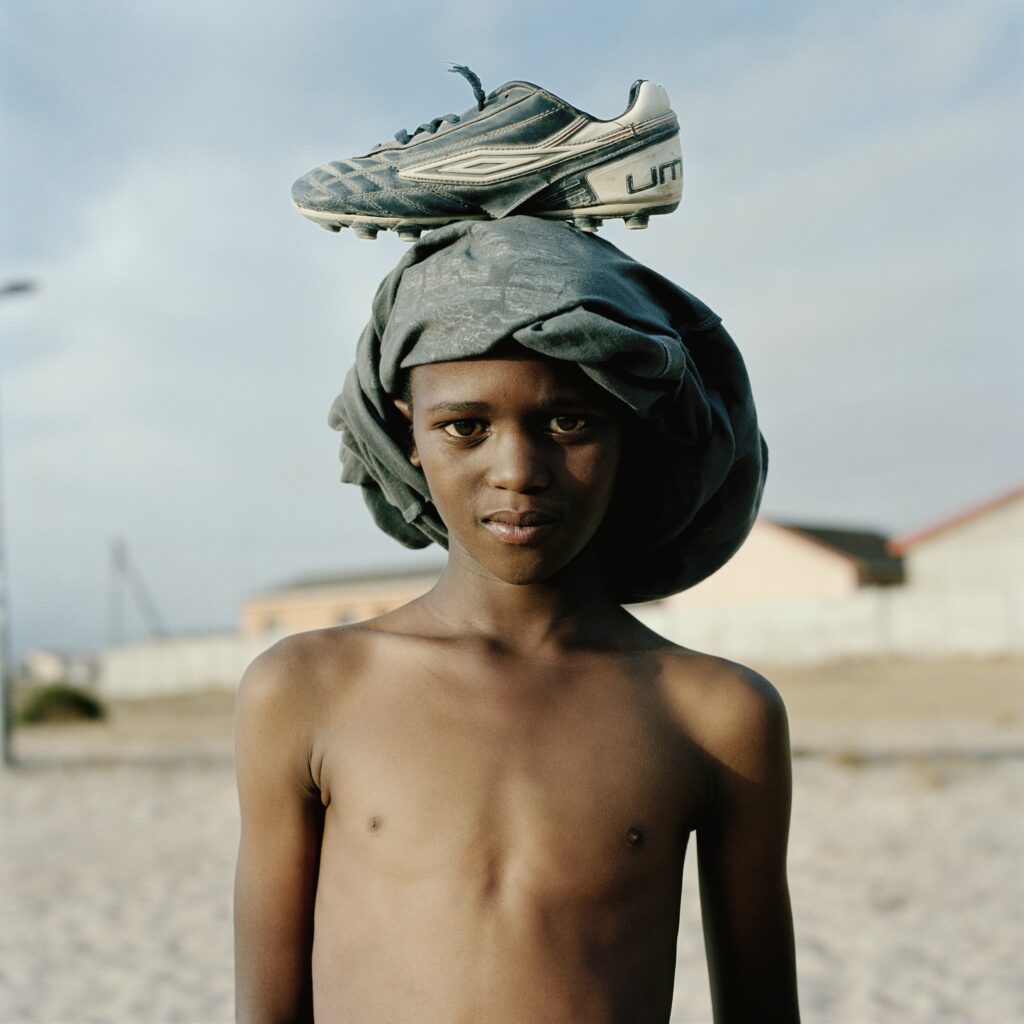
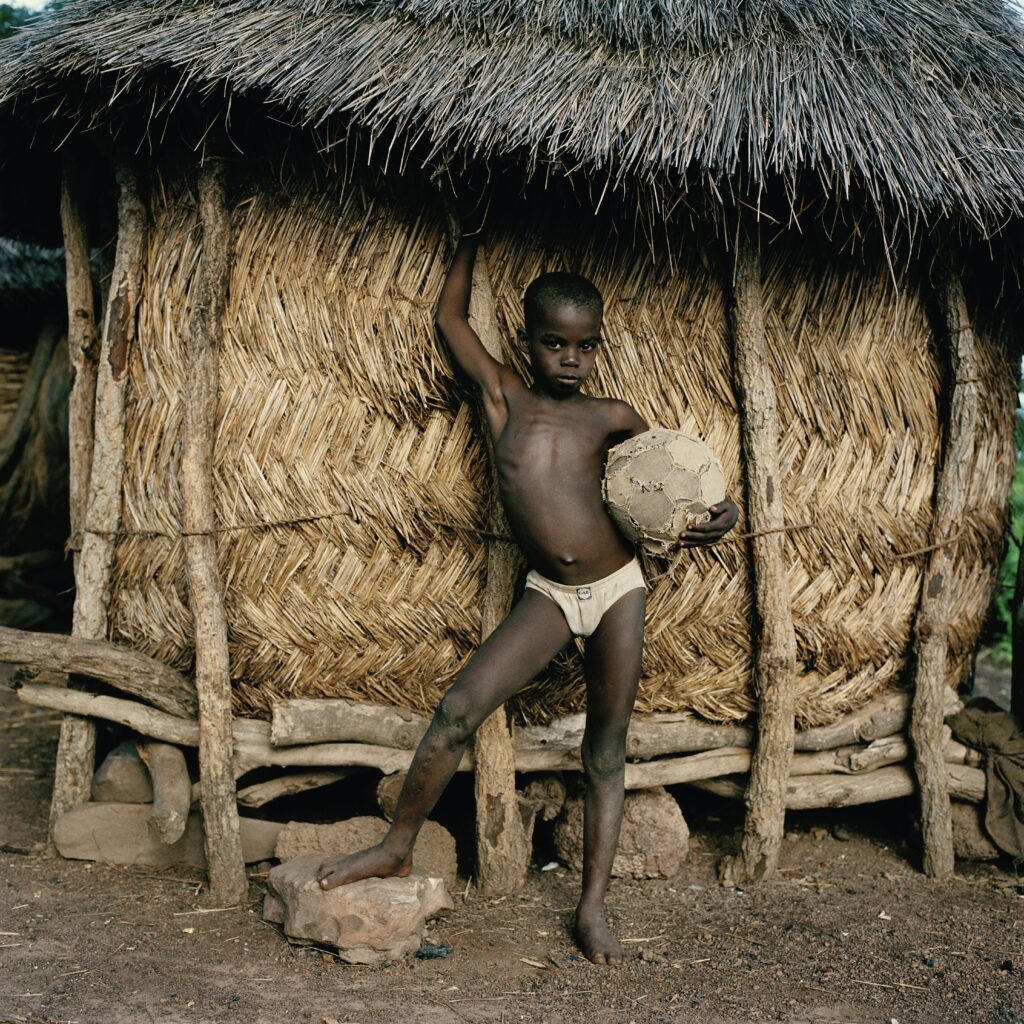
Besides documentary, Jessica’s approach to portraiture is equally important. She tries to avoid the empty smiles and carefully rehearsed poses that children often present to foreign photographers. Instead, she directs for moments that reveal something more honest and personal. All of this comes from a concern that photographs of Africans have too often been trapped within stereotypes, reducing people to familiar narratives rather than allowing them to exist as individuals. As a result, her work occupies a space between documentary photography and ethnographic inquiry, carrying a distinctly reflective and research-driven quality.
Now showing in Cape Town at Gallery F, at the heart of Amen is resilience. One of the most compelling examples appears in Bombofa, a village in Burkina Faso where football fields are not fixed sporting facilities but multifunctional landscapes shared with agriculture and livestock. Depending on the season, the same ground may serve as farmland, grazing territory, or a football pitch. Here, football is woven directly into the rhythms of everyday life, illustrating one of Amen’s central ideas: that the game derives its power not from stadiums or commercial spectacle but from the communities that continually adapt and reinvent it. Through these encounters, Hilltout reveals football as a lens for understanding resilience, creativity, spirituality, and the enduring human capacity to create meaning under any circumstances.
The project celebrates the human spirit expressed through football and the way communities gather around the game. Football becomes a character within the work, a spiritual guide, a community deity that unites people through shared belief and collective participation. One of the most compelling examples appears in Bombofa, a village in Burkina Faso where football fields are not fixed sporting facilities but multifunctional landscapes shared with agriculture and livestock. Depending on the season, the same ground may serve as farmland, grazing territory, or a football pitch. Here, football is woven directly into the rhythms of everyday life, illustrating one of Amen’s central ideas: that the game derives its power not from stadiums or commercial spectacle but from the communities that continually adapt and reinvent it. Through these encounters, Hilltout reveals football as a lens for understanding resilience, creativity, spirituality, and the enduring human capacity to create meaning under any circumstances.
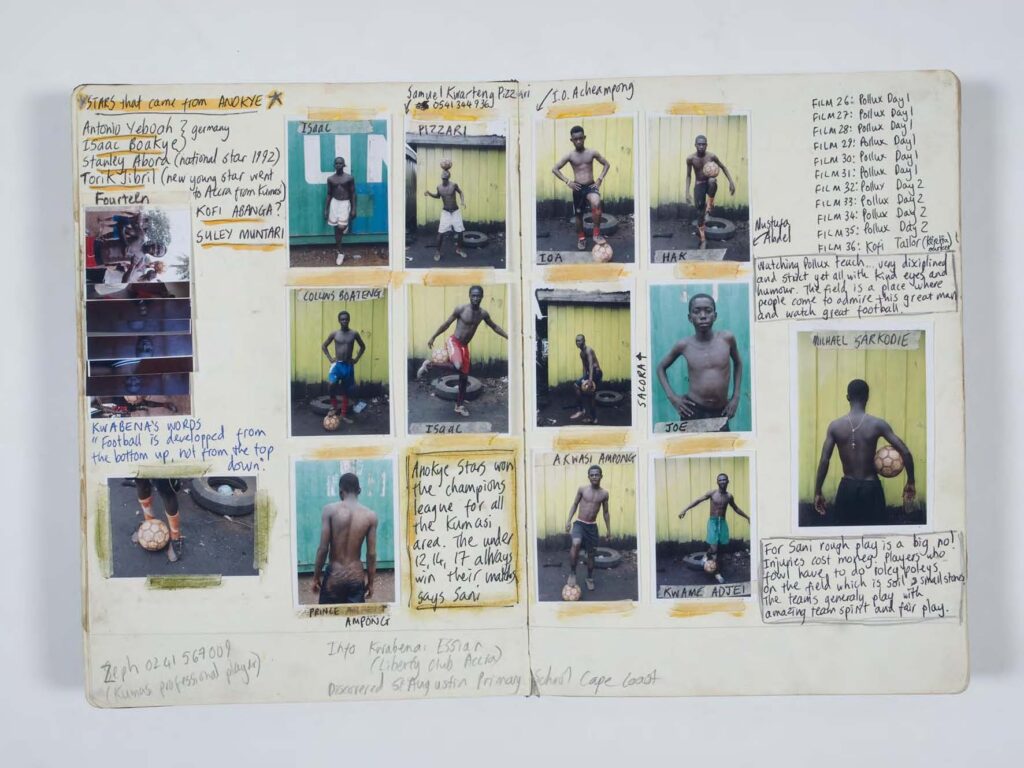
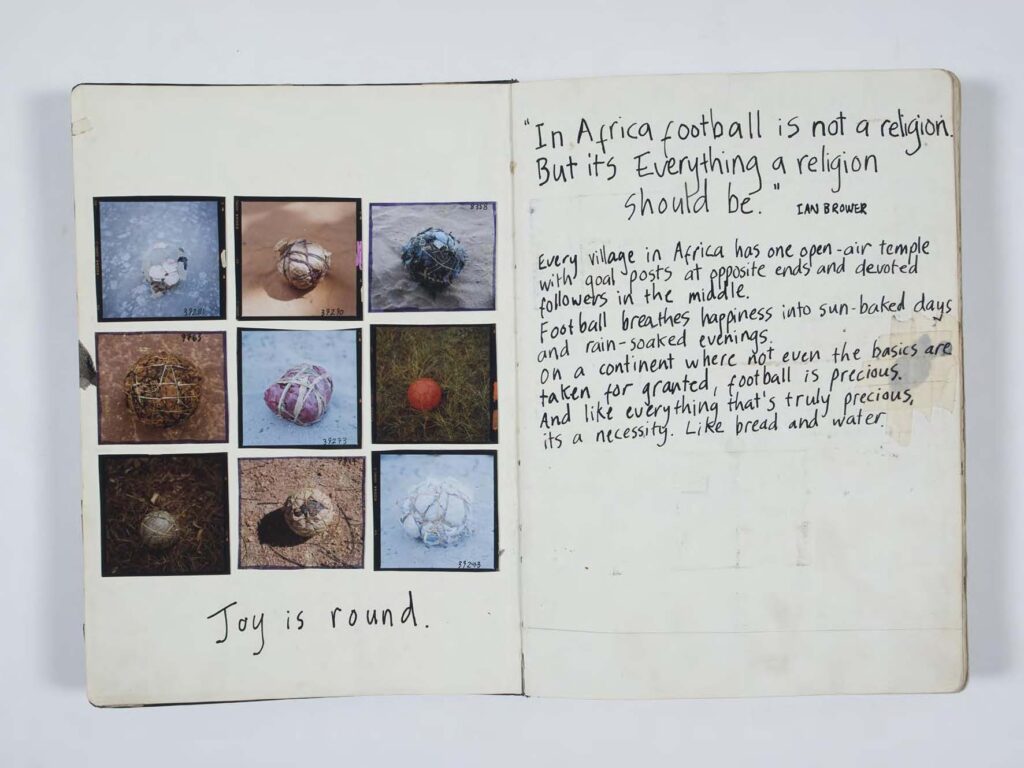
Can you remember where you were, or what you were doing, when the idea for the Amen project first emerged? From that initial spark to the completion of the work, how long did the project take to develop?
I was travelling in Madagascar, where I was working on a project exploring the word ‘Imperfection’. There I was amazed by how everything had a value and was part of the endless cycle of creation. Objects have numerous lives and are cherished; the more they come alive, the more they almost take on human qualities. It was there that I saw my first handmade football. I was fascinated by these footballs, made from whatever people could find, symbols of human ingenuity, resilience and strength. To me, they represented that invisible force and spirit I had so often felt during my travels on the African continent. As soon as I came home from Madagascar, my father and I were discussing art one evening, and he said: “I love football, you love Africa. The World Cup is coming up, let’s speak of all those in its shadow. Far from the big stadiums, the money and the sponsors, let’s show the small world cups that are played every day in every village, where football is simply one of life’s essentials.”
There was not much preparation beforehand, apart from having a car and deciding which countries to visit. The rest of the planning happened on the spot, guided by instinct and feeling our way through things.
- First trip: South Africa, Lesotho, Mozambique, Malawi — in my dad’s Beetle. About 3 months. 2009.
- Second trip: Ghana, Ivory Coast, Burkina Faso, Togo, Benin, Niger — in a Nissan Vanette that I bought there and sold again. About 4 months. 2009.
- Post-production and self-publishing the book Amen: 1 year. 2009–2010.
After struggling to find publishers or sponsors, two days before the first World Cup match, FIFA ended up buying 2,000 copies to give to all the delegates of the World Cup, and Adidas sponsored my promise to give back to all those who appeared in the book.
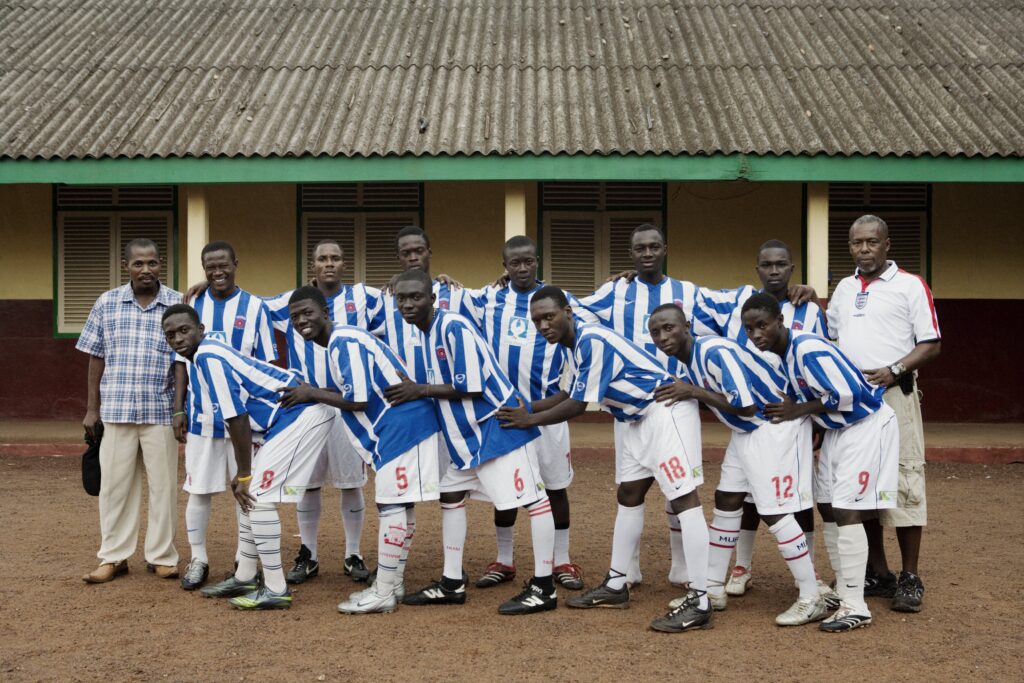
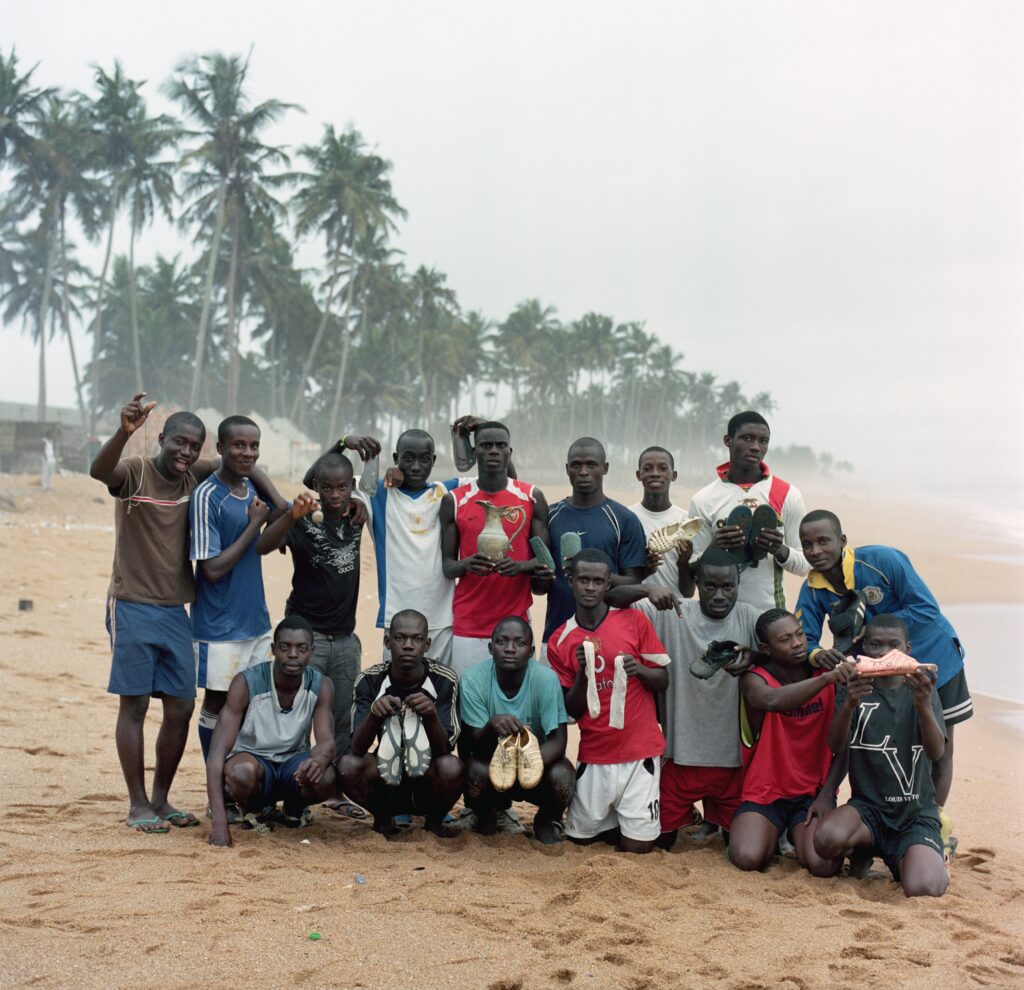
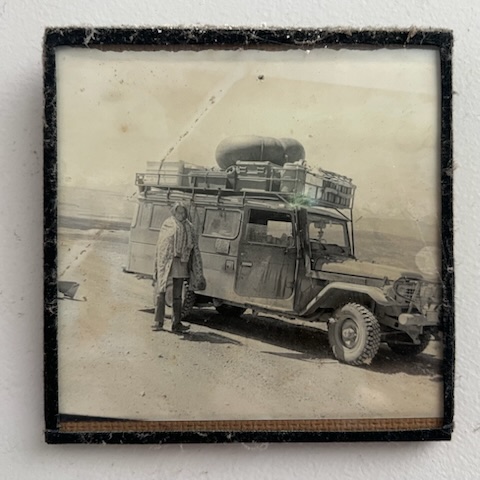
Looking back on your journey from Central Asia to Africa, what did you discover about yourself along the way? Do you feel the experience changed you as a person? And did your photographic approach evolve from country to country as your understanding of each place deepened?
Looking back on that trip, I feel it gave me confidence in humanity and in the goodness of people. I photographed what I wanted without a serious theme or project in mind; I was only 21. During the trip, I discovered more about the world, about myself, and about confidence than I did about executing a formal project. But photographically, after crossing so many countries (Blx-Mongolia and back home through Africa), I realised I was drawn to very small, banal things — the ordinary, the everyday, those in the shadow. That is still what I love today.
Throughout our conversations, you have often spoken about being the mother of three boys, a role that can be both demanding and all-consuming. How have you navigated the relationship between motherhood and photography? Have the two practices ever come into conflict, or have they ultimately informed one another?
Interesting question. If I’m honest, it is tough, tough and beautiful, just like life. Yes, they have come into conflict simply because one makes choices. I met my partner and had three boys quite late in life, and it all happened just as my career as a photographer was taking off. I jump into things and then realise after the challenges. Becoming a parent must be one of the biggest adventures. Motherhood and the energy it demands are immensely powerful and all-consuming. It definitely took me down a different path for a while; that was my choice. My boys are all over ten years old now, and I definitely feel I have more space to exist. What I find challenging is being on all fronts: raising a family and making a living, expressing myself through photography on subjects that I care about, and artistic projects. Handling that whole orchestra is definitely a challenge, as it is for so many people. Having said that, children marvel at small things, and it is truly beautiful. I photographed my children through their young life, but I have not yet found time to do something with that work.
During our call, you mentioned that the Amen project required you to become something of a director, particularly in guiding your portrait subjects toward moments of introspection. What does introspection mean to you in this context? And while making these images, do you find yourself entering a similar state of self-reflection?
The word ‘director’ doesn’t quite feel right to me. Of course, a photographer plays a significant role in what she or he chooses to photograph or to leave out, in the expressions they choose to bring forward, in the overall feeling they want to convey; that is one’s intention. And so my photographs certainly speak a lot about me and about what I admire in others. In this project, I wanted to speak of people in a positive and powerful light. I wanted to capture that energy of the continent which people so often refer to but can’t quite put their finger on. Despite sometimes very tough conditions, I wanted the human spirit to prevail in the way it vibrated before my eyes in every village. That doesn’t mean directing people to perform, but rather finding the right people and the right villages, and working with them so they understand what I was searching for and my message…. Capture the beating heart of football. For that, I couldn’t simply arrive and take my camera out. I needed to earn people’s trust, to learn their stories, and to bring them to a place where they were willing to participate fully and accept me into their lives, if only for a moment. I’m not a big fan of forcing smiles for photographs. I often encourage people to be centred, inside themselves; I ask questions which make them think and somehow forget for a moment that the camera is there. This creates introspection. Yes, when working, I am in a form of introspection; I’m in my bubble; nothing else matters.
You have benefited from several important influences throughout your photographic life, your father among them, and have also shared a long-standing creative companionship with Gavin Furlonger at Gallery F. Beyond these figures, are there other artists, thinkers, teachers, or mentors whose work has significantly shaped your practice?
I was extremely lucky to have parents who encouraged me to follow my passion. There were no conventional roads to follow. Follow your heart, work hard, and you’ll get there. My father, Mark Hilltout, was an inspiring man, a crazy ideas man, someone who went for it. He pushed me, believed in me, but there were also times when he was extremely demanding. My father and Gavin Furlonger have a friendship which dates back to the 70’s; we even embarked on a project the three of us called ‘The Beautiful People’, photographing the spectators of the World Cup in SA in 2010. After that Gavin and I lost touch for a while. In February this year he called and suggested an exhibition in his beautiful gallery, and I was over the moon. Working to put this together with Gavin and Shaw all flowed freely, and the opening night was beyond my expectations. I left SA full of energy thanks to Gavin.
Some artist I have always loved… but there are many more Sally Mann, Tracy Amin, Lisa Sorgini, Annie Leibovitz, William Kentridge, Thomas Chable, Francesca Woodman, Peter Beard, Michael Borremans, Alain Rivière, Diane Arbus, Berlinda de Bruykere, Alain de Botton (philosopher), Otherwise apart from inspiration from others, simply doing shapes your practice, diving into something and digging, meeting people, being faced with challenging situations, being uncomfortable. Always learning.
How did the exhibition at Gallery F come about? Was it an idea you proposed to the gallery, or did the invitation originate from them? What made the collaboration feel like the right fit for this body of work?
Gallery F suggested, through Sean Furlonger, that I do the exhibition with them.
You already have an incredible body of work from the Amen project, and the catalogue is remarkable throughout. Looking at the selection of images you sent us, is there one photograph that stands out as your favourite? If so, what is the story behind it, and why does it hold a special place for you?
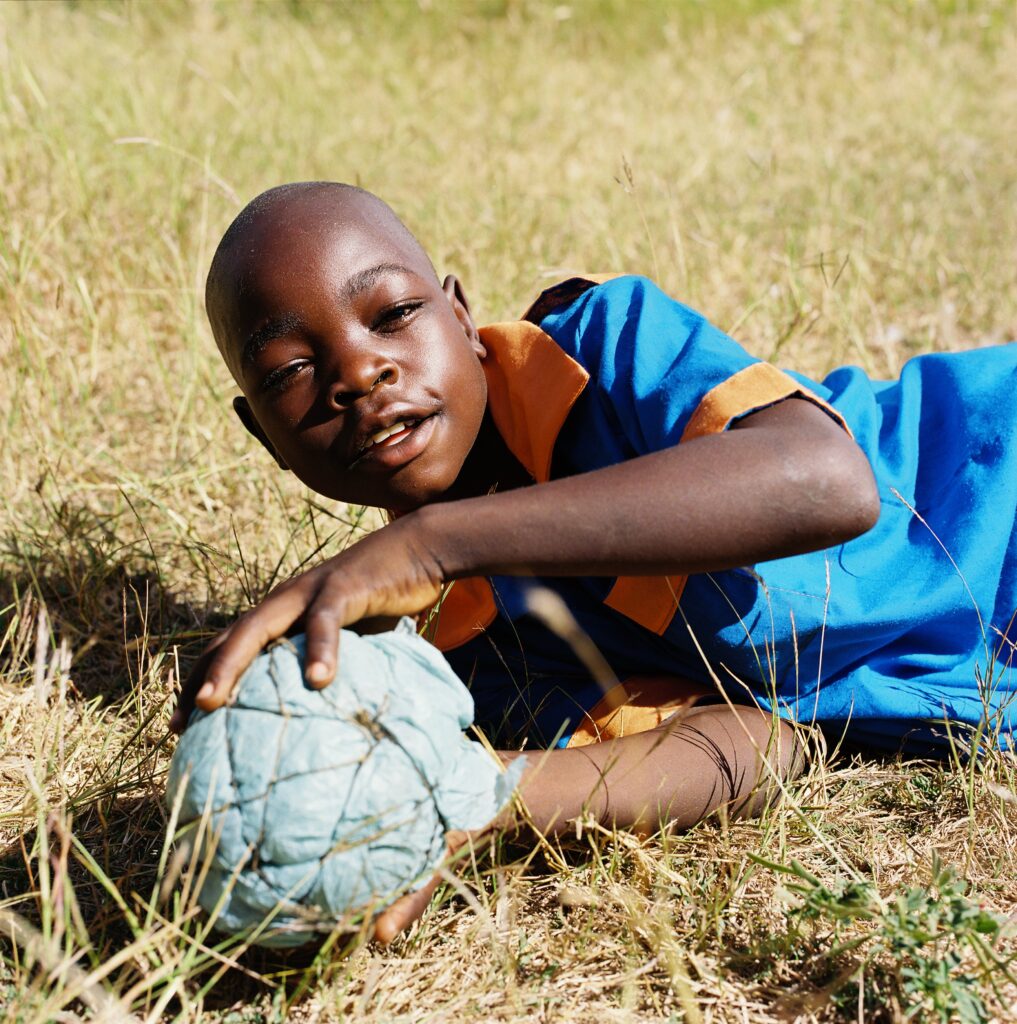
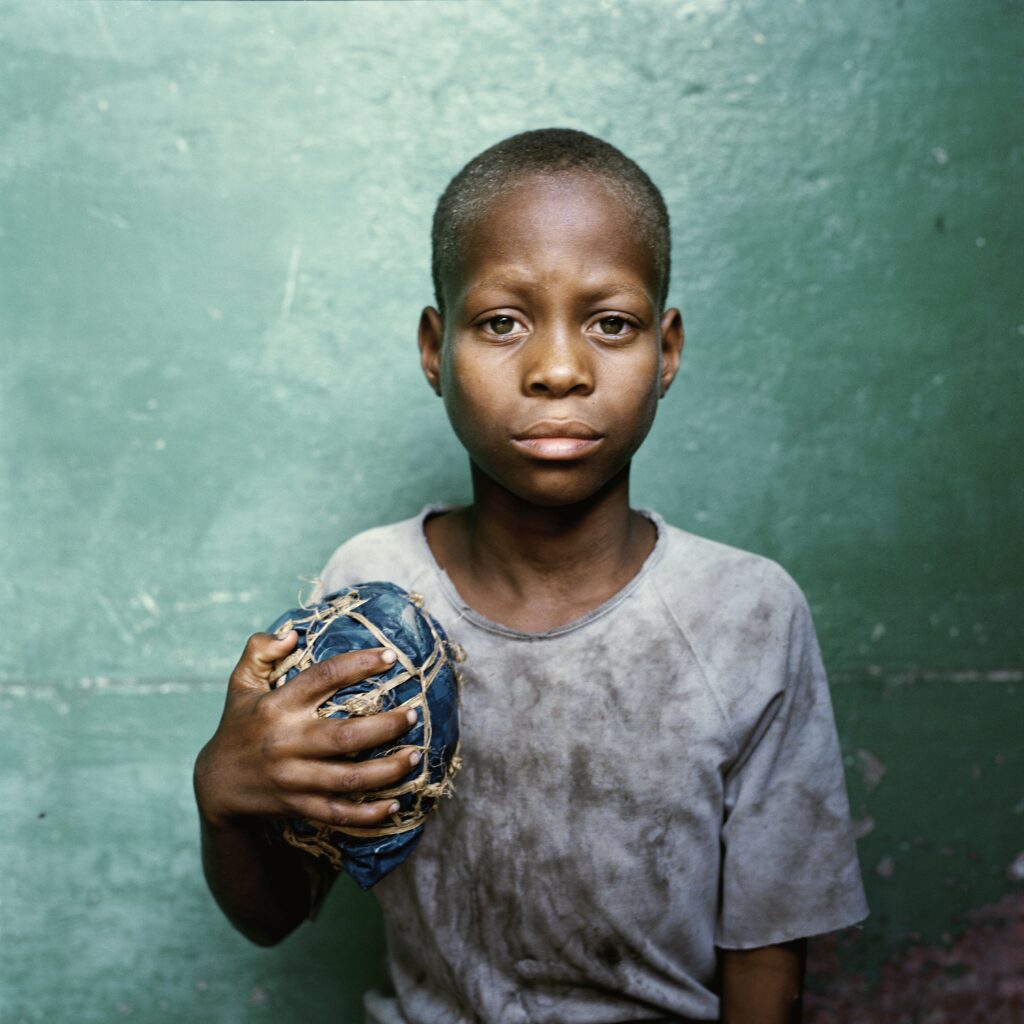
‘Orlando’ — the boy on the cover of the book (turquoise background). I had been working for more than two or three weeks, and nothing solid had come yet. I was nervous. The handmade balls I had been searching for were nowhere to be found, and I was beginning to lose confidence. I had heard of a village called Chicome and decided to go there. The road was rough, and getting permission to stay was no easier. At many points I could have given up… first waiting for permission from the mayor, which took days; then the road to get there; then the conversation with the village chief. Finally, I arrived. I was given a hut to sleep in, but first I had to empty it of the 300 coconuts stored inside. What a mission. At sunrise in Chicome village, Sebastião, the English teacher of this village, which had no electricity or running water, assembled the children from his class by tapping on an old car rim. They all arrived carrying their own football. I was amazed, astounded. Each of these little creations was unique. Each child had one. I began photographing the balls as though they were little jewels, portraits of footballs.
The boys laughed, wondering who this woman was, lying on the floor to photograph their footballs. Once I had earned their trust, I began photographing the younger boys, and then the end-of-day matches with the older boys. I found out that they had a village team who sometimes plays matches at a neighbouring village; to do so, they walk for two days, play the match and come back. It was there in Chicome that I truly understood the power of football, a necessity and a pure joy. Every day at 4 pm, after a hard day’s work in the fields, players and spectators would gather to play. Pure joy at the end of a tough day. As for Orlando in the photograph, I have gazed at this photograph for years. It’s paradoxical; I feel opposite feelings. A certain strength mixed with fragility. Dreams mixed with reality. Hope. Resilience. Like life, to me, a mixture of extremes.