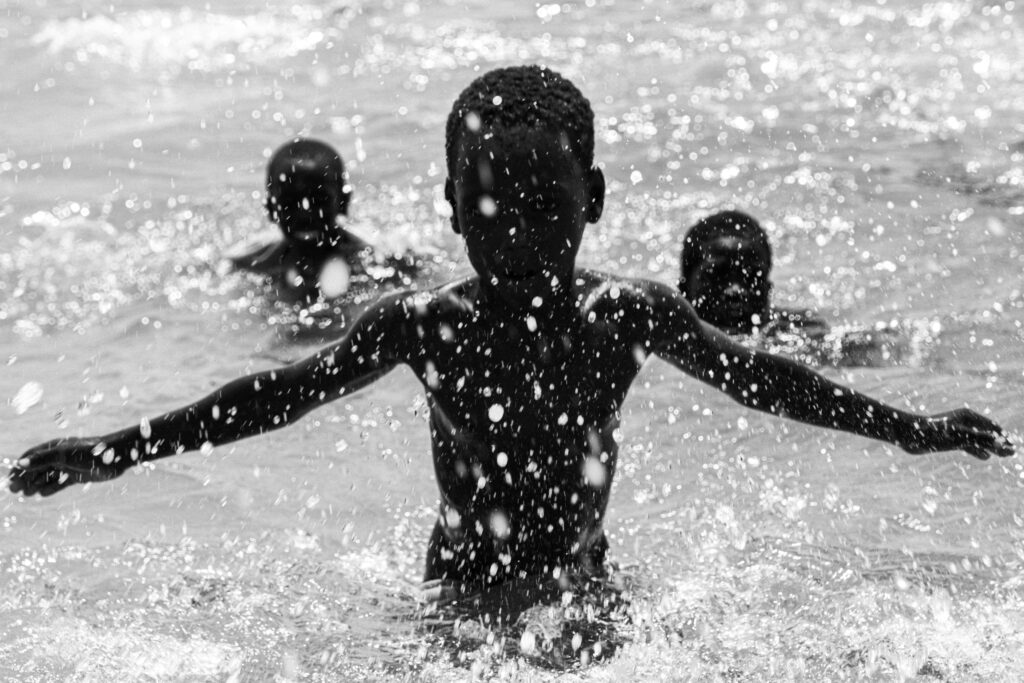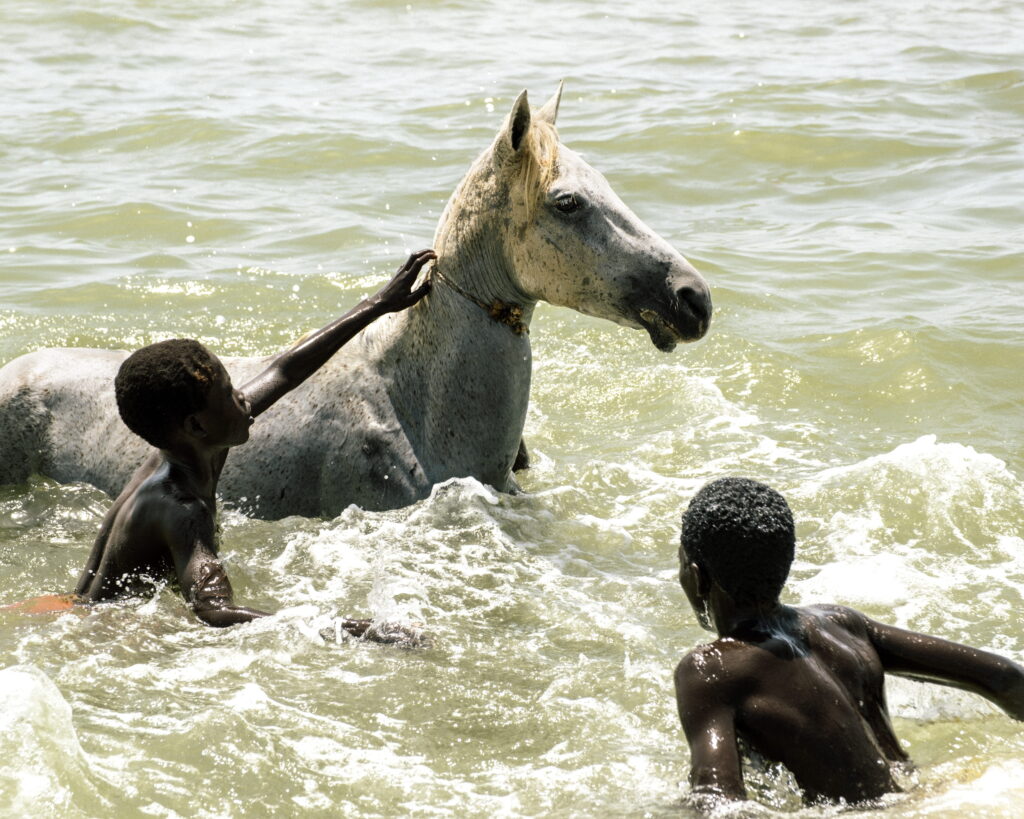
Some projects begin with long-term introspective research, careful planning, or institutional access. Others begin through coincidence: a random conversation sparked by genuine curiosity, a shared language of photography, or just the simple act of noticing and paying attention to another human. Nio Far belongs to the latter. What began with a friendly encounter in Costa Rica between photographer Tenz Maalsen and Badou, a young Senegalese traveler curious about a VHS camera, gradually unfolded into something larger: an invitation into family life, into M’bour, and into a different understanding of what it means to exist among others. Arriving in M’bour, Tenz entered not as an observer standing outside community, but through the rituals that sustain it: shared meals, conversation across fragmented language, gestures filling the spaces words could not. Around a dinner table surrounded by fifteen family members, photography became secondary to participation. When the woman who prepared the meal responded to his gratitude with the words “Nio Far”: “we are one” Tenz project found both its title and its conceptual foundation.
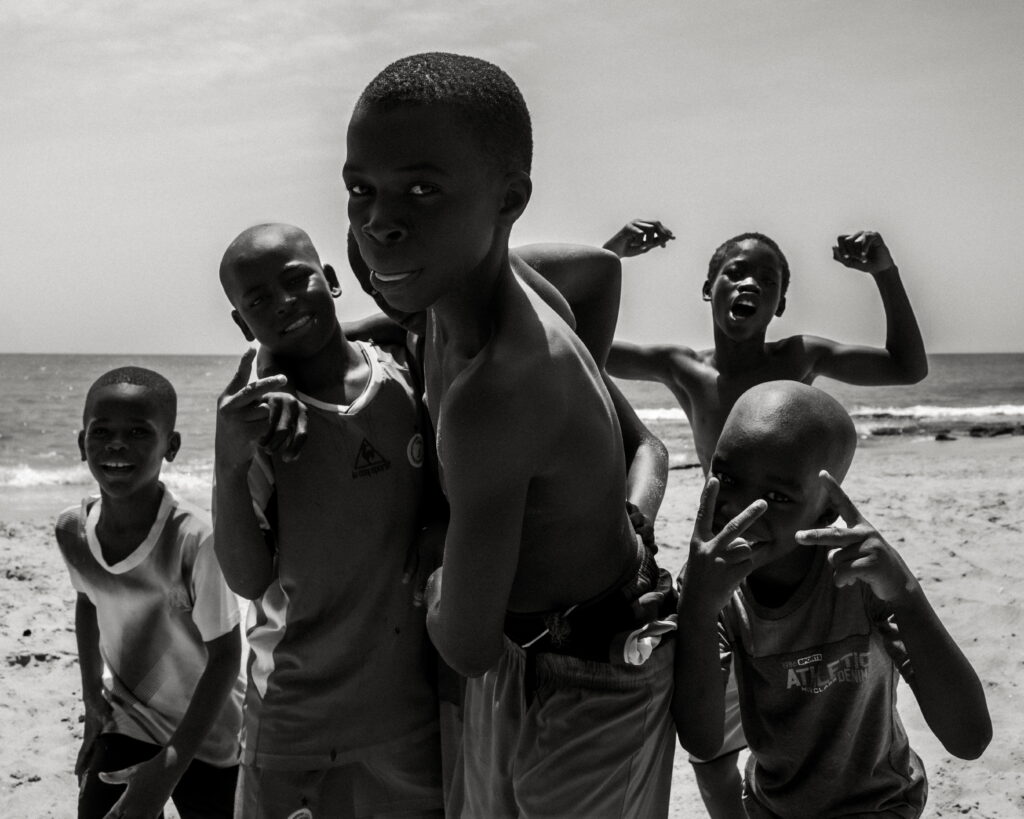
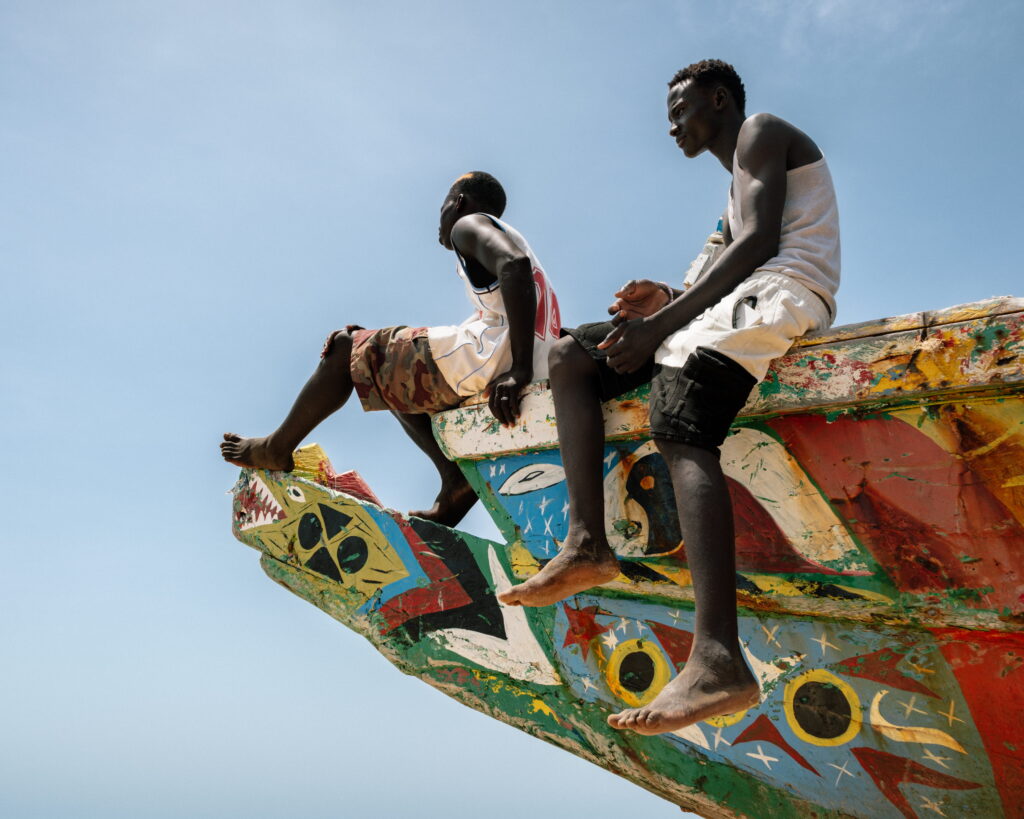
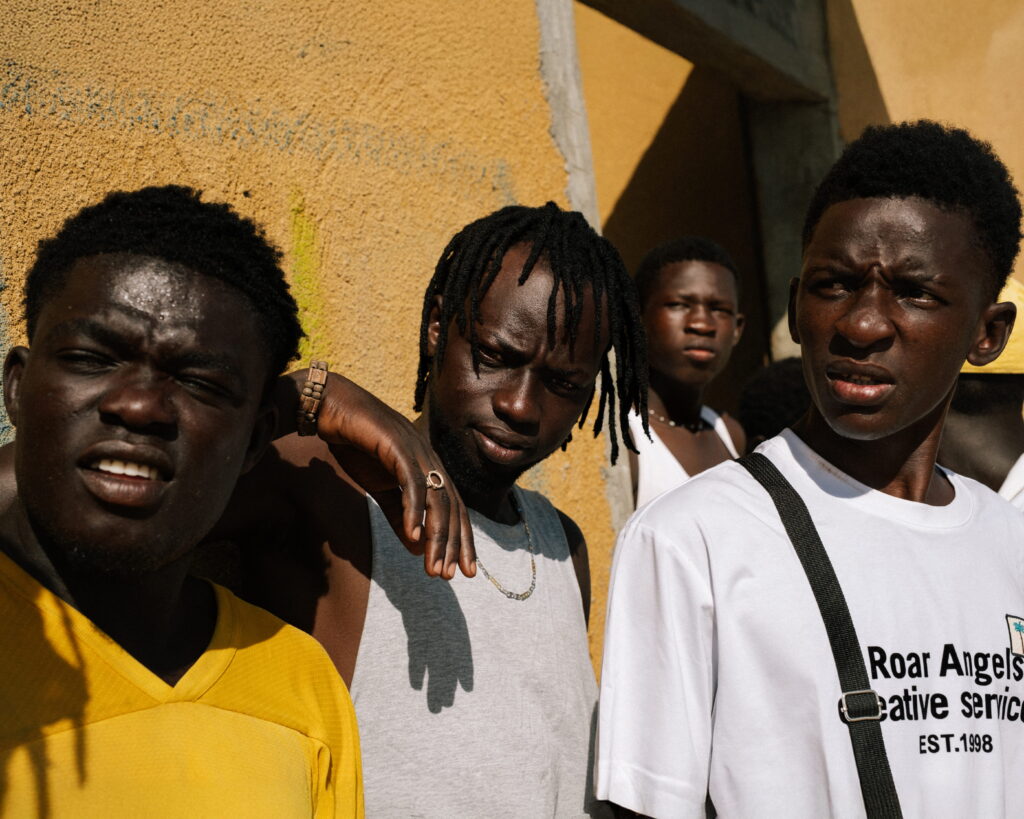
The images from Nio Far is not simply a photographic account of Senegalese communal life, nor does it attempt to romanticize collectivism through the familiar language of hospitality. Instead, the work examines community as infrastructure: an everyday system of care, responsibility, and coexistence. Here, togetherness operates as a social condition. Worries are shared, meals are collective, laughter circulates, and presence itself becomes a form of support.
“Nio Far” — we are one —
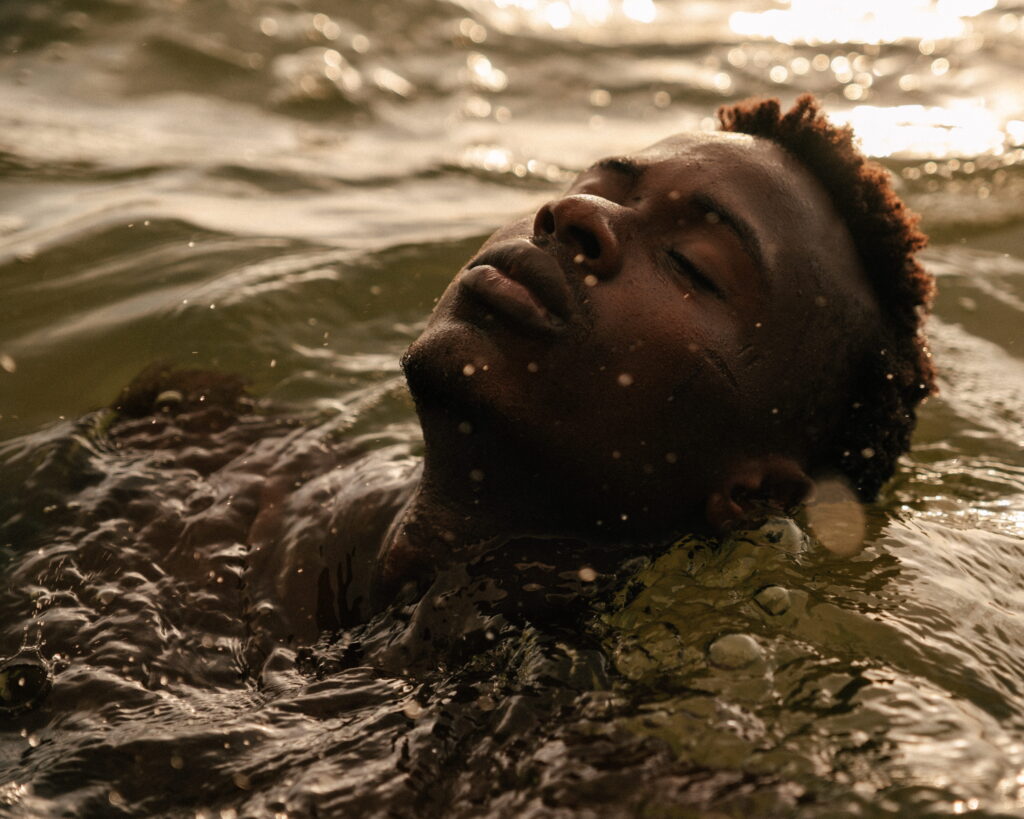
Nio Far also quietly reflects back onto the photographer’s own position and the social structures he returns to. Tenz frames the work through contrast to question contemporary ideas of individualism, productivity, and personal advancement. In societies increasingly organized around self-optimization, Nio Far asks what forms of connection have been deprioritized, and what kinds of living conditions become possible when community is treated as default. Photographically, the work operates through proximity rather than spectacle. Its strength lies in moments of intimacy, collective rhythm, silence, and informal interaction. Images less concerned with explaining a place than with transmitting a feeling, the sensation of entering a social fabric where belonging is practiced daily.
Why we love Nio Far is because it’s about closeness: the building, the maintenance, and inheritance. More importantly, it draws our ears tight about how community is not merely a social ideal but a structure that shapes how people eat, grieve, celebrate, and move through the world together.
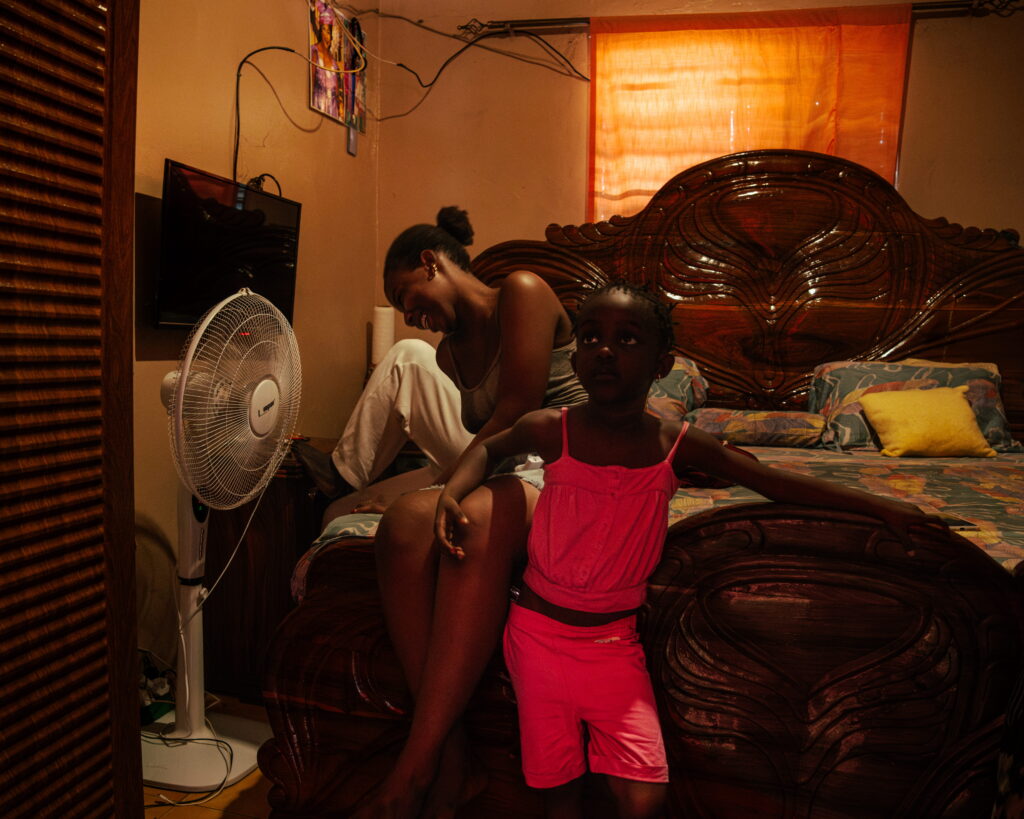
You describe M’bour as a place where togetherness feels natural in contrast to Western individualism. How did you navigate the risk of romanticizing community from the position of someone experiencing it temporarily rather than living within its complexities?
I prevent myself from portraying the community as more beautiful or idyllic than it is by first immersing myself among the people without a camera, making sure I develop a better understanding of the reality of the community I’m staying in. By talking to the people around me and placing myself as close as possible to their everyday lives. With this project, I haven’t tried to make things look more beautiful or interesting than they actually were. I shared my own experience and documented the things we encountered together on a daily basis. Trying to tell my story through these images.
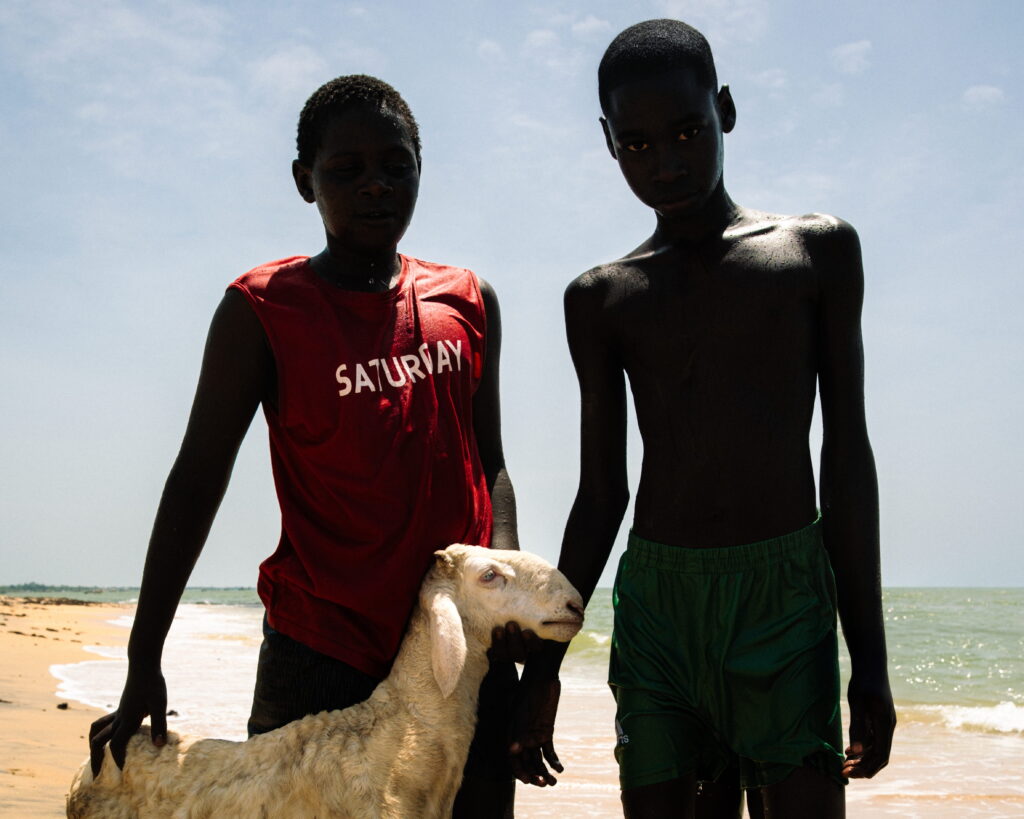
“Nio Far” becomes both a phrase and the conceptual foundation of the work. What is lost, or potentially misunderstood, when a cultural philosophy rooted in local context is translated into an artistic framework for international audiences?
The way I experienced Nio Far as an expression is that it represents a way of showing mutual respect, acceptance, and comfort. I think the translation of Nio Far into “we are together” is a phrase that can be used across the world for the same reasons I experienced Nio Fa, and that in this way, “we are together” evokes a similar feeling in an international audience as this expression did for me in Senegal. I also strongly believe that in the Western world, we could do more with this way of thinking, and that we should more often position ourselves as equals, as people who are in this together. After my time in Senegal, I took Nio Far with me as more than just a phrase. For me it became a way of living in which you look after those close to you, more of an ideology than anything else.
Your project is rooted in connection and collective life. How did the act of photographing affect that sense of togetherness? Were there moments where the camera created distance rather than intimacy?
I am aware that when I arrive somewhere new with new people and immediately start working with my camera, this can create a certain barrier. For this reason, I often wait before photographing my subjects until I have built a connection with them, so that we can develop certain ideas together. There are many moments where I see a beautiful image in front of me and think: “I wish I had my camera right now.” But I believe that with patience and compassion, you will make the right images, ones that tell the story in the most honest and respectful way. After all, I wouldn’t appreciate it myself if I invited someone into my home and, before my family or those close to me had gotten to know them properly, they started taking photos of our daily life without asking.
You mention warmth, laughter, silence, and shared worries. Community can also produce obligation, surveillance, or pressure. How does the work engage with the tensions and burdens of communal living rather than only its comforts?
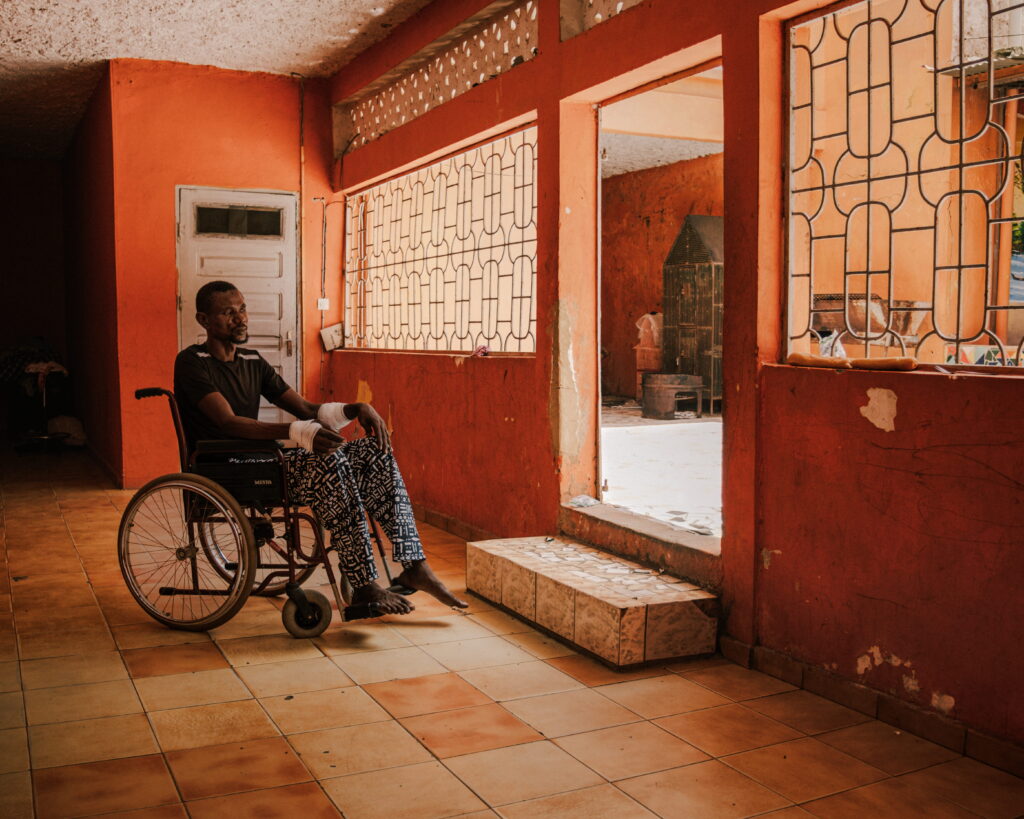
The story I want to tell with Nio Far is largely about the shared moments from which we can draw strength through being together. How we as people, and how a community, can achieve more and find support in one another. The project is still ongoing and I am trying to show as many different sides of communal living as possible. This includes the other side of togetherness, which I try to highlight by showing certain moments of solitude and the emotions that come with them.
You entered M’bour through Badou’s invitation and family network. How did access through hospitality shape your responsibility as an image-maker, and where did you feel the limits of your perspective as an outsider?
Absolutely. I am incredibly grateful to Badou for welcoming me and always try to handle that with as much respect as possible. For the first two weeks of my trip I was mostly without a camera, using that time to build a connection with the people around me. I noticed that Badou’s family made me feel at ease quite quickly, but I never went into this trip with the idea that I was there solely to shoot a photo series and turn it into a project. I made this journey out of personal interest in the culture of my close friend and in life in M’bour. Because of that, photography always came second. I often spoke with Badou about moments when I wanted to photograph something and always checked with him and the people around me whether that was okay. I noticed that the things I was asked not to document were often related to cultural events that the locals kept protected, moments that were not meant to be shared with outsiders through photography or social media.
Briefly discuss how you found your way to photography and achieved your first camera, also, are there other photographers whose work you draw inspiration from?
My interest in photography began because my father always carried a camera around his neck wherever he went. I still remember vividly how my brother and I were placed in front of a beautiful white wall in the living room with our favorite toys, and my father would take photos of us. Back then, I always went with him to the photo store where he had his film rolls developed, and the owner of the shop once gave me a small analog camera (which was probably broken, haha). When I was about six years old, my father gave me my first small camera. At that time, I was a huge fan of LEGO, especially LEGO Star Wars! With my little camera, I started making stop-motion films of my LEGO, and that’s how the love for photography and film was born.
Photographers who inspire me: my father, Letizia Battaglia, Leonard Freed, Dana Lixenberg, Albert Watson, and Kwabena Sekyi Appiah-Nti.
You position the project partly through what you feel is missing in Western social life. At what point did the project stop being about Senegal and become a reflection on your own relationship to loneliness, proximity, and belonging?
I realised that Nio Far is also about myself at the moment I returned to the Netherlands. The reality of where I had been formed such a stark contrast with where I live, and I experienced communal life in the Netherlands differently after what I had witnessed in Senegal. In the West we live close to one another but walk right past each other. Everyone is on their way somewhere. Including me. Nio Far started as a project about a community in Senegal, but it also became a question I asked myself: what am I missing, and why am I missing it? The images I made were about them, but the reason I made them says something about me too. I don’t think the project could ever have been purely about Senegal, because my perspective is always present in it. And my perspective comes from somewhere.