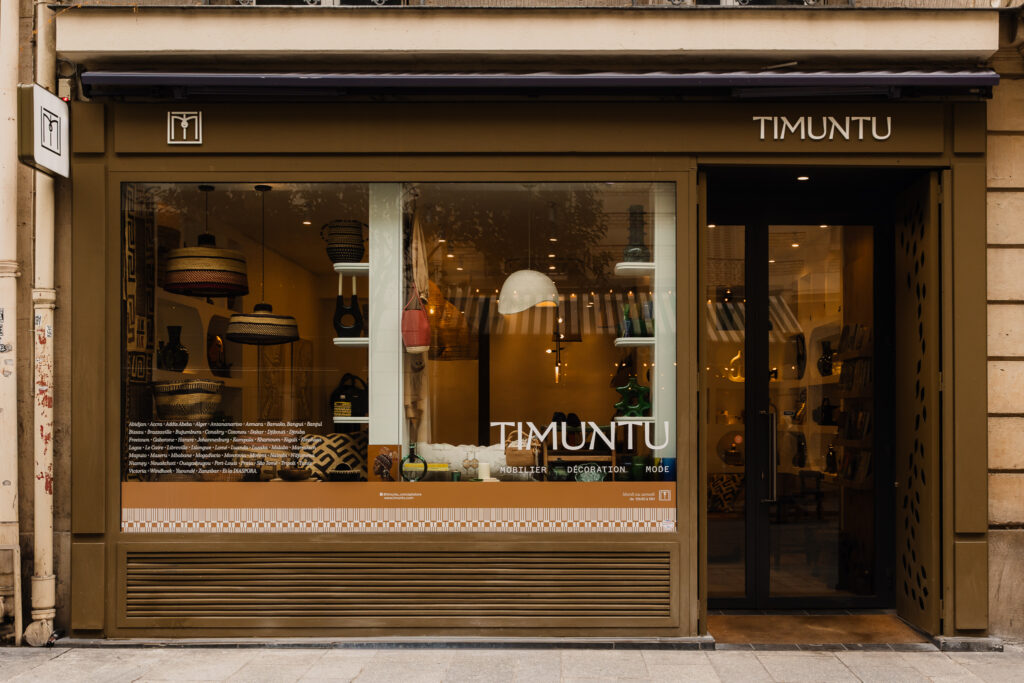
TIMUNTU arrives at a time when the art and creative industry needs them most. They also, in the same breath, arrive at a time when African aesthetics are increasingly visible globally but are still too often flattened into trend, texture, or nostalgia. Situated demurely on Rue Bachaumont in Paris, the beautiful and well-curated concept space proposes something more deliberate: African creativity as living infrastructure. What the three Matsika sisters, Aline, Inès, and Marcelle, have built is a spatial argument for contemporary African life, the new generation.
The cradle of Timuntu is deeply personal. Raised in Congo-Brazzaville and shaped by a true family legacy rooted in anti-colonial thought, solidarity, and social responsibility, the sisters position the project around the Bantu concept from which the store takes its name: “I am because you are.” This philosophy structures the project’s worldview. The store becomes a place where interdependence is materialised, between artisan and consumer, diaspora and continent, heritage and reinvention.
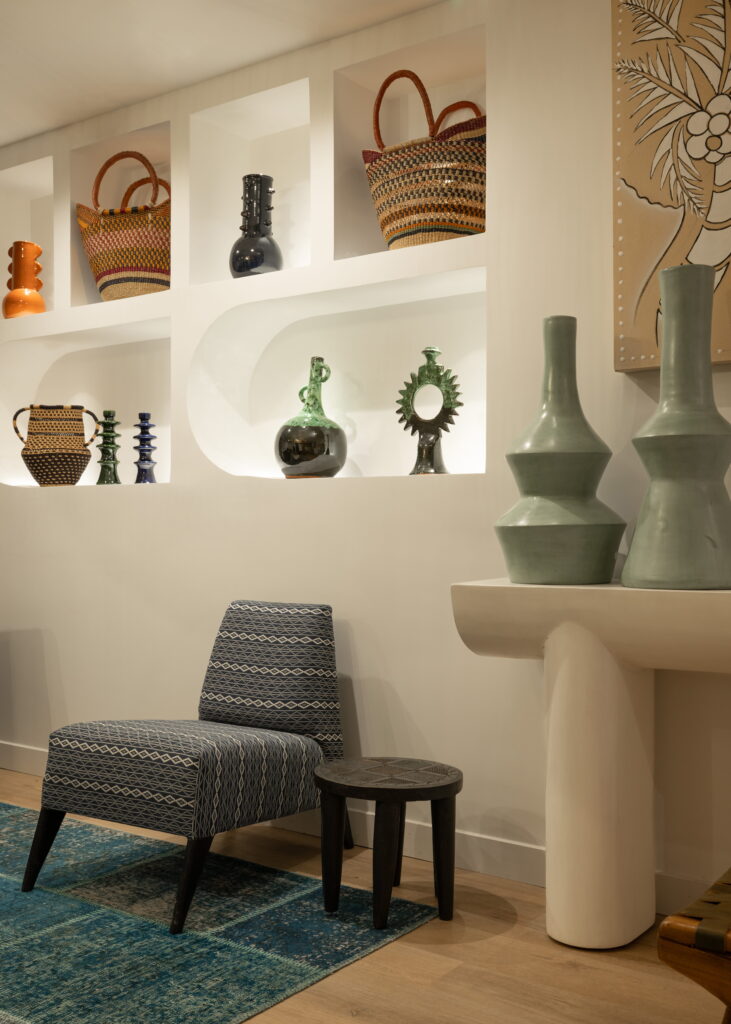
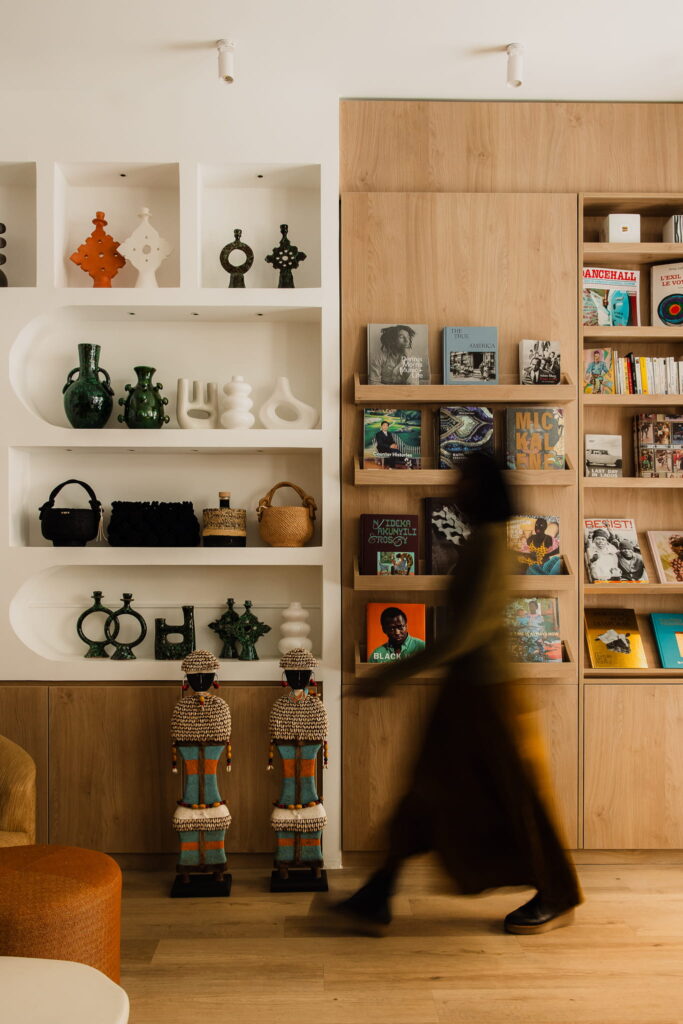
Timuntu’s richness comes from the distinct expertise each sister contributes. Aline Matsika brings decades of experience in interiors, architecture, and design curation, having spent years championing African design long before global markets caught up. Inès Matsika contributes editorial intelligence: storytelling, brand language, and the understanding that objects require context to carry meaning. Marcelle Matsika extends the project beyond commerce into care, public health, and well-being, expanding the store’s function from a marketplace to a social infrastructure. Together, their practices overlap into a hybrid, equal parts gallery, archive, design studio, bookstore, and cultural centre. Stylistically, Timuntu chooses not to engage the visual language imposed on African design. The language here is restraint: raffia lamps with sculptural forms, carved wooden stools reduced to pure geometry, textiles used with intentionality.



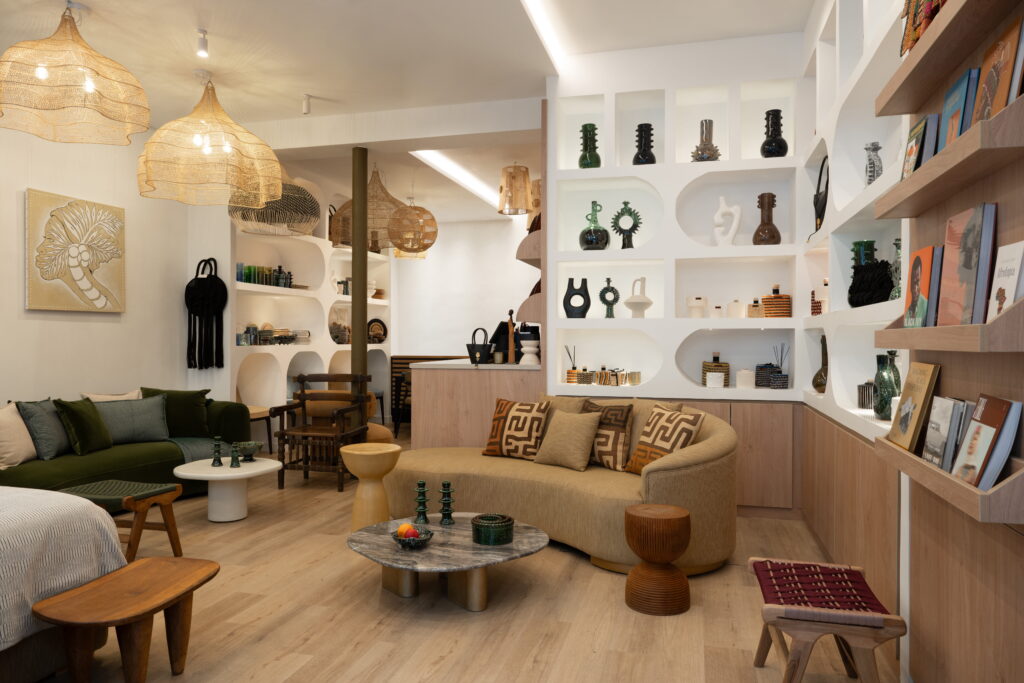
Their curation leans toward contemporary minimalism while remaining materially tied to craft traditions across Morocco, Ghana, Côte d’Ivoire, Senegal, Guinea, and beyond. The result is a design language where craftsmanship is modern authorship. “African minimalism” here is less trend than method. What makes the Timuntu project genius is that they refuse to separate aesthetics from politics. They speak openly about labour conditions, environmental responsibility, women’s economic independence, artisan welfare, and care infrastructures. Their planned Timuntu Care initiative pushes the ideology even further, suggesting that design spaces can function as social actors rather than neutral marketplaces. In this sense, the store’s ideology is not simply about representation; it is about redistribution, of visibility, resources, and authorship.
Timuntu succeeds because it understands that objects are never only objects. They carry routes, labour, memory, and ideology. Hidden within a quiet Parisian street, the store offers another possibility for African contemporary culture, one where craft is intellectual, lifestyle is political, and beauty is inseparable from care.