
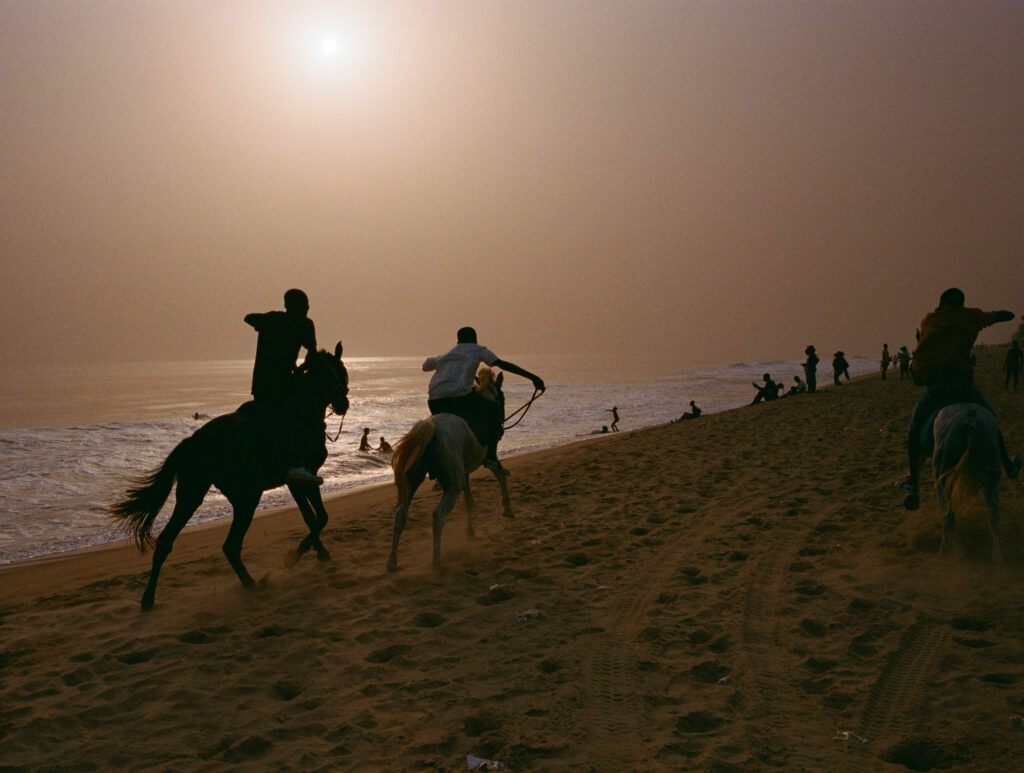
Photo documentary is necessary because it allows us to witness lives beyond our own experiences. Such is the case with Hermann Diagne’s Si Loin Mes Proches. His book does more than show how people live in Ivory Coast; it gestures toward the systems, spaces, and histories that shape the conditions of that living.
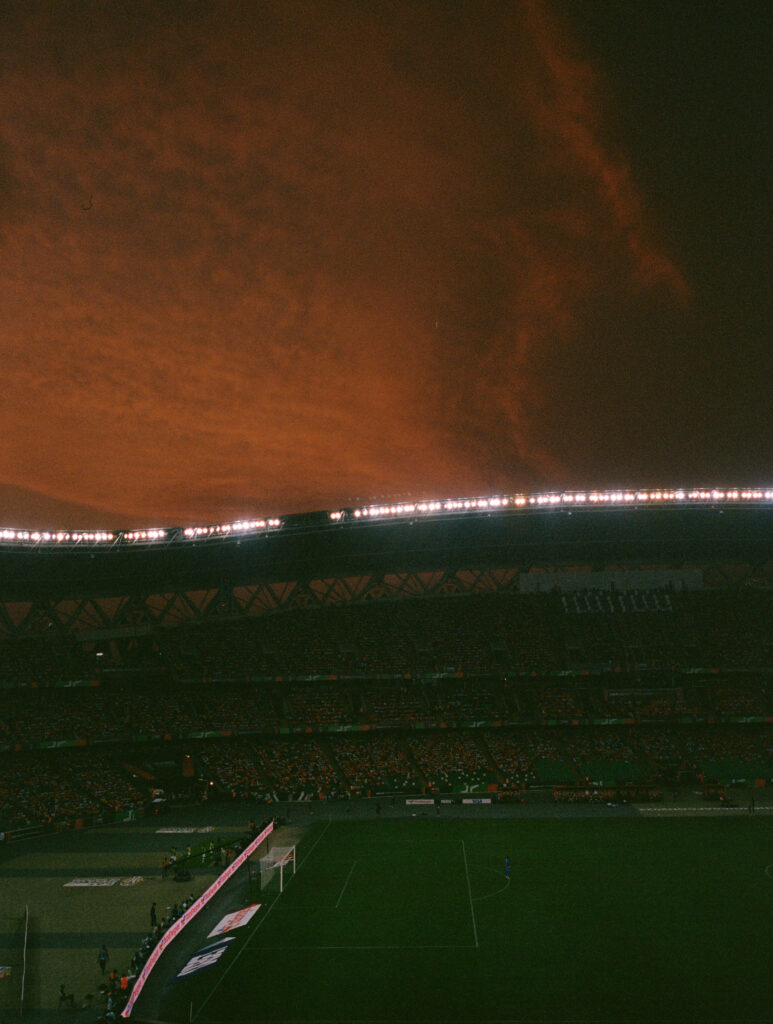
Si Loin Mes Proches begins not with geography, but with distance, emotional, political, and familial. Hermann Diagne’s return to Côte d’Ivoire was not simply a homecoming or a professional assignment; it emerged from a much more intimate negotiation. Centred around his mother, the project carries the weight of a country left behind under difficult circumstances. For political reasons, she never wanted him to return. In 2023, having gained a stronger sense of independence, Diagne made the decision to travel back alongside his cousin during AFCON. Football may have provided the occasion, but it was not the reason. Beneath the tournament and movement across the country was another motivation: to photograph Côte d’Ivoire in a way that could reopen a conversation with home, and perhaps offer his mother a reason to imagine returning after years away.
The journey, then, became layered: part family history, part personal reclamation, part image-making exercise. In Si Loin Mes Perches, returning is never singular; it is multiple forces pulling at once.
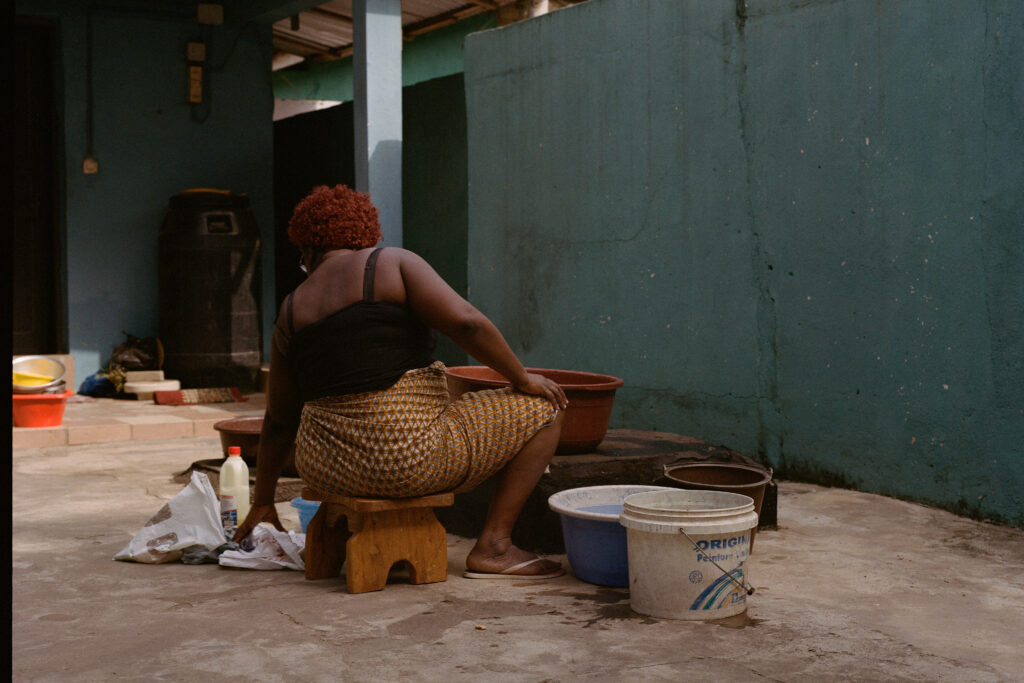
Moving through the images in the catalogue, the reasons for Diagne’s return home gradually become visible. Some photographs feel concerned with change, others with memory. Throughout the work, architecture, roads, housing, markets, and public spaces become more than background; they begin to reveal who the resources were built for, who occupies them, and who remains on the fringes. Sometimes, though, the work feels like an attempt at self-understanding: a photographer tracing his relationship to home through observation. Elsewhere, the images seem to push against fixed narratives about the Ivory Coast, insisting instead on complexity, intimacy, and contradiction. There is also the persistent sense that documentation is an act against disappearance: of places, faces, and ways of living that may not remain unchanged.
In fashion photography, Hermann moves differently. His images are clean, stable, focused, and well coordinated. Documentary allows for something else: uncertainty, excitement, and the possibility that the image discovers something the photographer did not fully arrive with.
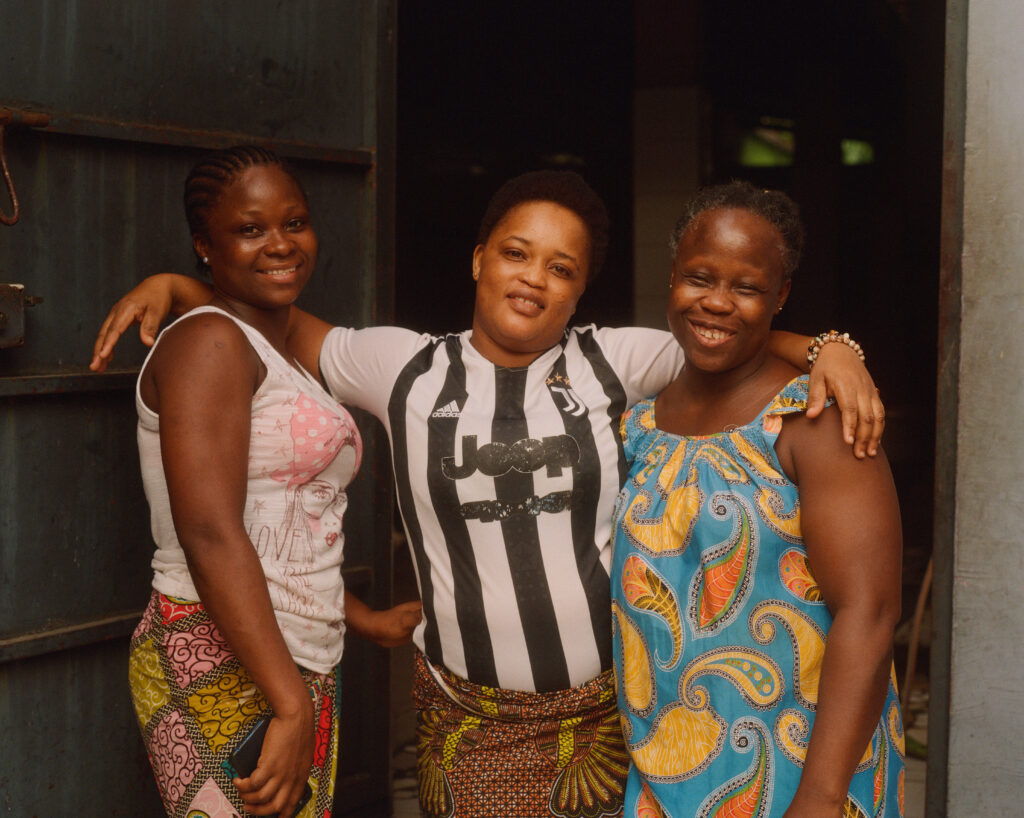
The kids are always so happy to see you, man. What is it about your camera and presence in the Ivory Coast that makes everyone so happy to see you when you get back home?
Hard to say. It had been 23 years since I’d last been back. I didn’t even know most of these kids existed — nephews, nieces, cousins, neighbours’ children. But I felt a connection that was hard to explain. Something spiritual, almost — like we’d always known each other. I also think photography helped bridge that gap. They saw something playful in it, a moment of exchange around art. Those were powerful moments.
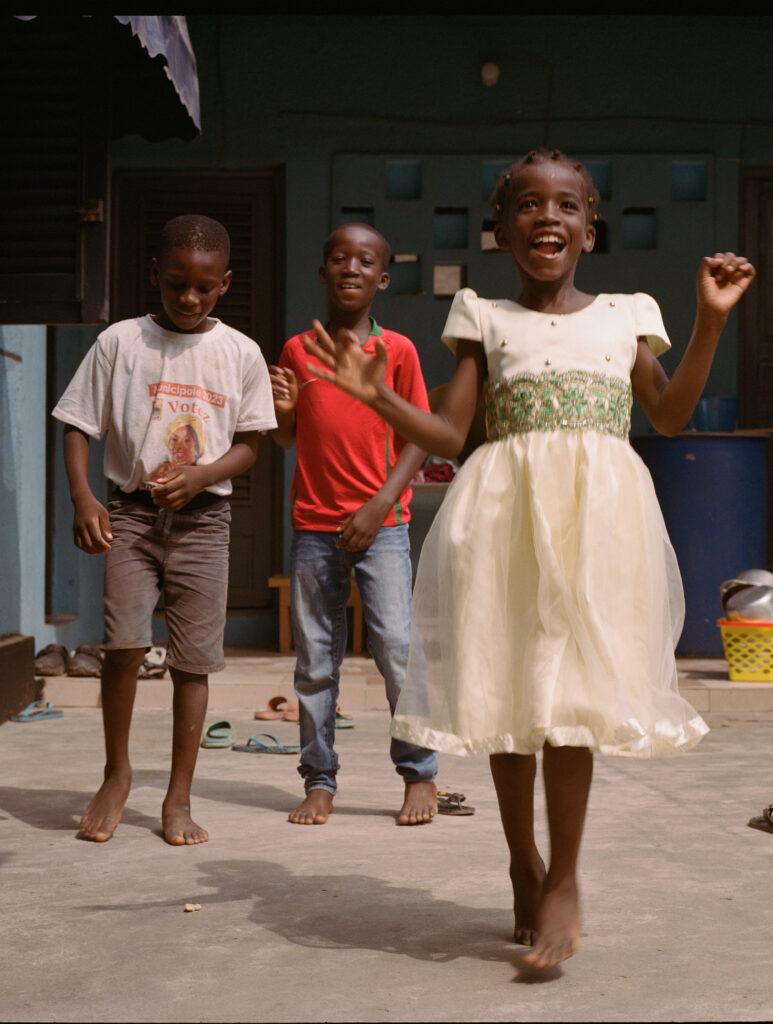
Your images often feel carefully constructed but still leave room for accidents and unpredictability. How do you decide what to keep when something unexpected happens in the frame?
I shoot mostly on film because I love the process. There’s something about the distance it creates — you disconnect from the image and come back to it later with fresh eyes. Nostalgia plays a big part in my choices. I don’t really think about technical criteria. I prioritise the emotion an image triggers in me. Emotion is what guides every decision.
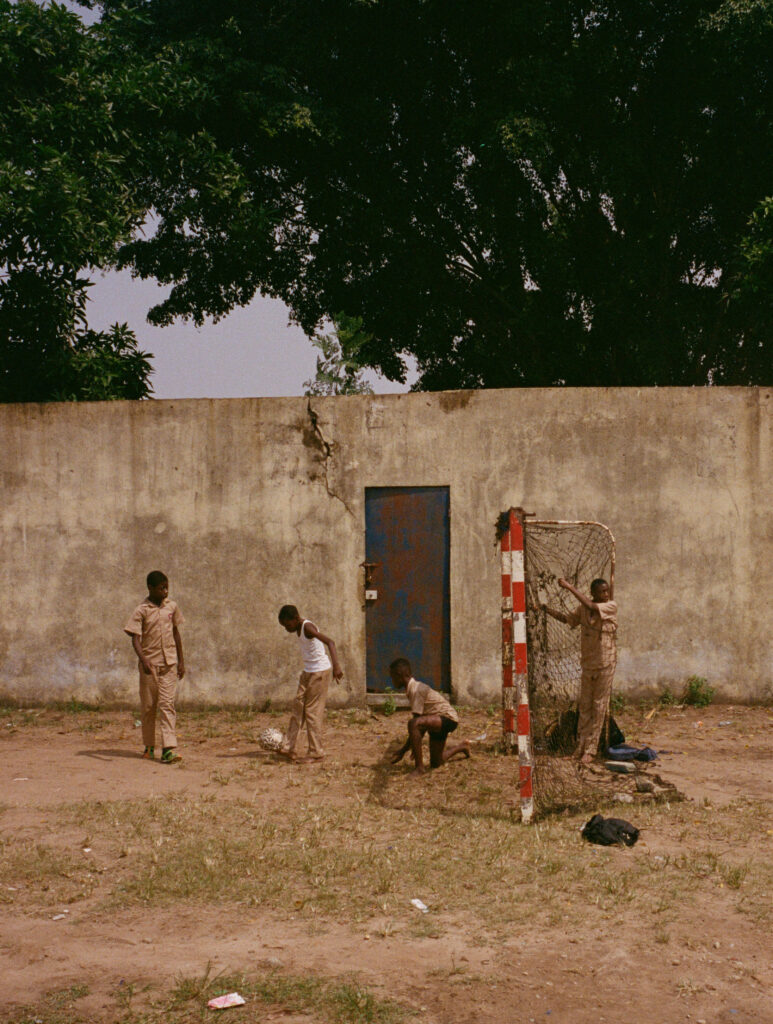
Can you speak briefly about the opportunity you got to travel back to the Ivory Coast to rediscover your country? Was it a family visit, a visit with friends, or did work take you back home?
The book project revolves around my mother. The truth is, she didn’t want me to go back to Côte d’Ivoire — for political reasons. In 2023, once I’d fully taken my independence, I decided to follow my cousin and go to AFCON (Africa Cup of Nations). But the intention went deeper than that. I wanted to take photographs and give my mother a reason to return to Côte d’Ivoire after all these years. So it was a mix of many things pulling me back at once.
How have your roots, history and traditions shaped your work in fashion and documentary photography?
Growing up, I was fully immersed in Ivorian culture. I was lucky to have three aunts nearby who kept that culture alive around me. It brought me close to dance — every family gathering turned into a celebration. I have this memory of myself as a kid dancing, and the elders slipping me money for it. Out of all that grew a deep relationship with dance — and eventually Krump — which taught me a lot about self-awareness and the artistic process. Naturally, my photography followed: rooted in emotion, authenticity, and personal depth.
In the series of images that you sent to us, which is your favourite shot, and can you tell us the story behind how it was made?
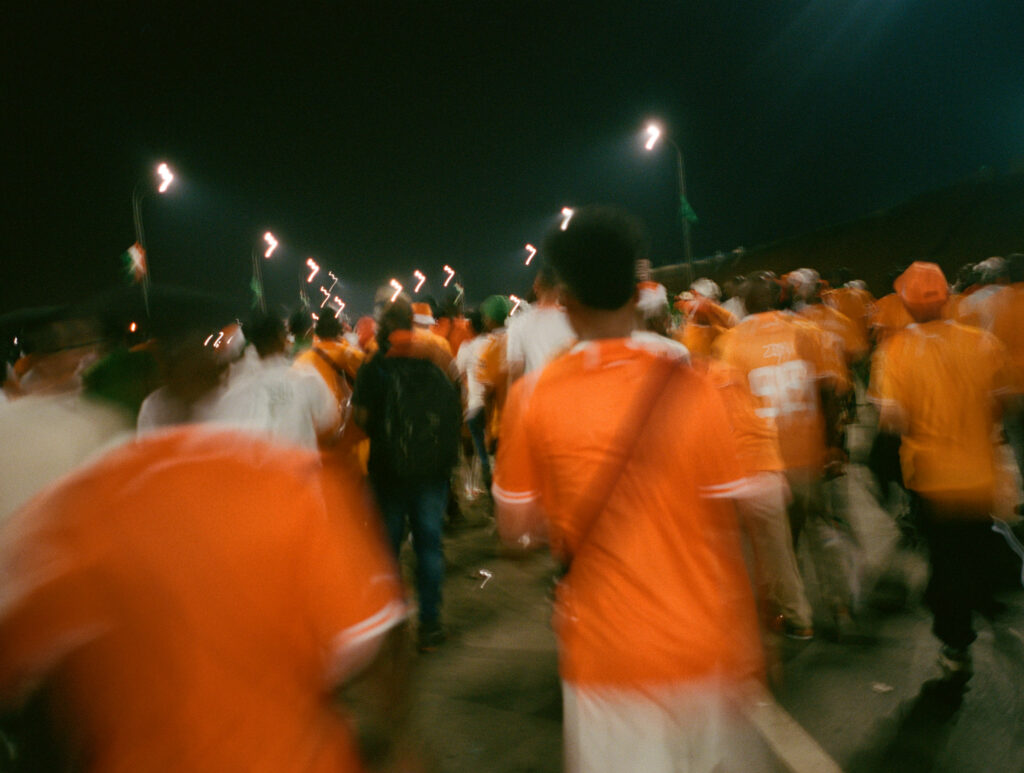
The one where my family is celebrating Morocco’s group stage win. It was such an intense moment. If Morocco hadn’t won that match, Côte d’Ivoire wouldn’t have advanced to the knockout rounds — and we wouldn’t have gone on to become champions. The second the final whistle blew, my cousins and I rushed outside to celebrate—pure magic. Thank you, football.
How did you discover photography? Can you speak briefly about how you were able to achieve your first camera?
I was introduced to photography by a mentor named Jeffry Junes. He was actually the first person to push me toward modelling, and I was always curious about his photographic process — I wanted to understand how it worked. After a trip to Japan, where I met a lot of photographers, I decided to buy my first camera — a Canon 6D. And from that point on, I never stopped shooting. The person who opened my eyes to reportage and documentary photography specifically was Terrence Bikoumou. He introduced me to a world that has become my priority. I owe him a lot.
Are there other photographers, artists or image makers that inspire your photography work? It could be your friends or just people you look up to; consider this question an opportunity to give back to them.
Jeffry Junes and Audrey M’balla have both been huge in shaping how I see photography as a whole. Beyond my immediate circle, I look at a lot of photographers — but Mary Ellen Mark is the one who moved me most deeply. The way she tells stories through images has been a foundational influence on my work.